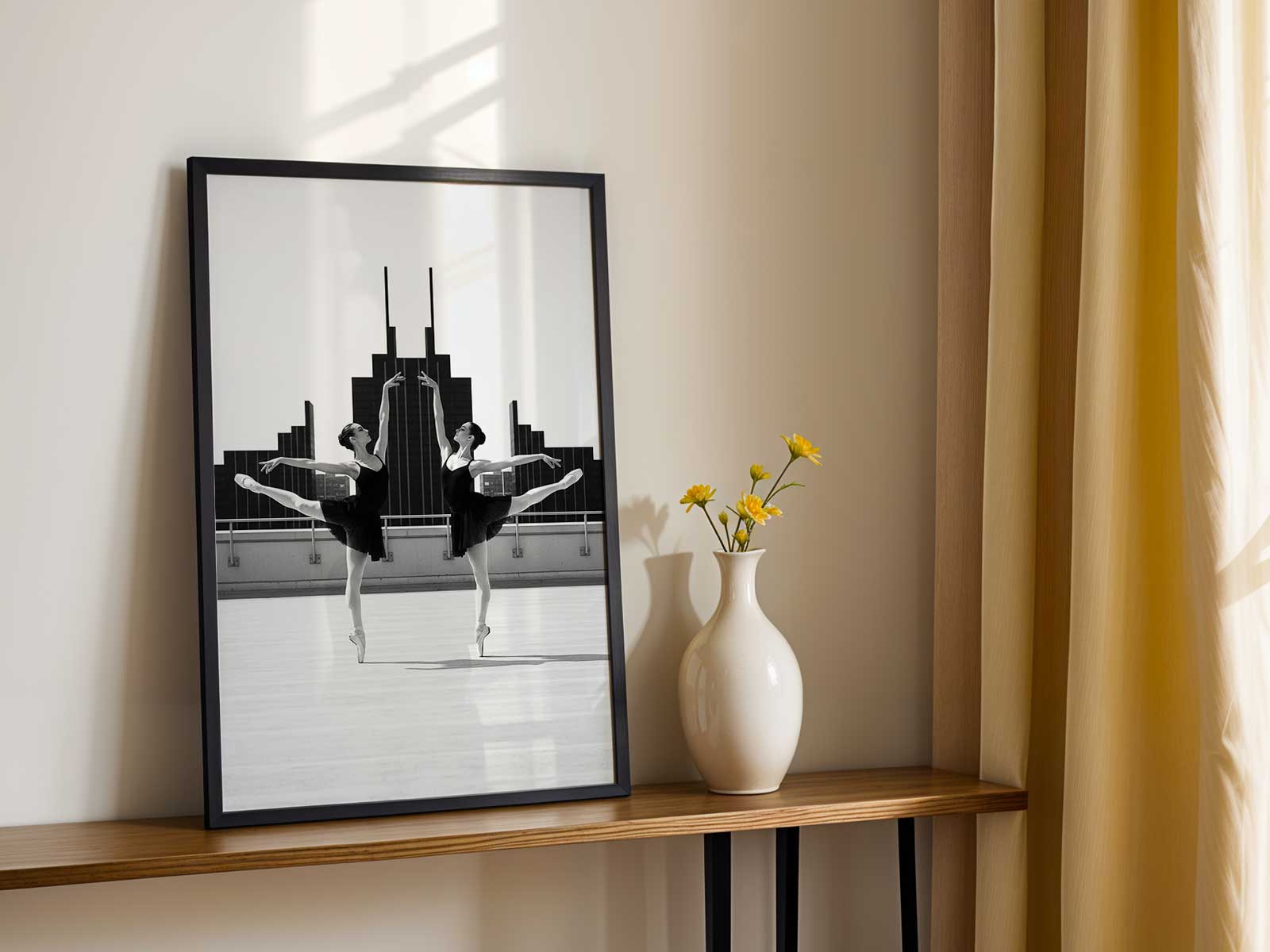
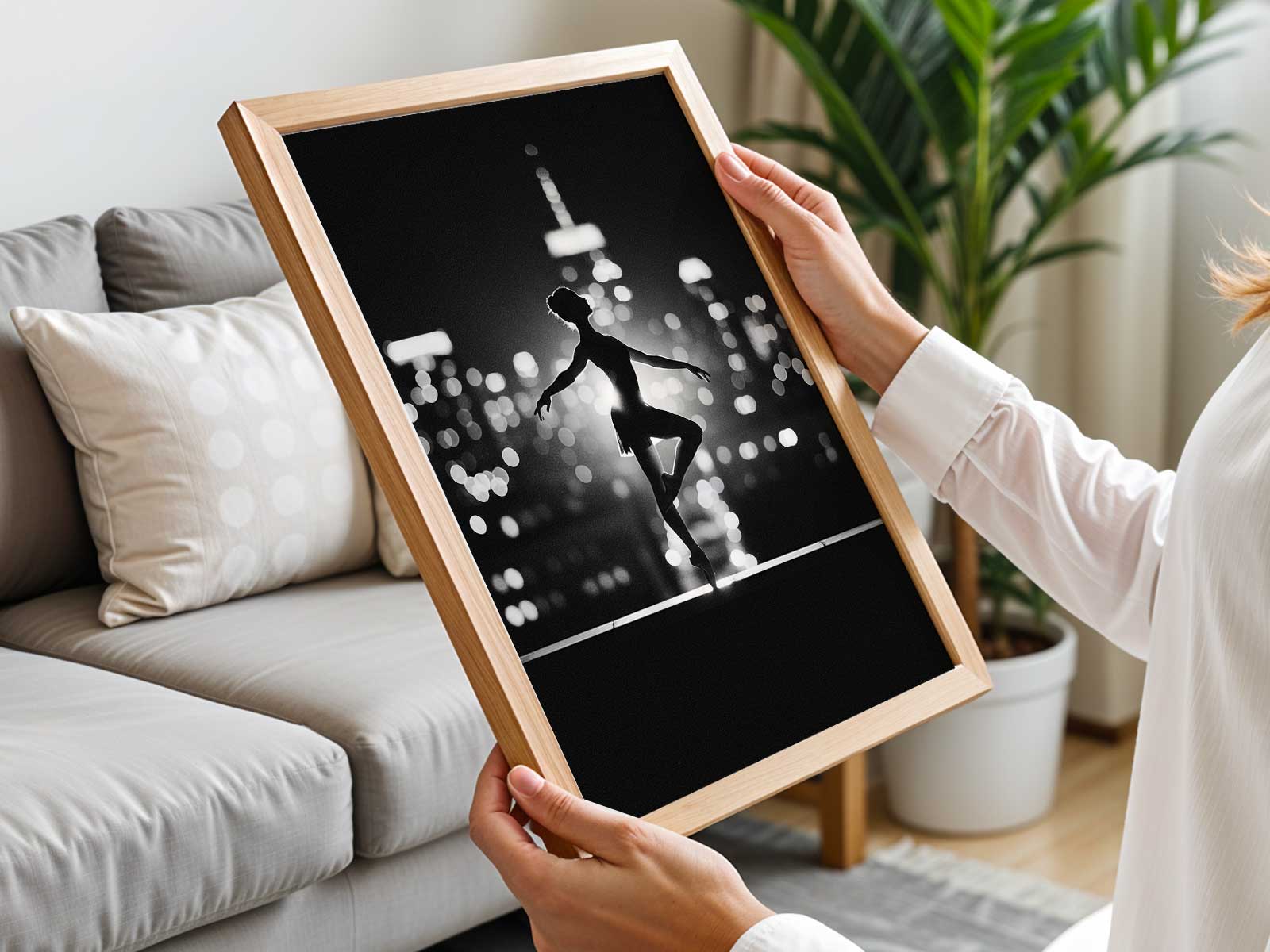
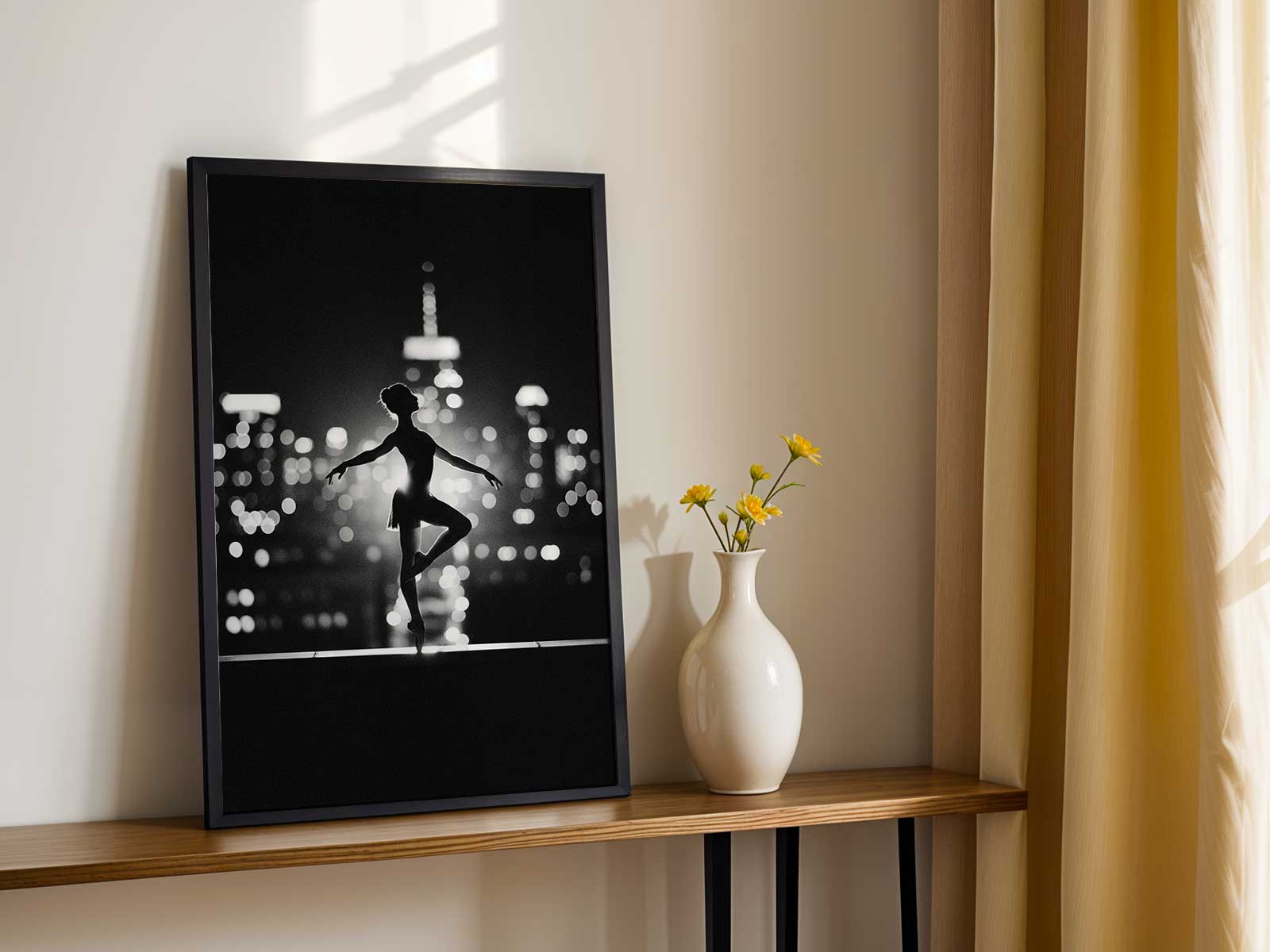
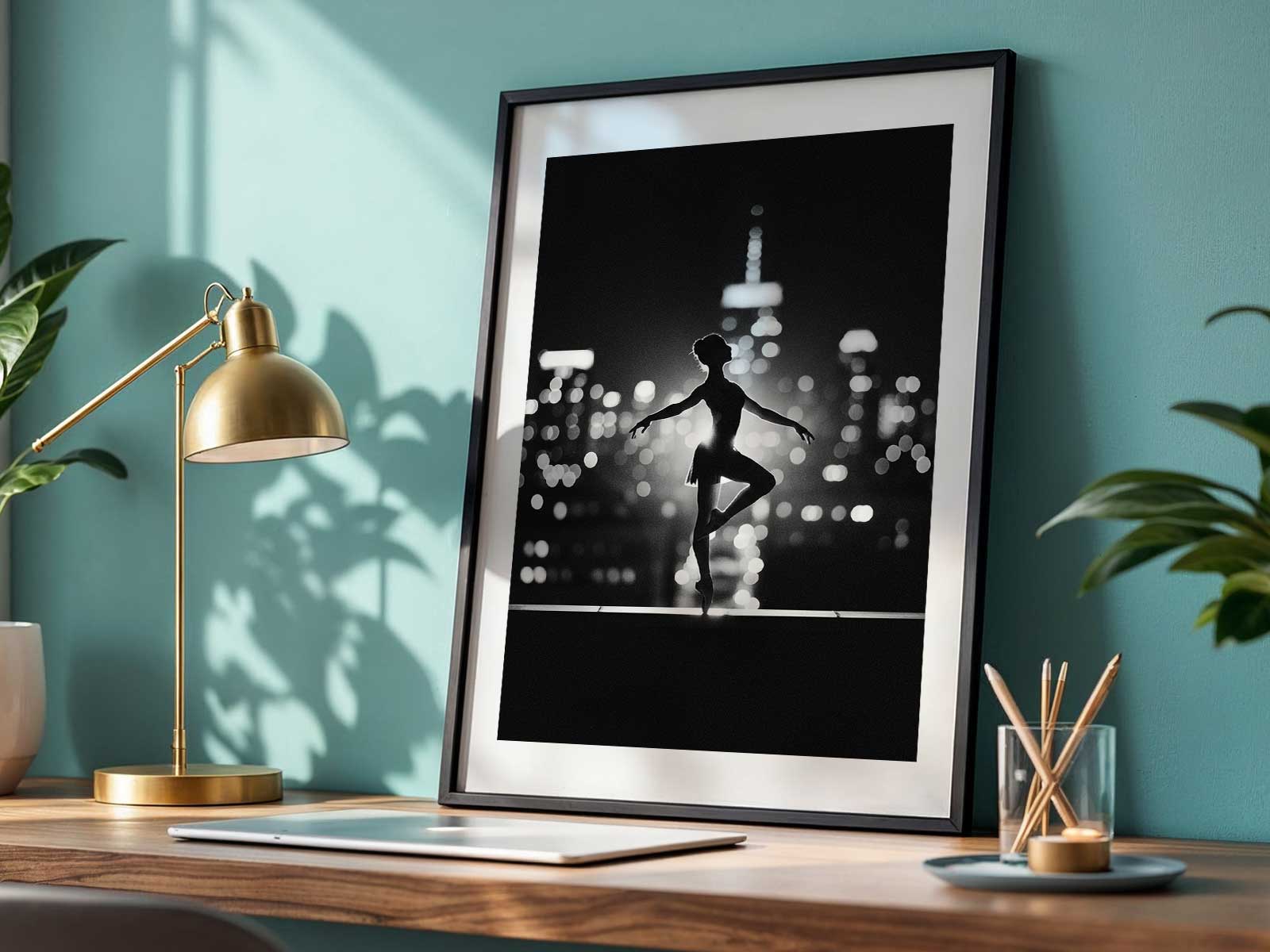
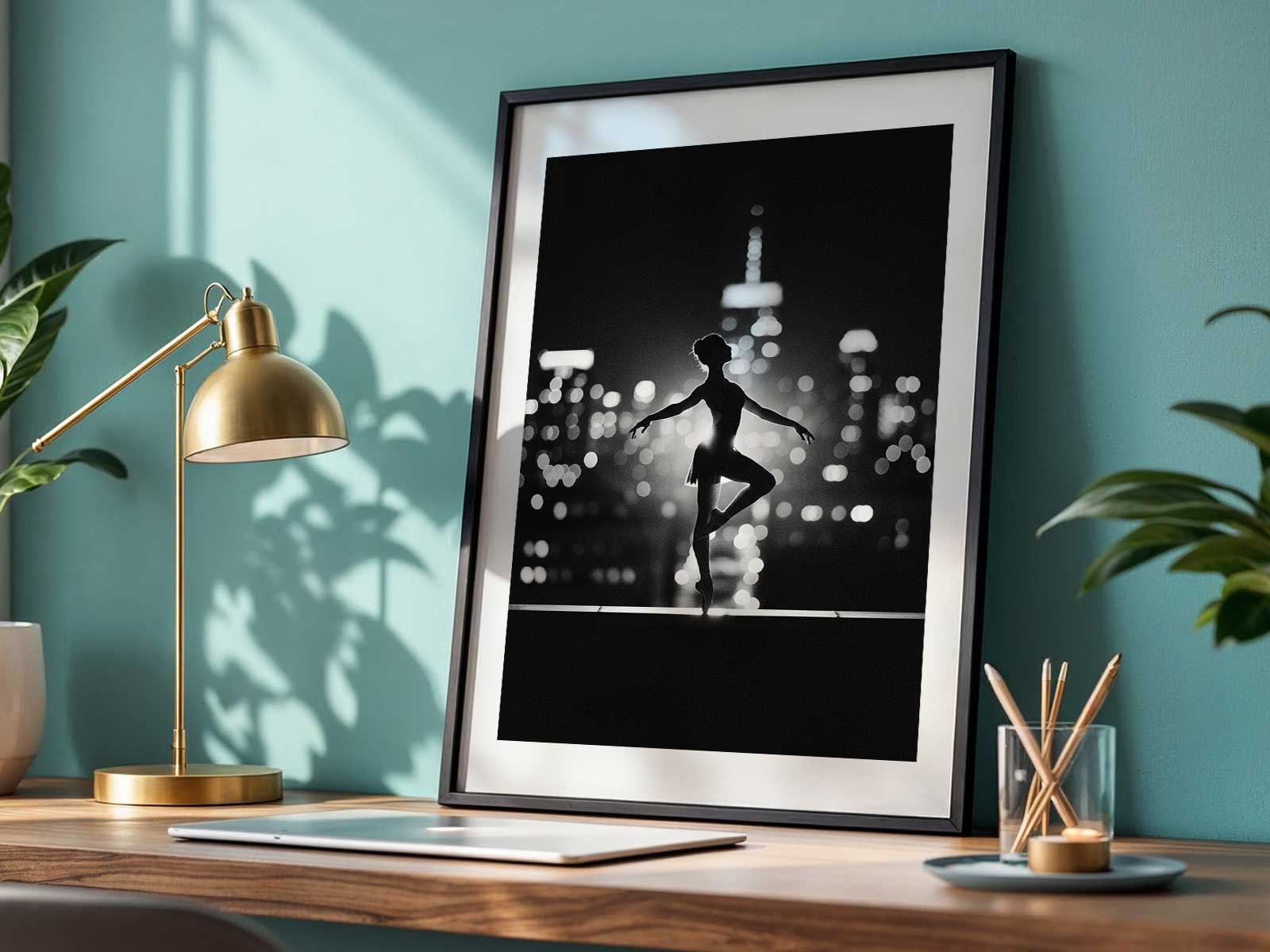
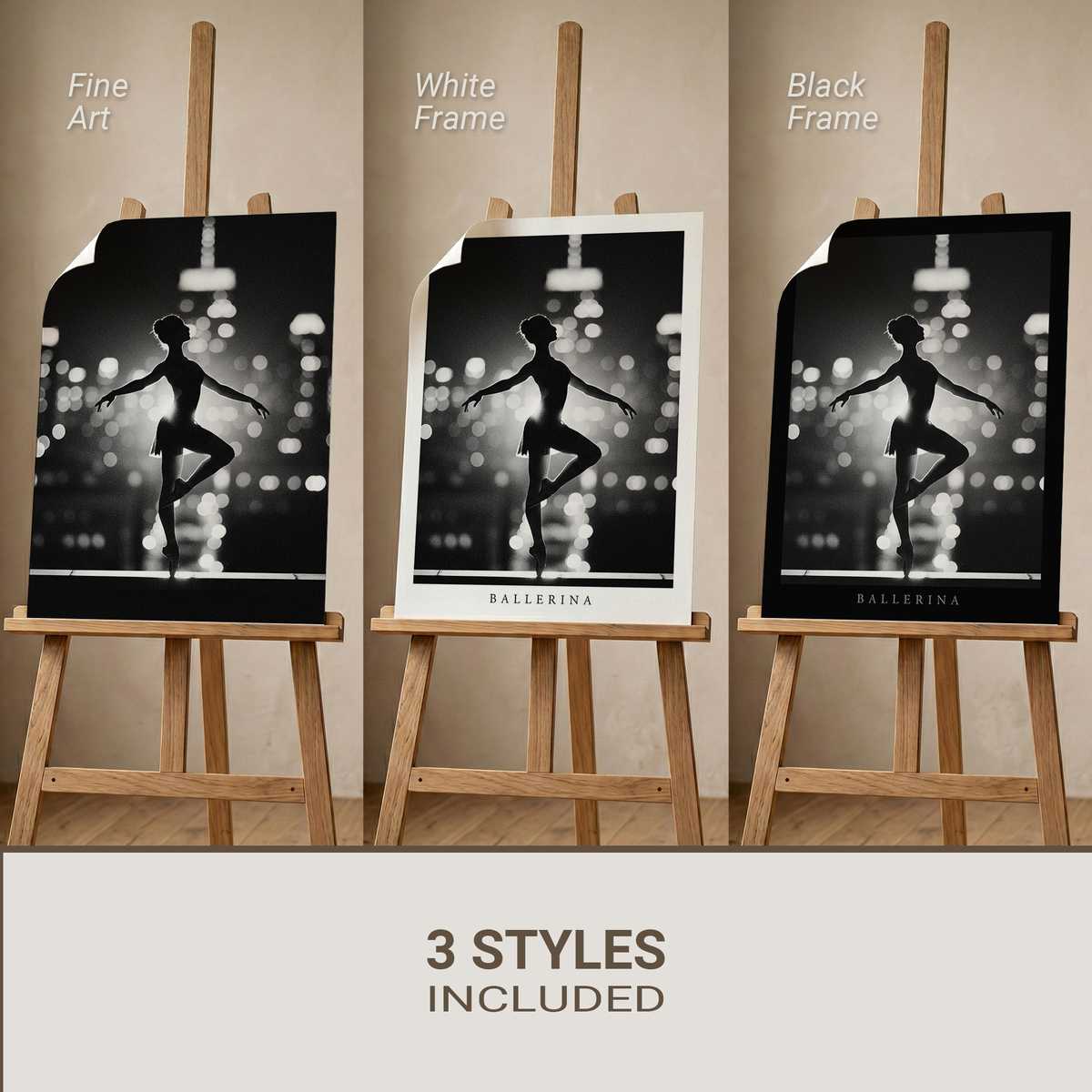
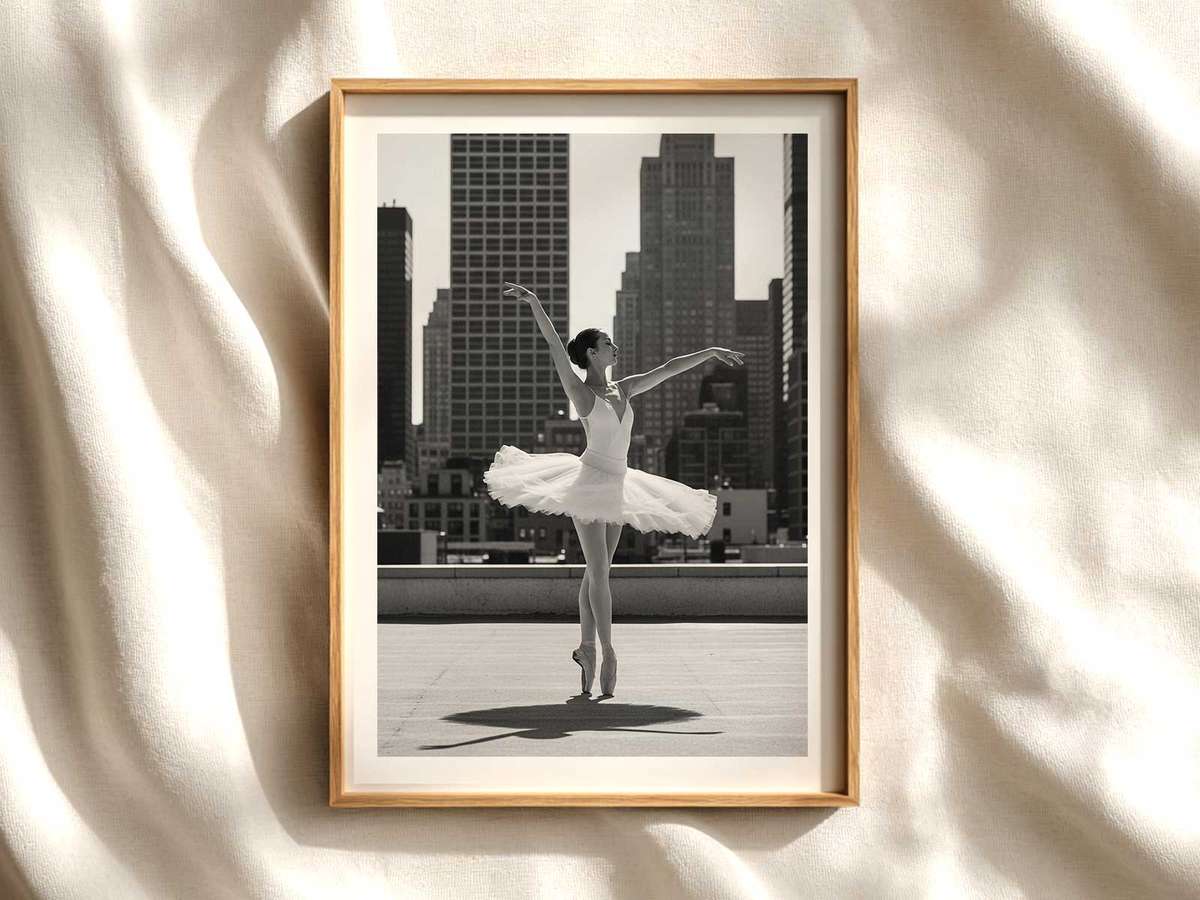
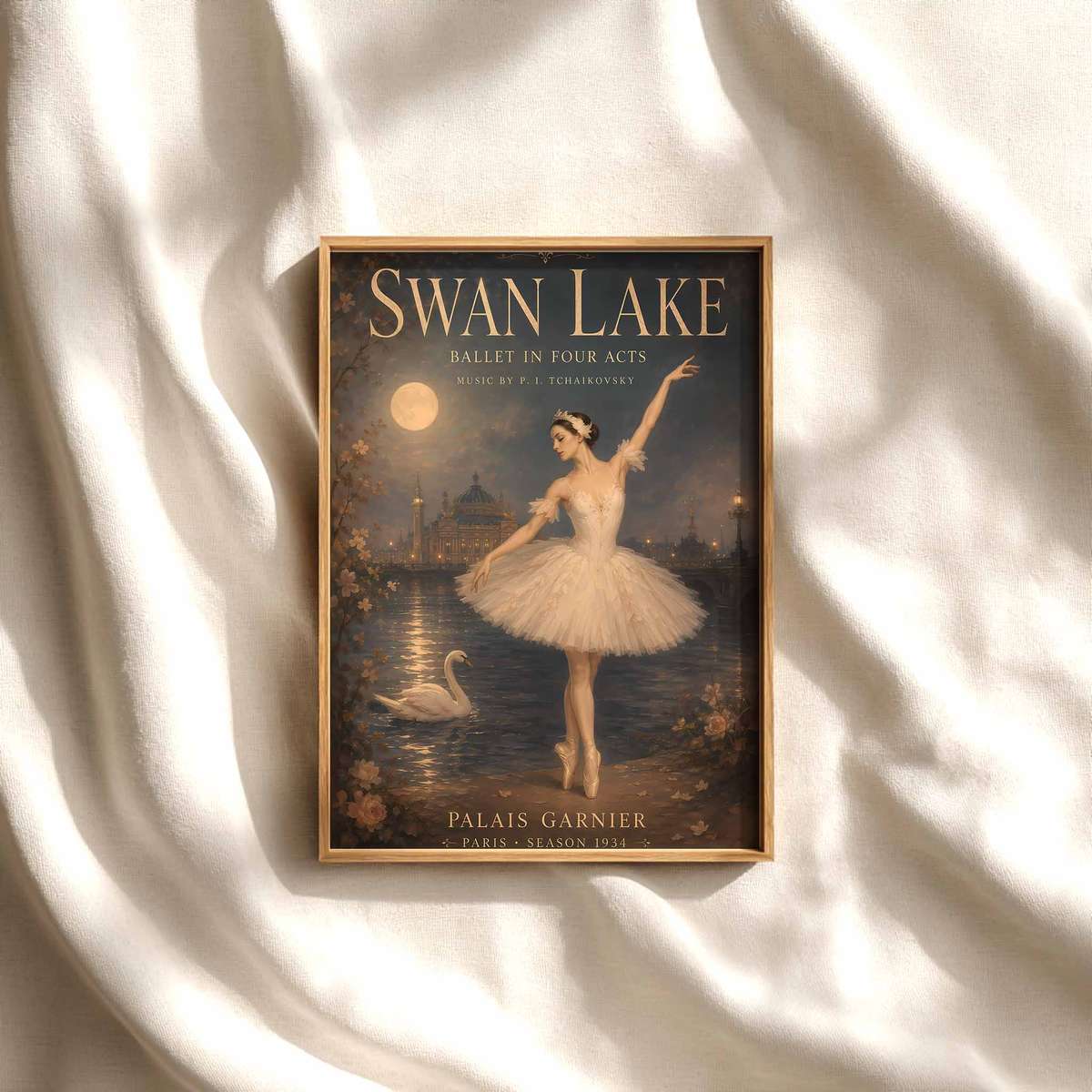
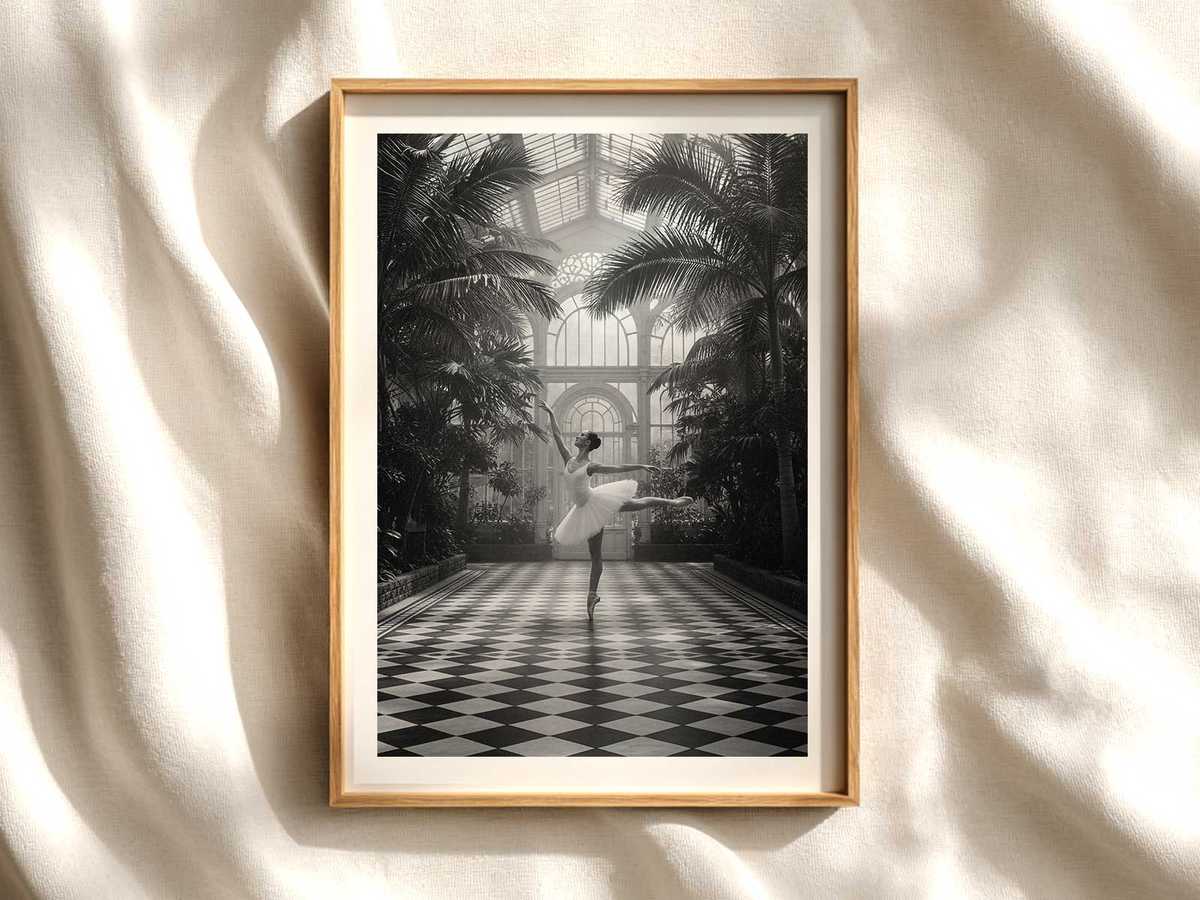
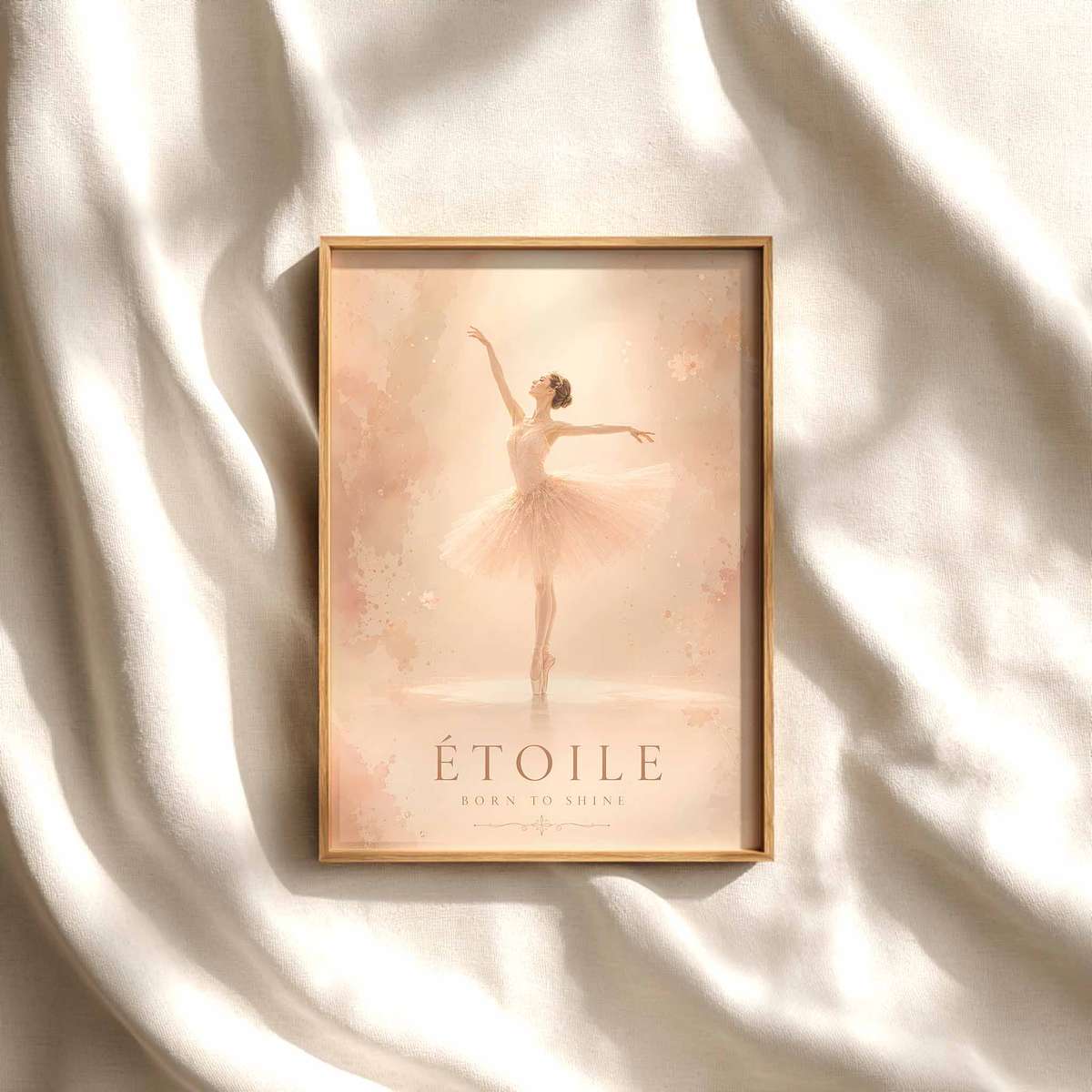
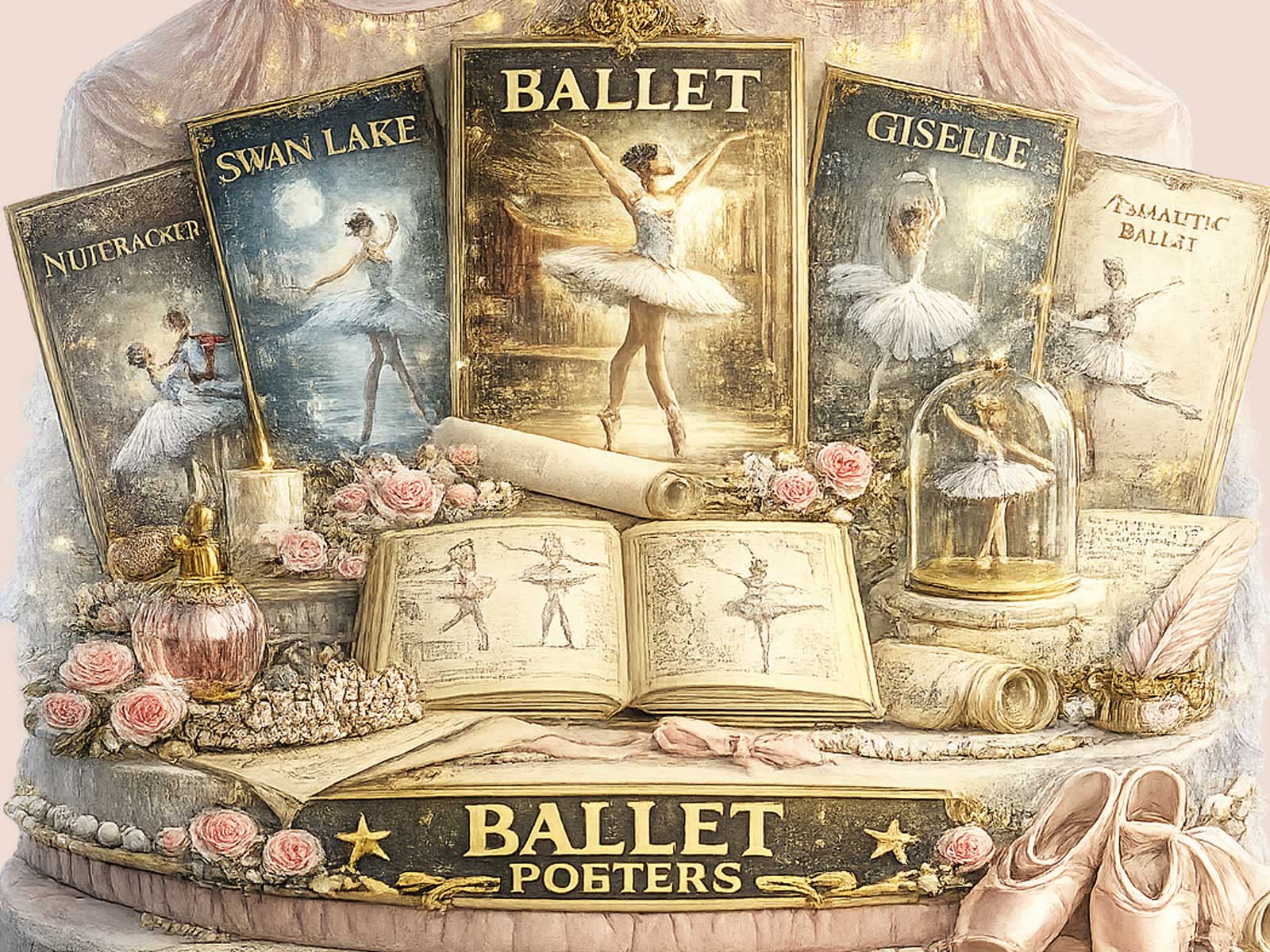
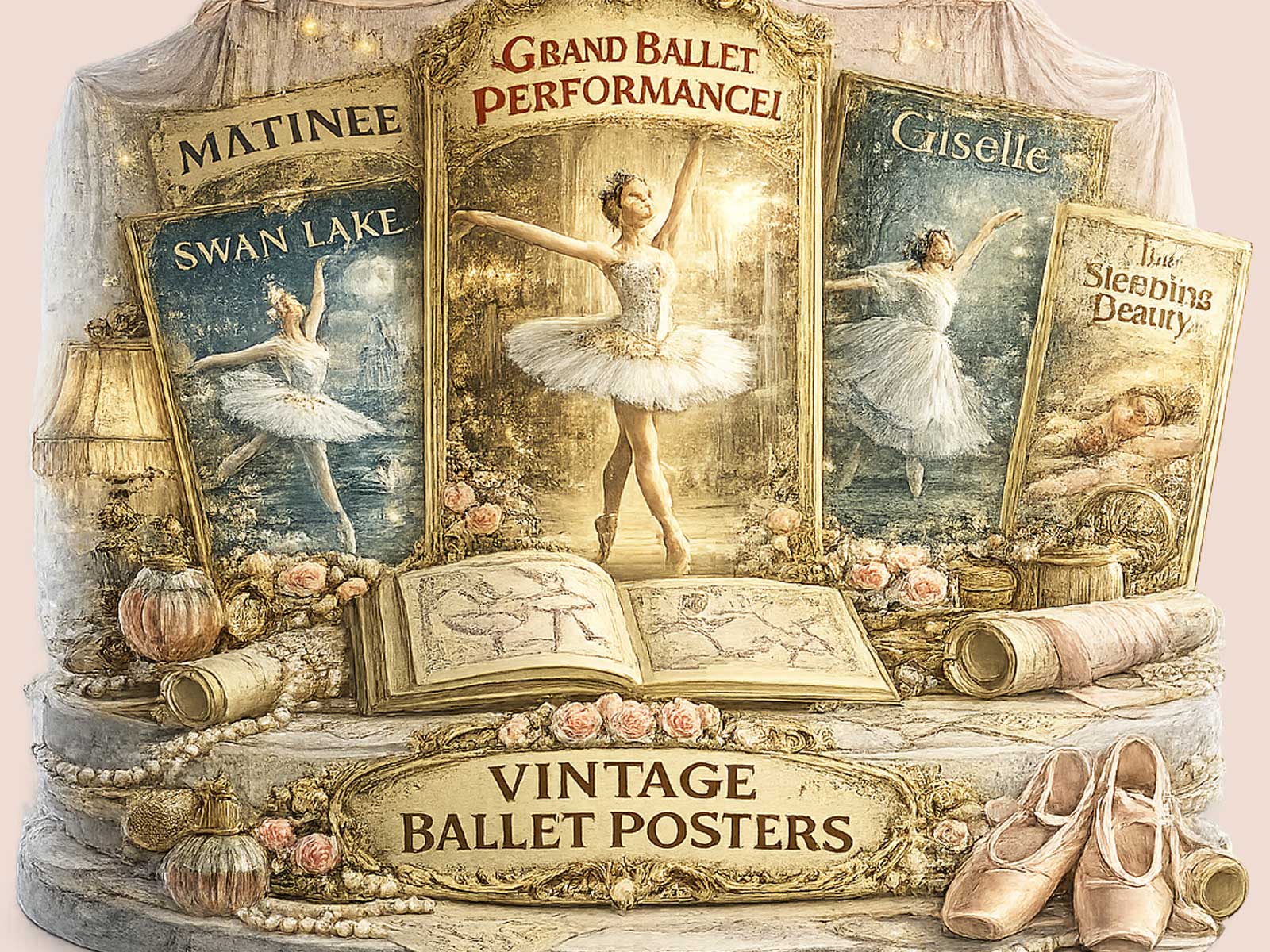
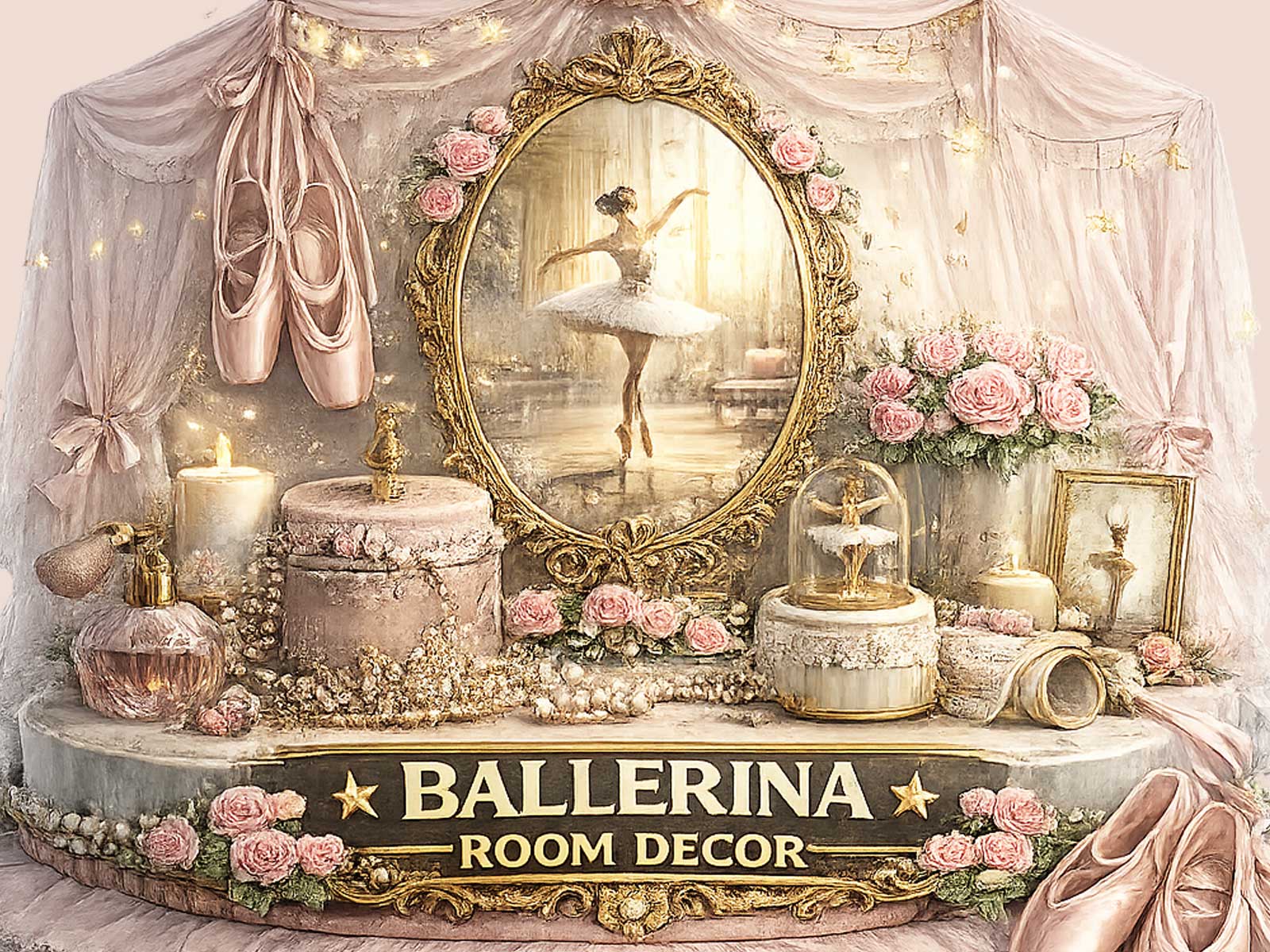
The first impression of a ballerina poster is immediate and deliberate: a single figure becomes the visual heart that orders everything around her. Historic poster collections in major institutions show this plainly — theatre and ballet posters frequently place a dancer or ballerina at the centre, allowing her silhouette, posture and gaze to set the tone. In a poster drawn from the imagery of grand classical ballet, the ballerina is not merely an illustration; she is the dominant element that creates a stillness of noble bearing.
Visual structure: the ballerina as focal point
Graphic-design theory describes dominance and focal points as the core tools for visual hierarchy. A single large figure functions naturally as that focal point: scale, contrast and the surrounding whitespace direct the eye to the dancer first, then let the rest of the composition fall into place. When a poster gives the ballerina primacy, type, colour and negative space are arranged to support rather than compete with her line. The result is a calm, legible composition where the body itself structures the layout.
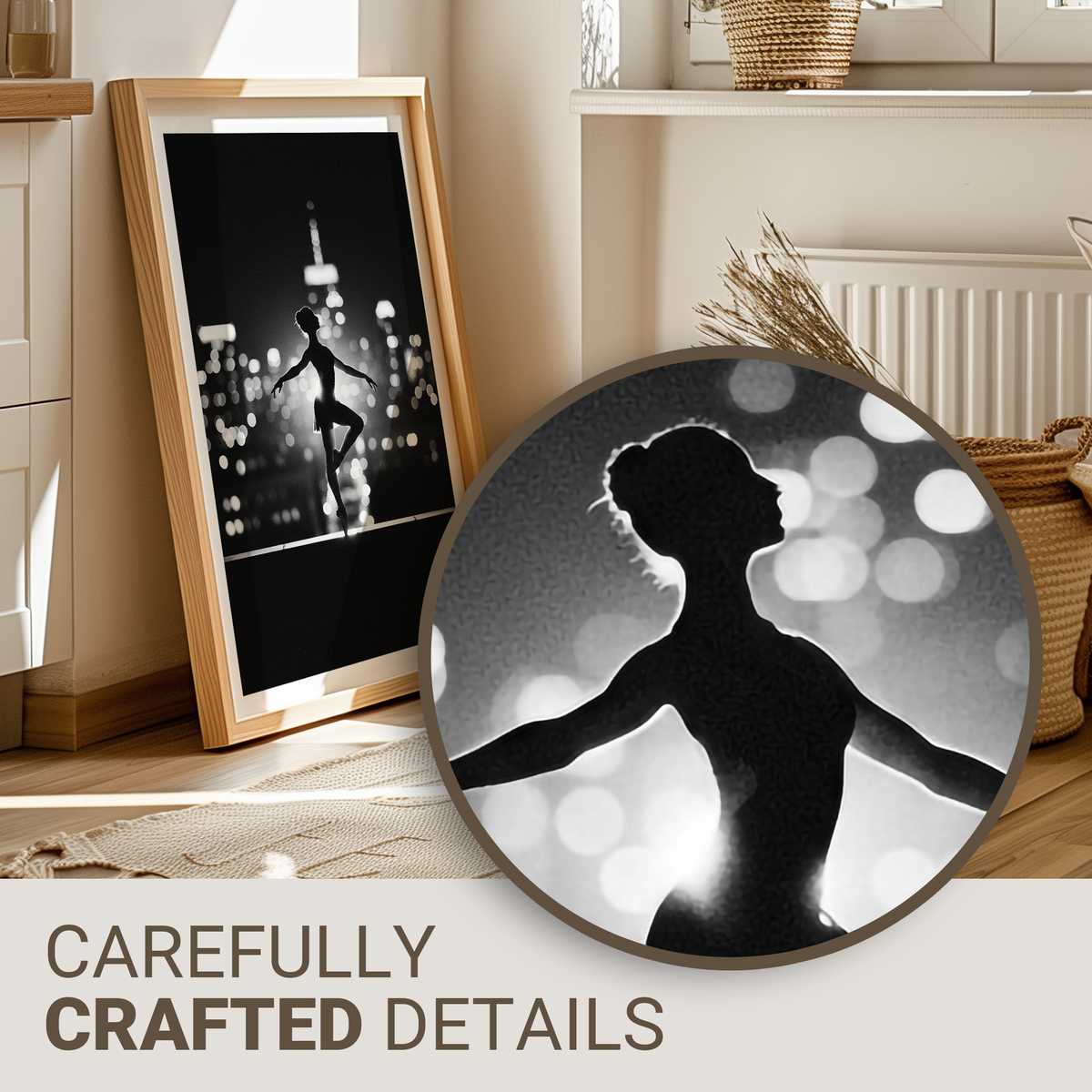
The classical ballerina’s posture — the extended line of an arm or the vertical clarity of a supported arabesque — provides a compositional spine. Dance scholarship and choreographers’ writings emphasize that the ballerina embodies ideals of line, poise and harmony; her carriage alone can communicate nobility and restraint without extra narrative devices. In a poster, that economy of expression translates into a visual authority that feels timeless and composed.
[IMAGE_INSERT_ARTICLE_01]
Atmosphere and décor: why a dancer-centered image elevates a room
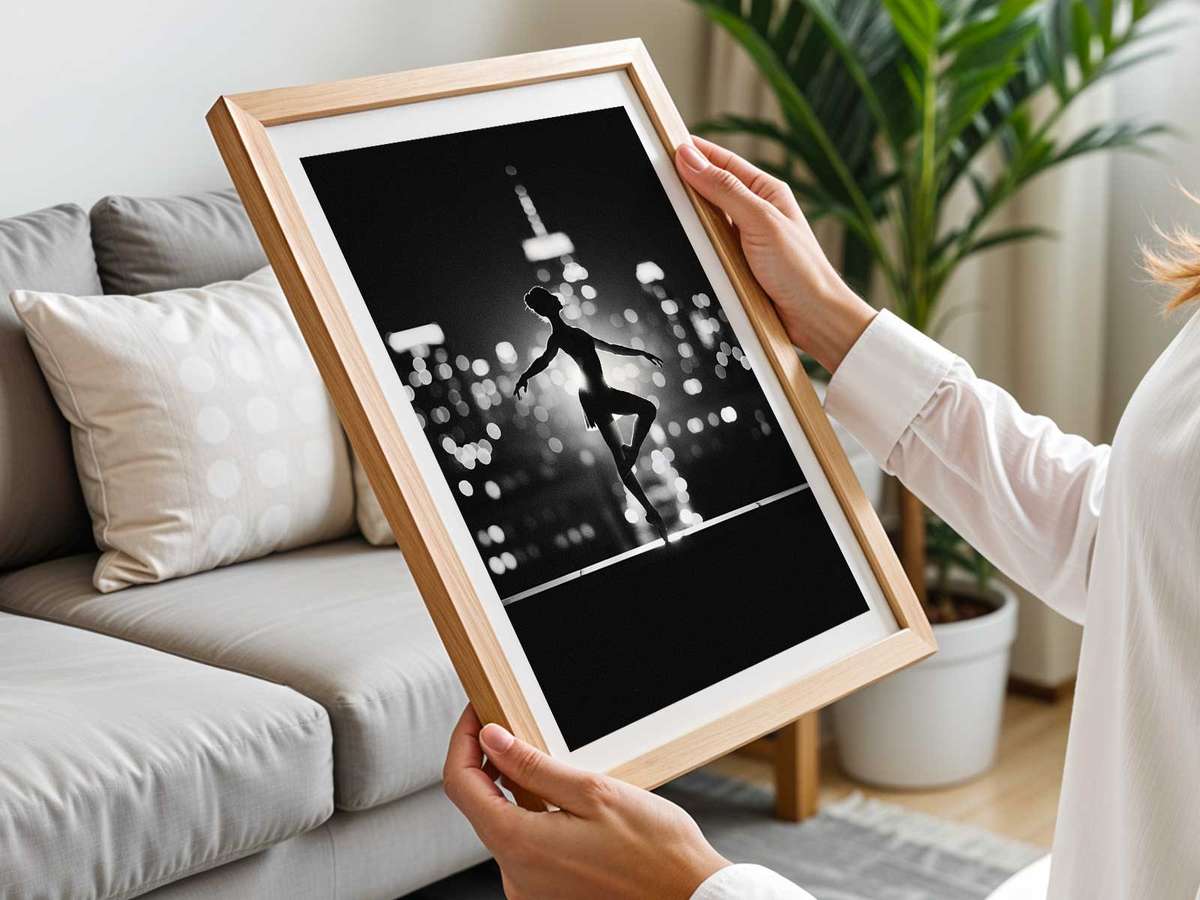
Because a dancer-focused poster foregrounds human line and balance, it introduces an elegance that is both decorative and emotional. Lighting, framing and pose — techniques long used in the art-historical treatment of ballet imagery — lift the principal dancer as the noble centre of attention. On a wall, this creates a quiet focal point that anchors a room: the poster’s vertical and diagonal lines complement furniture and architectural details, while its restrained visual language avoids clutter. The presence of a poised figure subtly refines a space, offering a sense of order and calm.
Emotionally, a ballerina image invites personal connection without prescribing a story. Her posture and line suggest discipline, grace and an inner focus, and those qualities resonate with viewers looking for décor that feels refined rather than flashy. This is why institutions that collect historic posters often preserve examples in which the principal dancer dominates the composition — the visual clarity makes the image both memorable and adaptable to contemporary interiors.
When you choose a ballerina poster inspired by the grand classical tradition, you bring into your home an image that functions as more than decoration. It is a designed focal point: a source of compositional order, a carrier of quiet nobility and a visual promise that elegance can be conveyed simply through the enduring language of the human line.