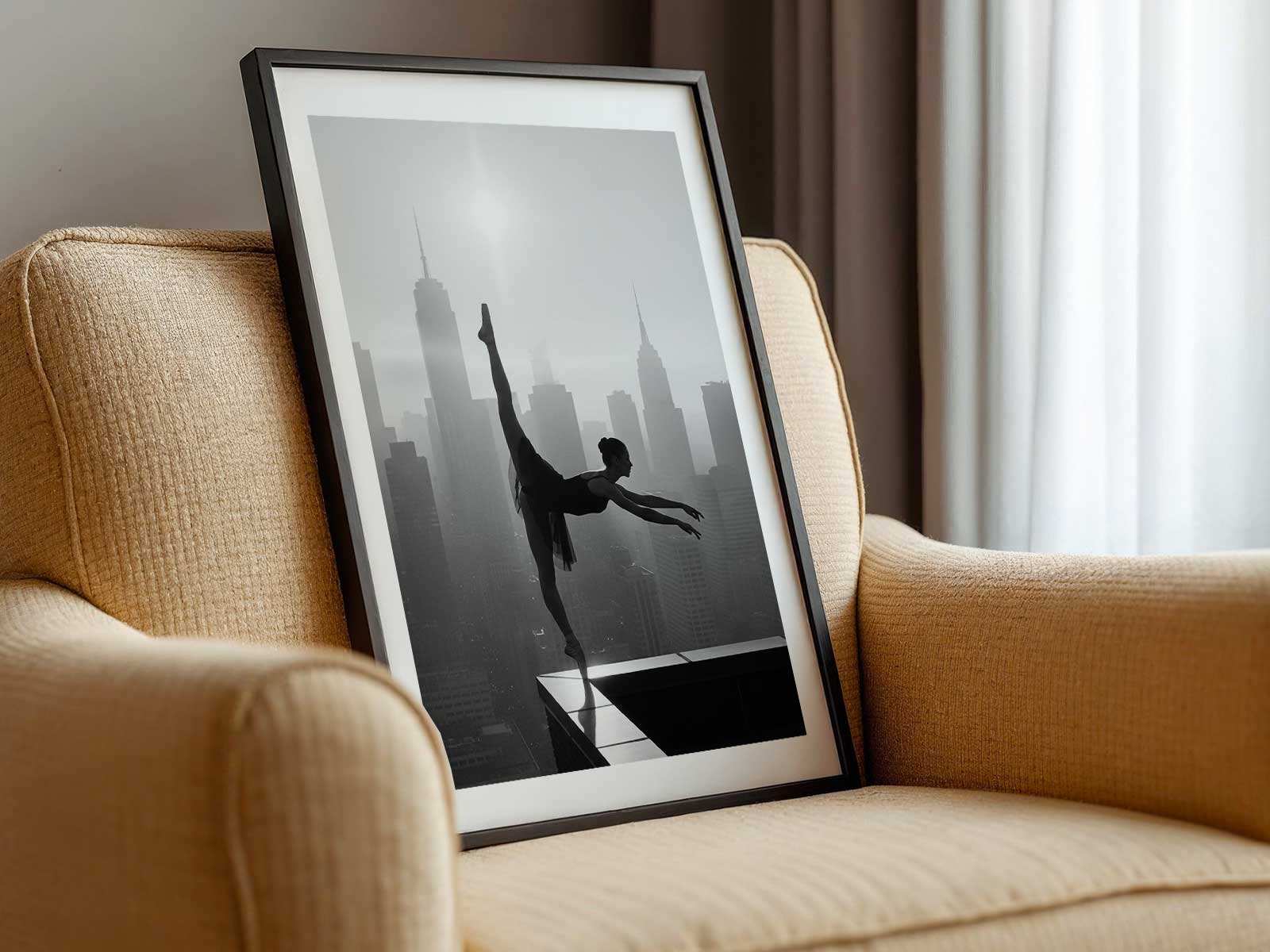
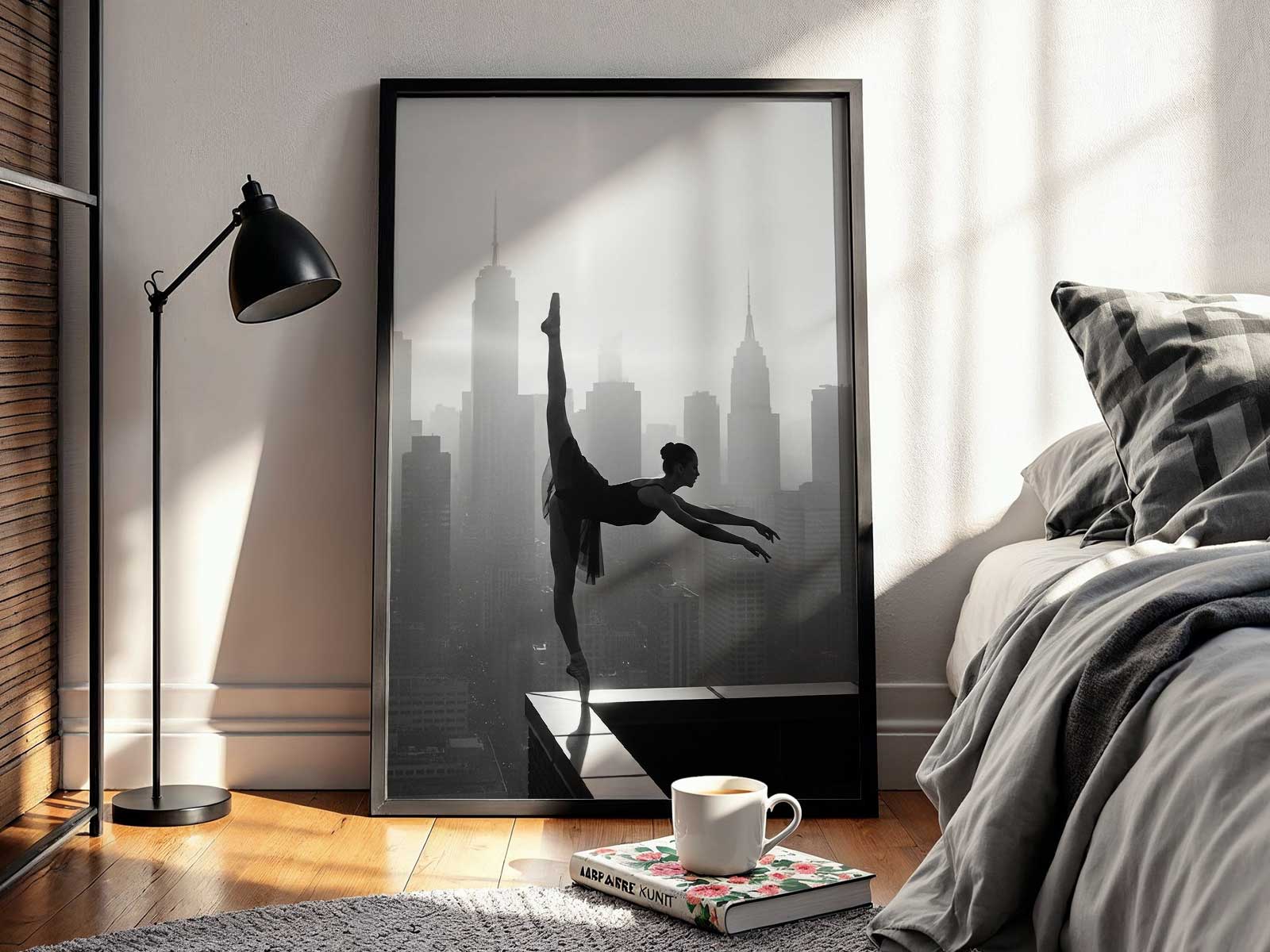
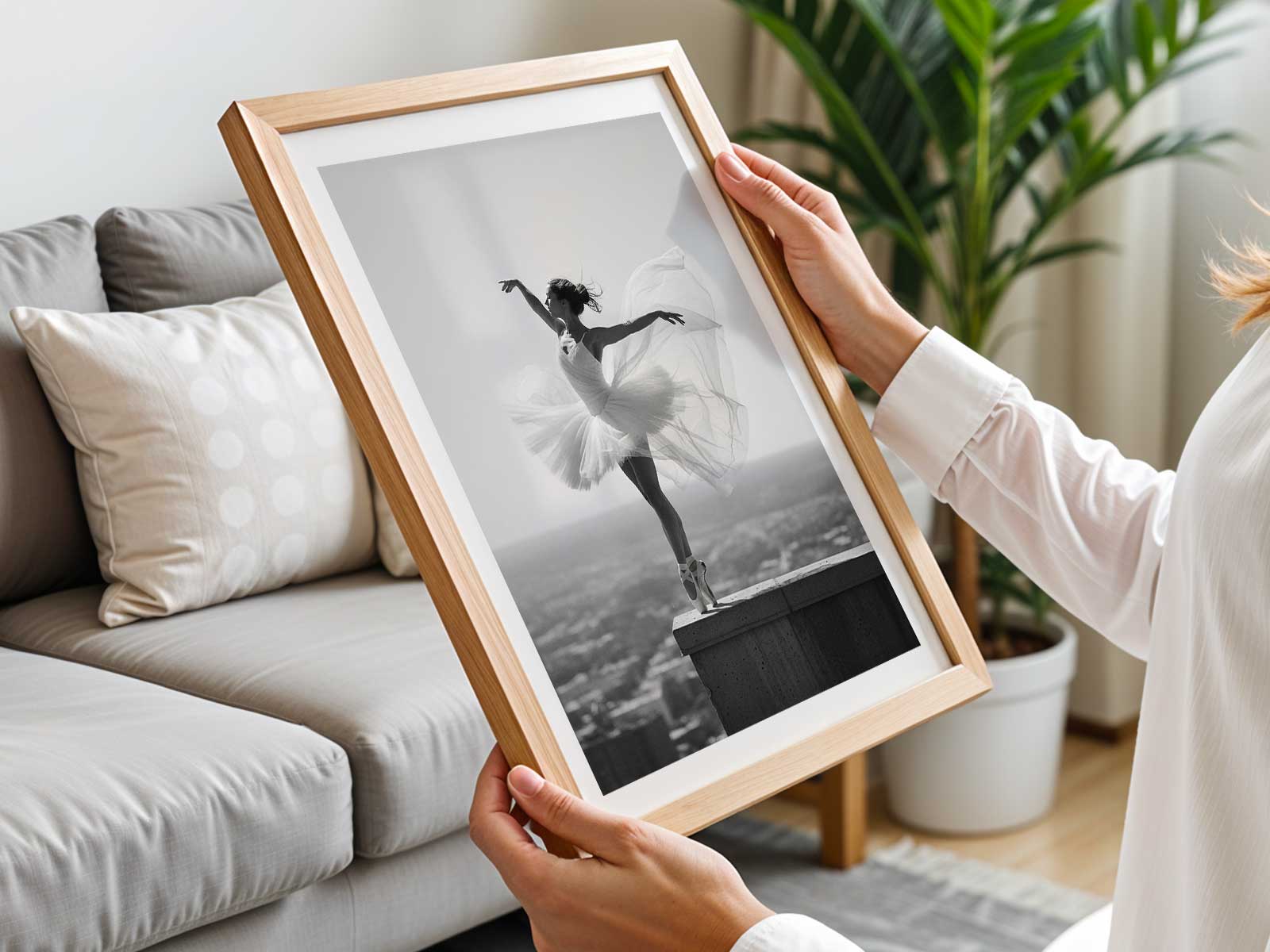
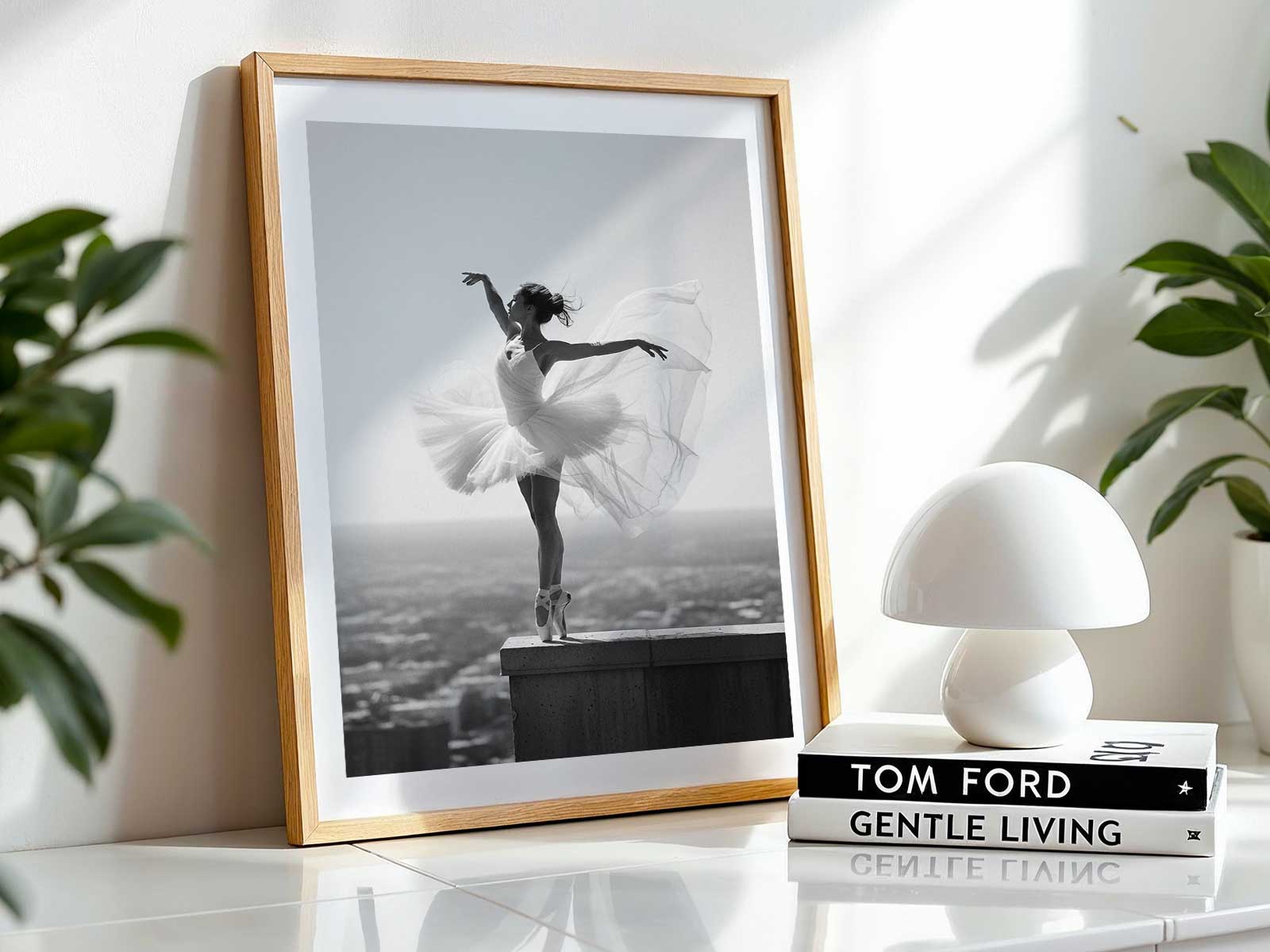
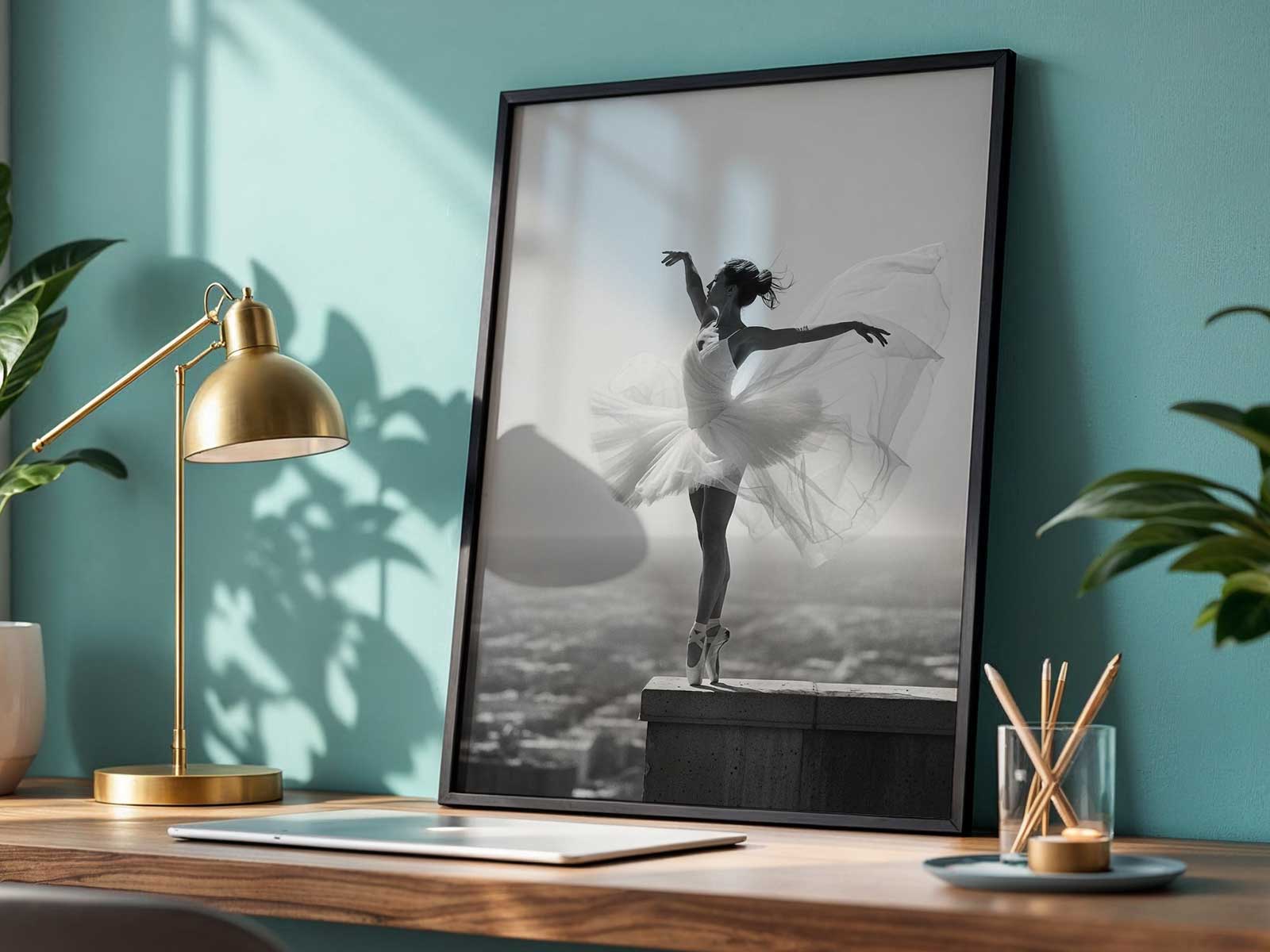
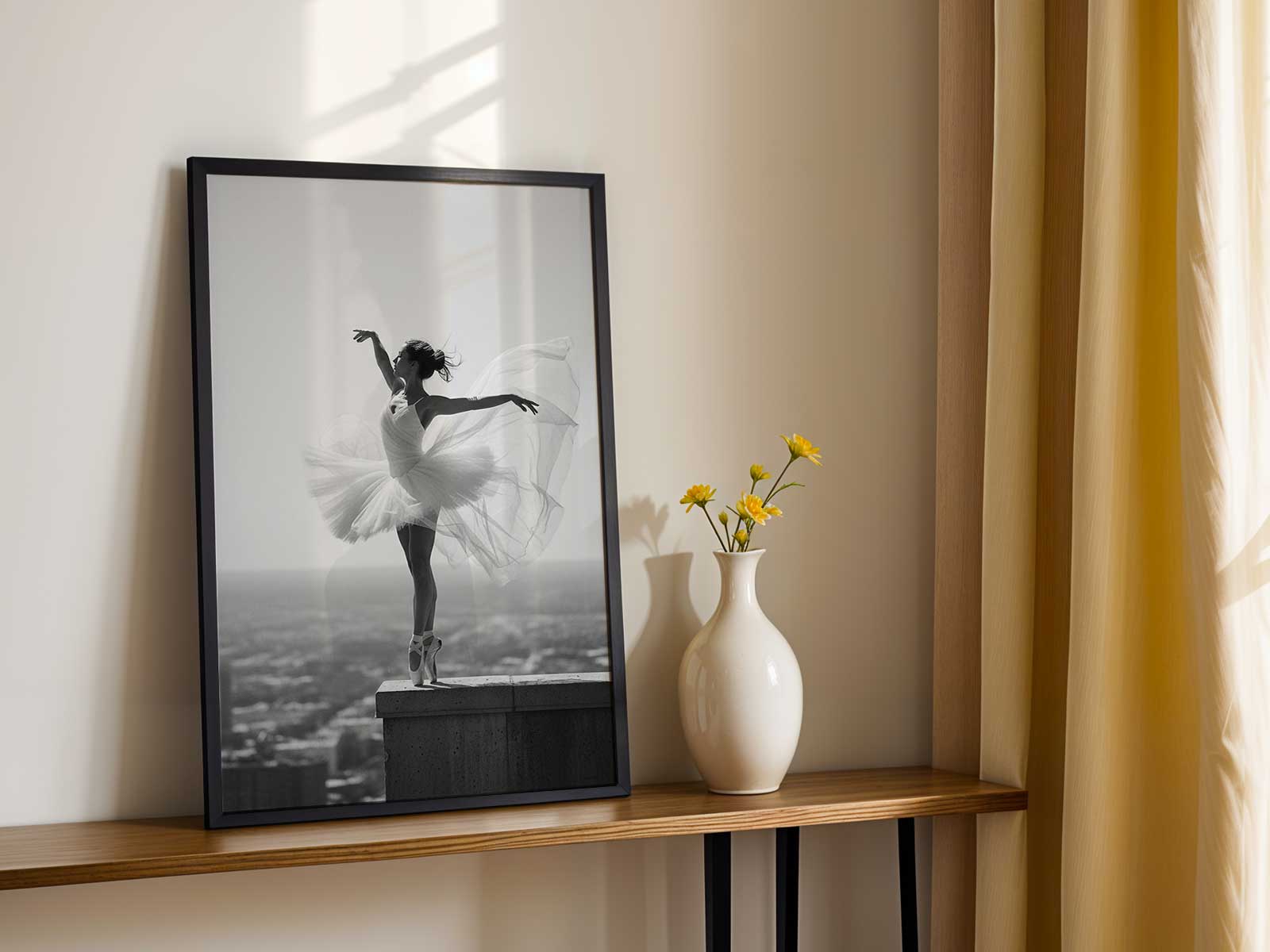
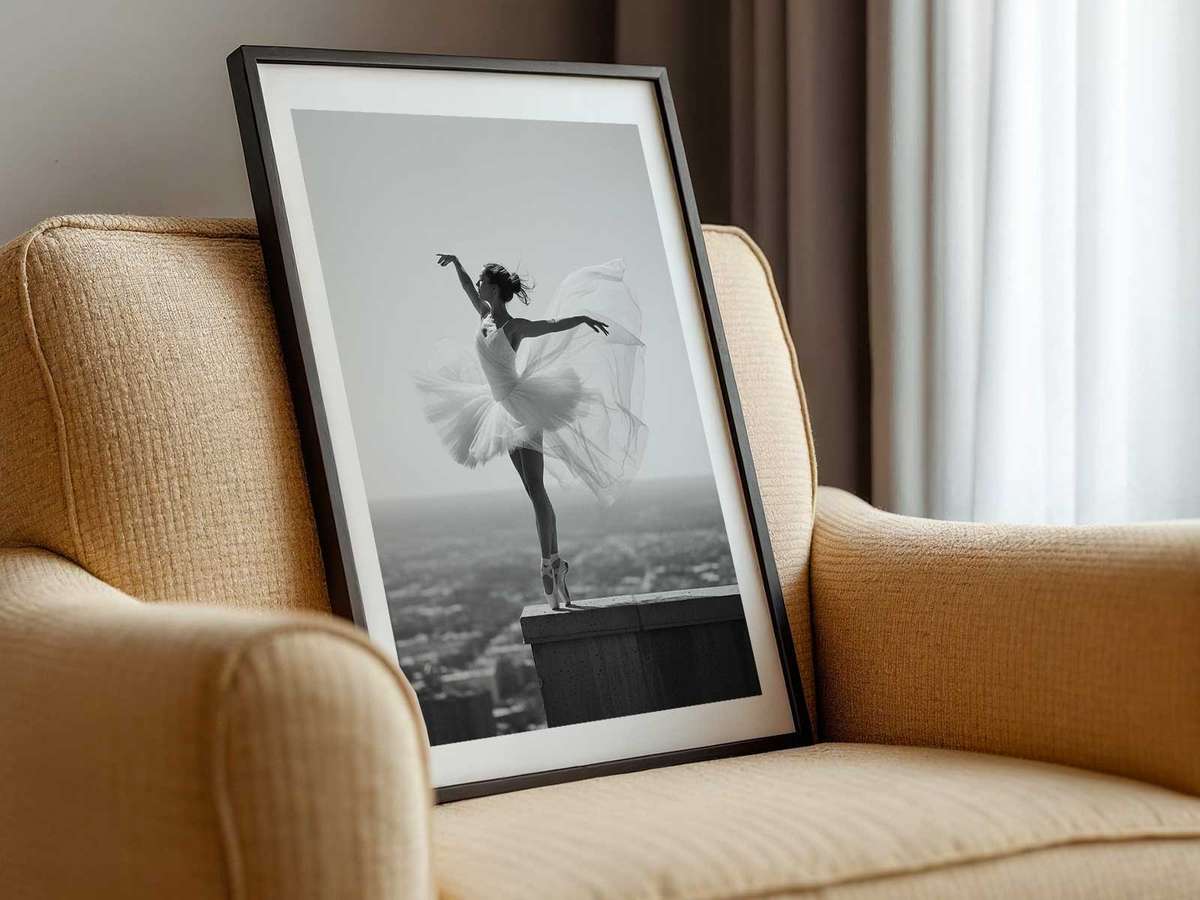
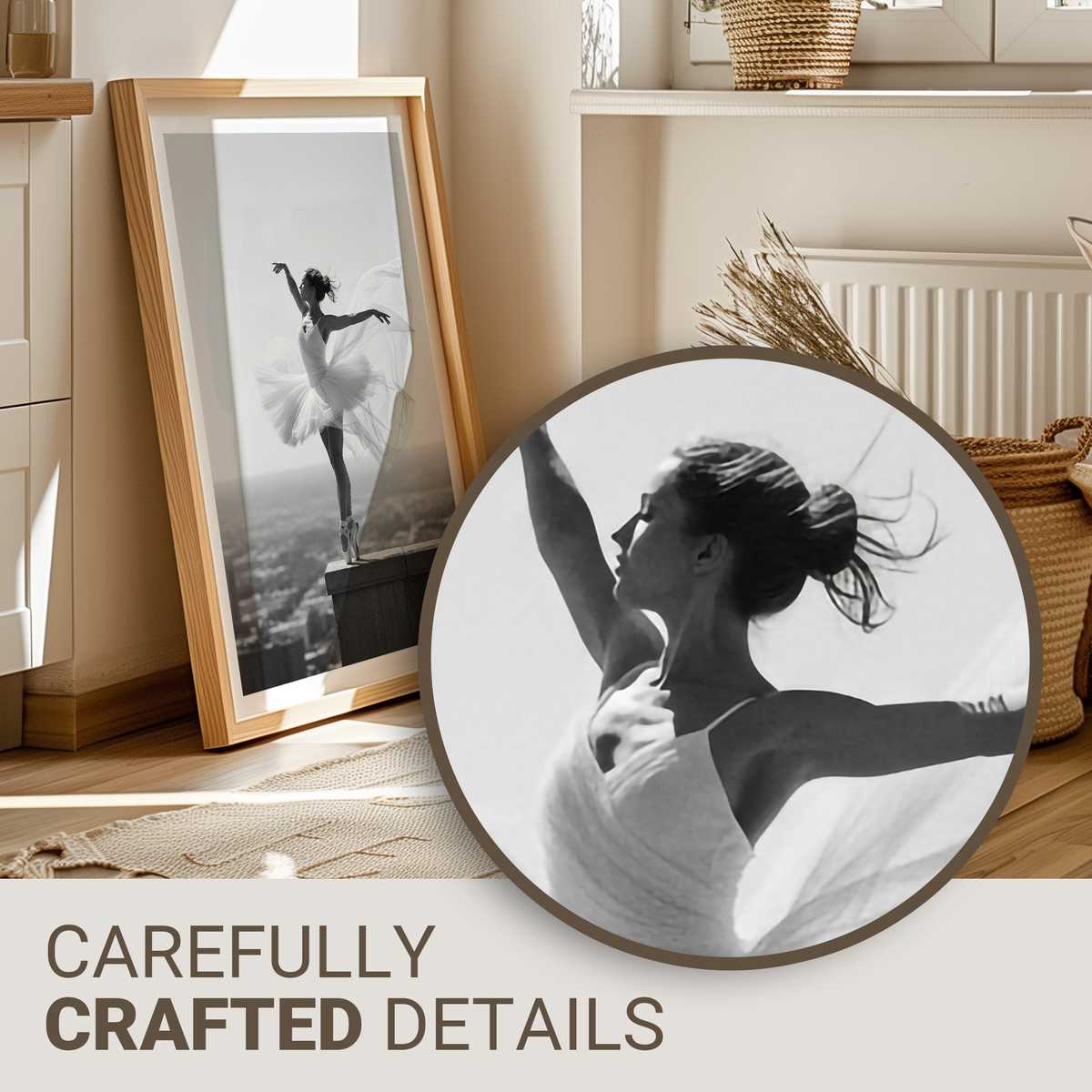
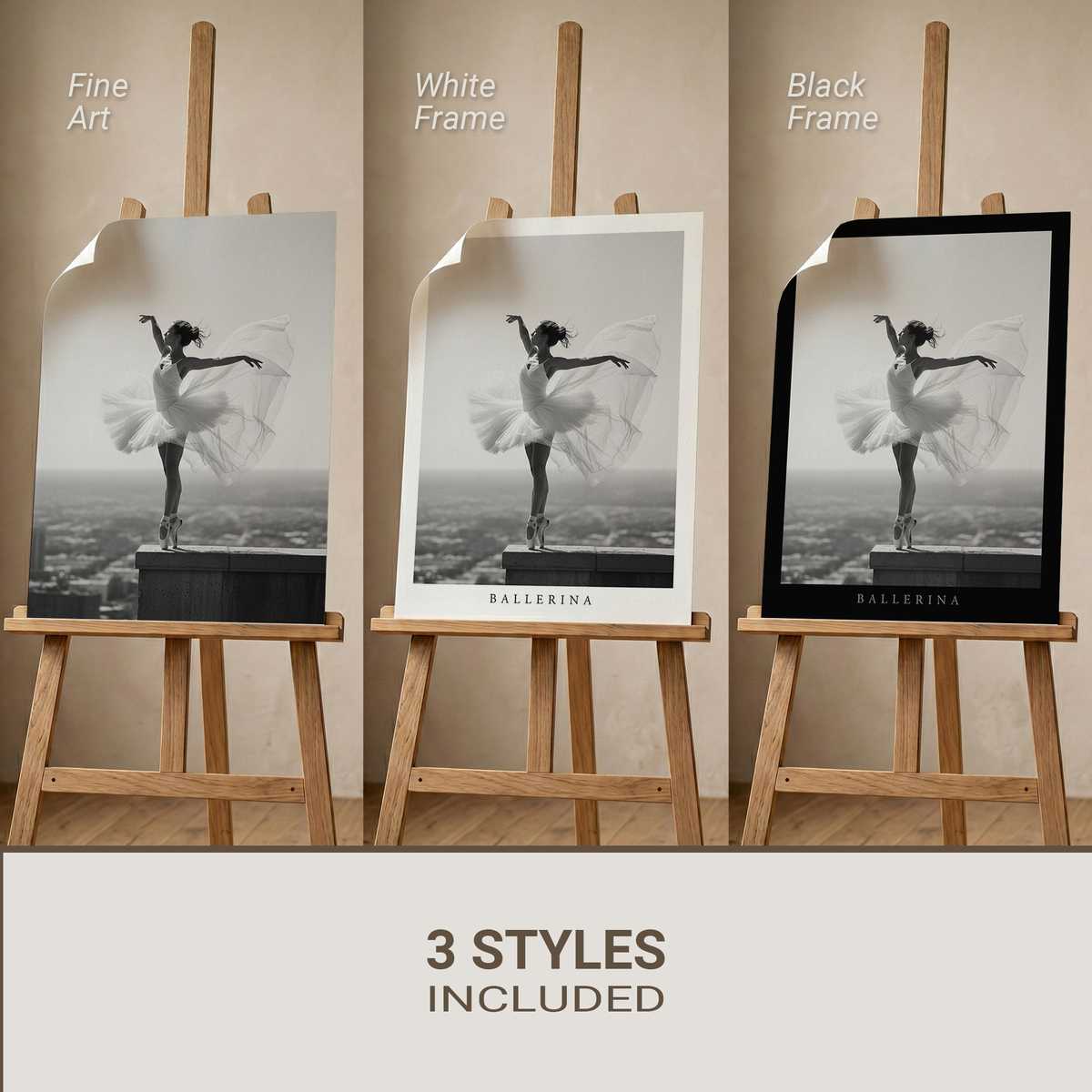
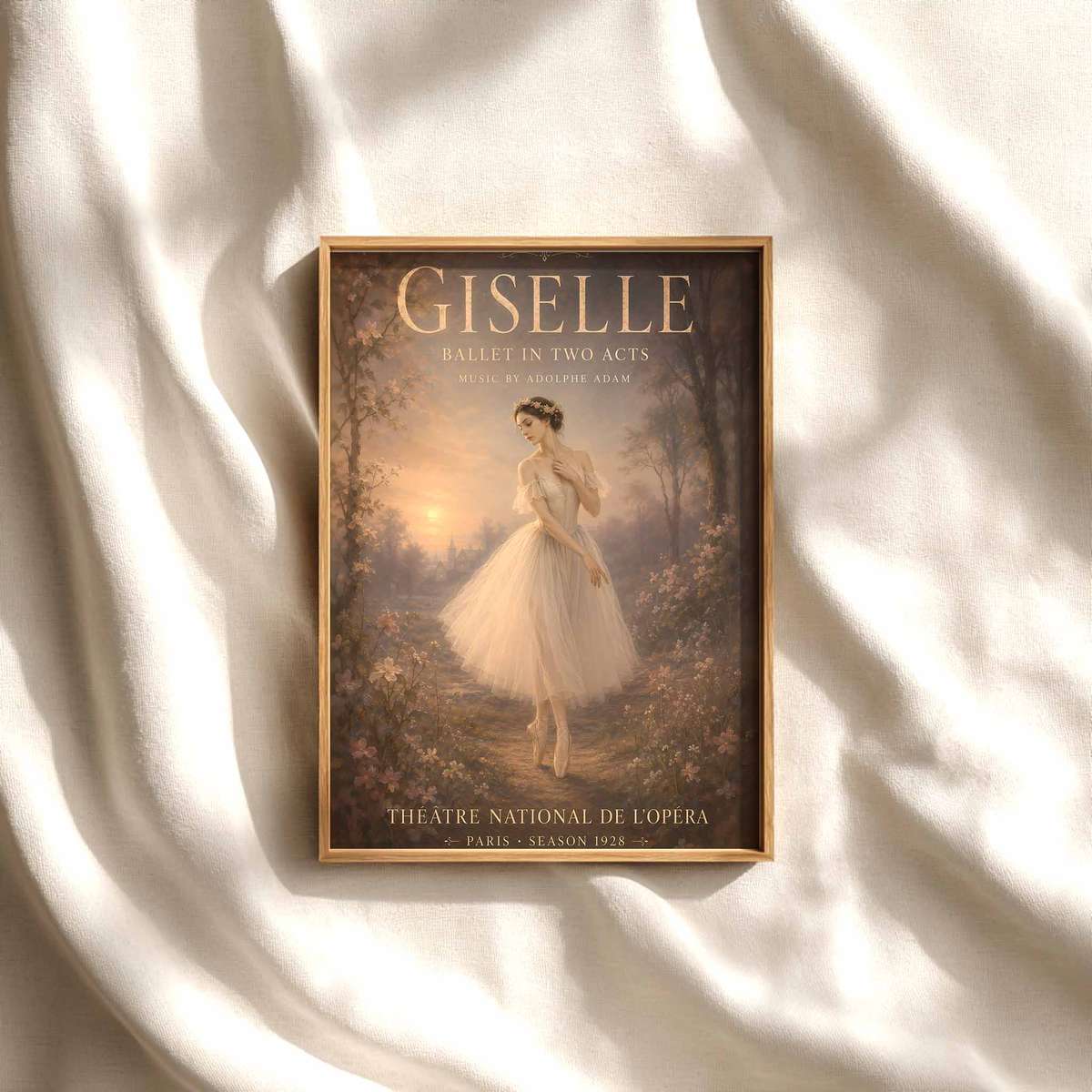
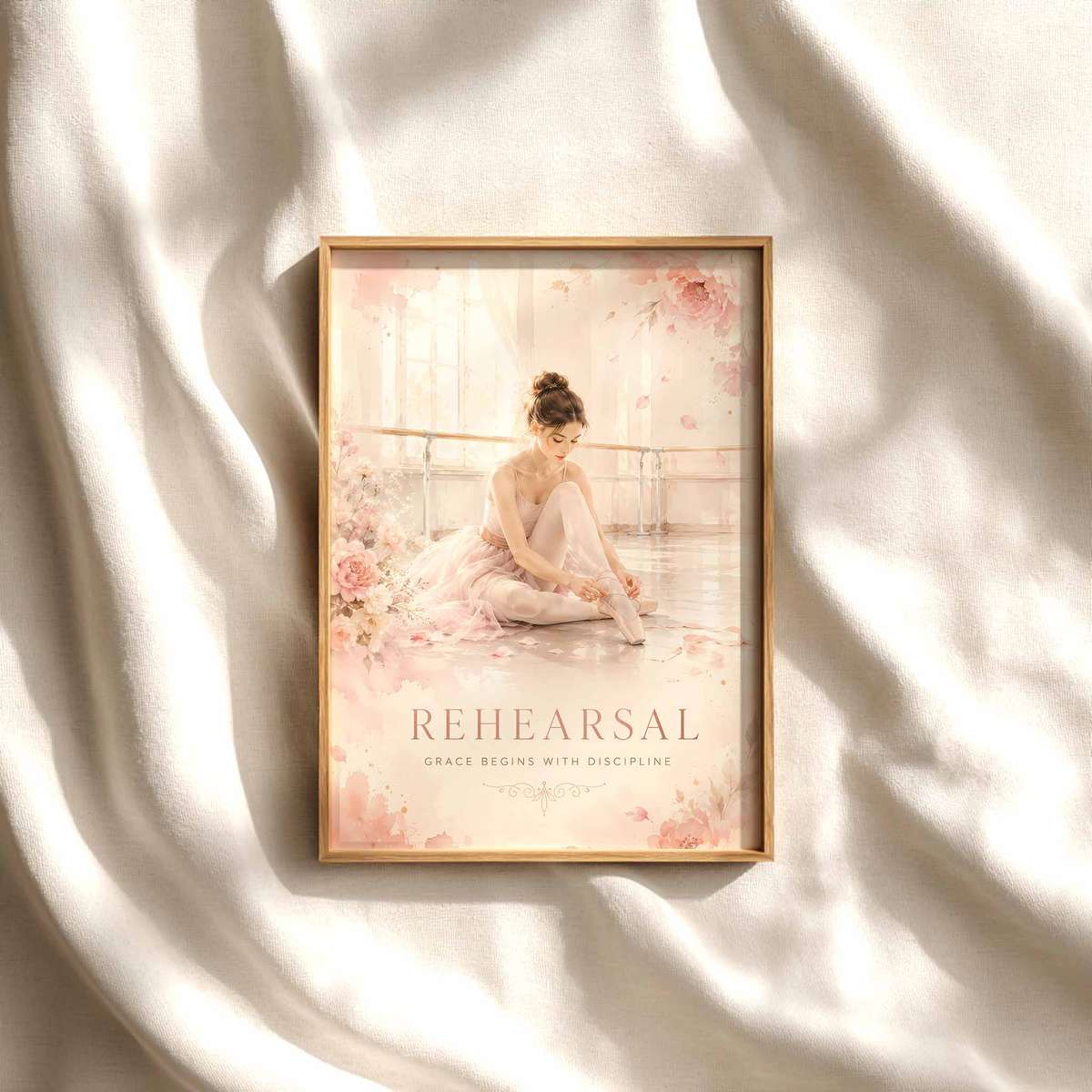
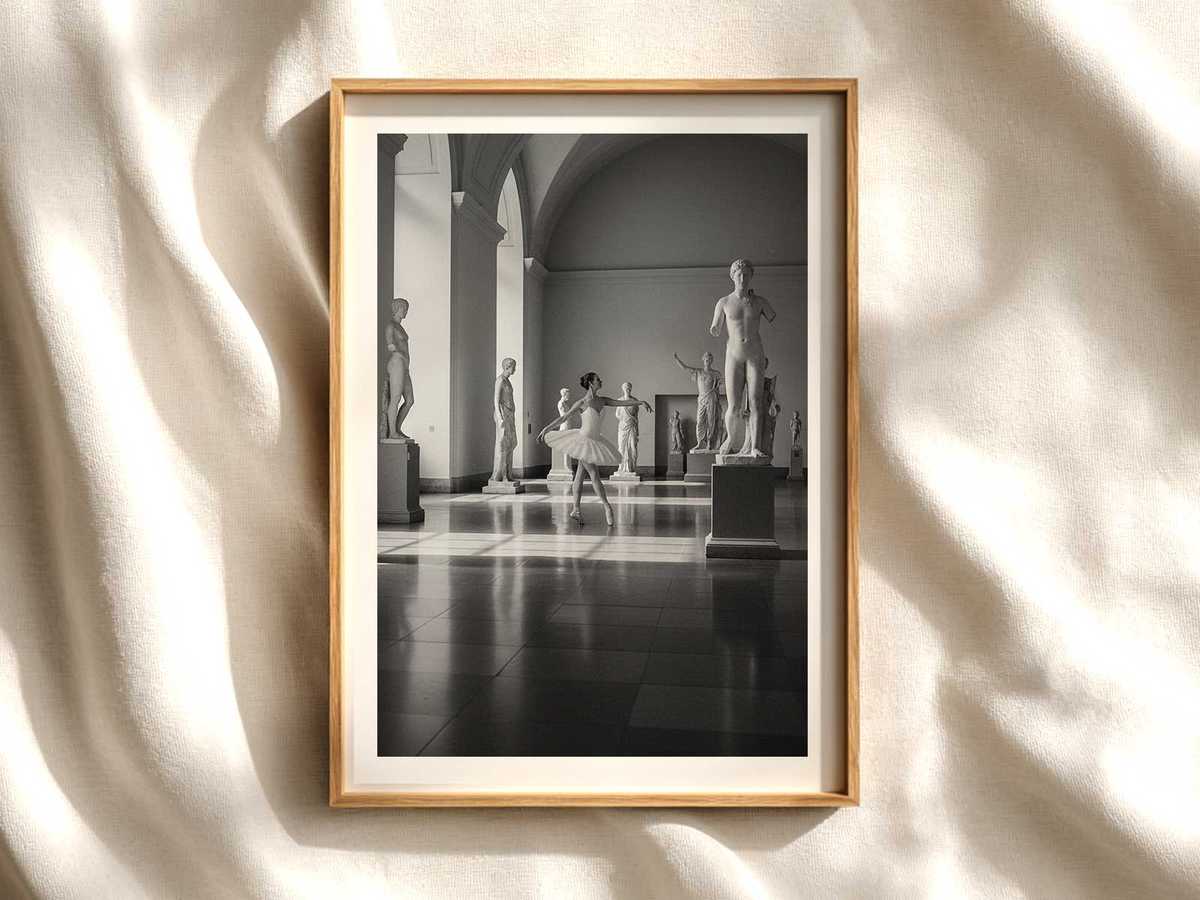
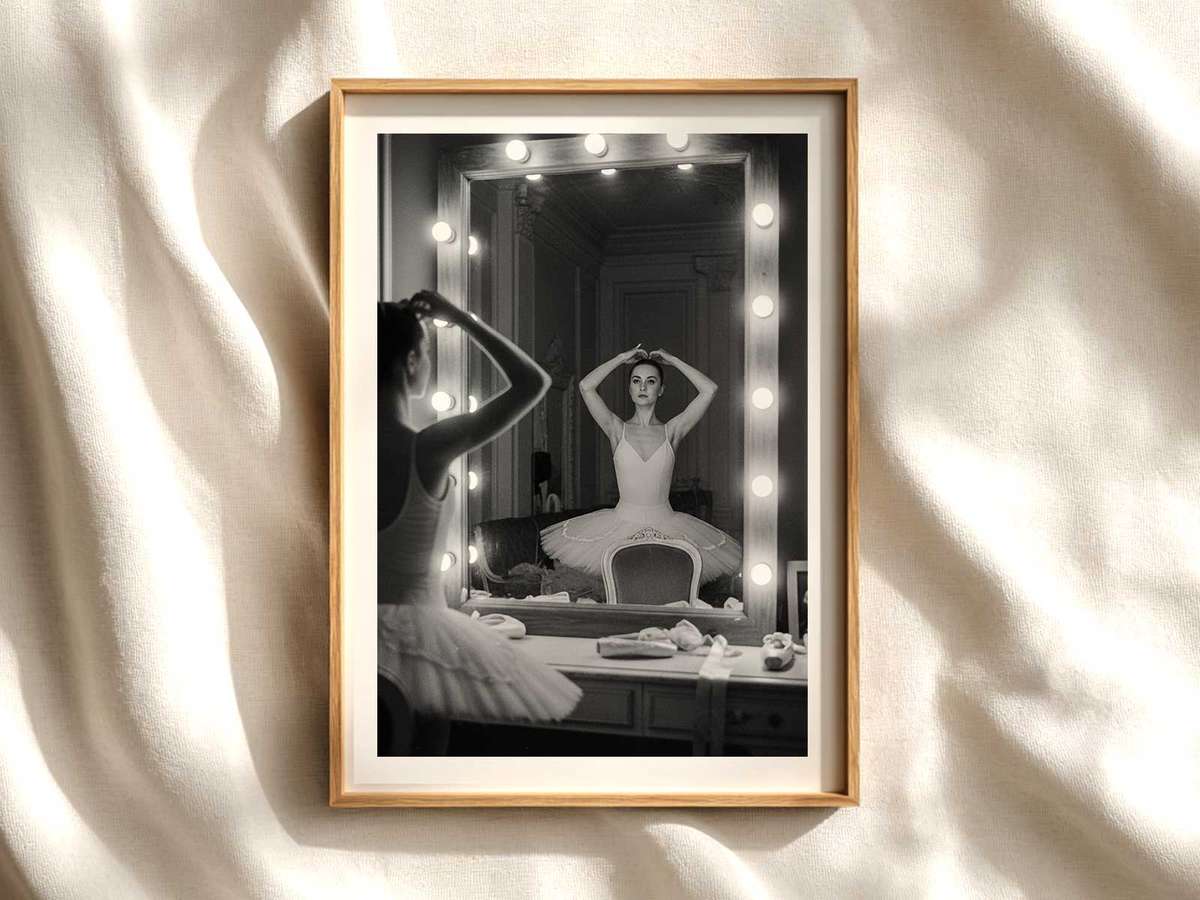
The first thing you notice is the silhouette: a single, lithe figure carved against the geometry of a sleeping city. In a ballet poster where a ballerina stands poised beneath streetlights and skyline silhouettes, the human line becomes an instrument of feeling. The delicacy of her arm, the clean curve of the neck, the arrested balance on a toe—each element reads like a sentence in a quiet play, and the nocturnal urban backdrop answers with a tougher, architectural rhythm. Together they create an image with the tension of a stage moment and the intimacy of a private reverie.
Visual Contrast That Feels Like Narrative
Contrast is where the drama lives. The ballerina’s soft contours and implied motion are amplified when set against the hard edges of buildings and lamplight. Her line—long limbs, lifted chest, outwardly rotated foot—acts as a visual melody that softens the city’s chords. That juxtaposition makes the scene feel almost theatrical: light focused on a performer, the city providing a galvanized, sometimes indifferent proscenium. On a wall, this dynamic invites the eye to pause and imagine the before and after of the captured instant, so the poster functions not only as decoration but as a story starter.
Because the figure is reduced to silhouette, every millimeter of posture matters. The tilt of the head, the extension of an arm, the angle of the torso—these small choices create an emotional vocabulary that the viewer understands instantly. The absence of facial detail turns gesture into message; the viewer supplies a mood, a memory, or a longing. That invitation to participate is what makes a dancer-centered poster feel personal and enduring.
[IMAGE_INSERT_ARTICLE_01]
How a Dancer-Centered Image Elevates a Room
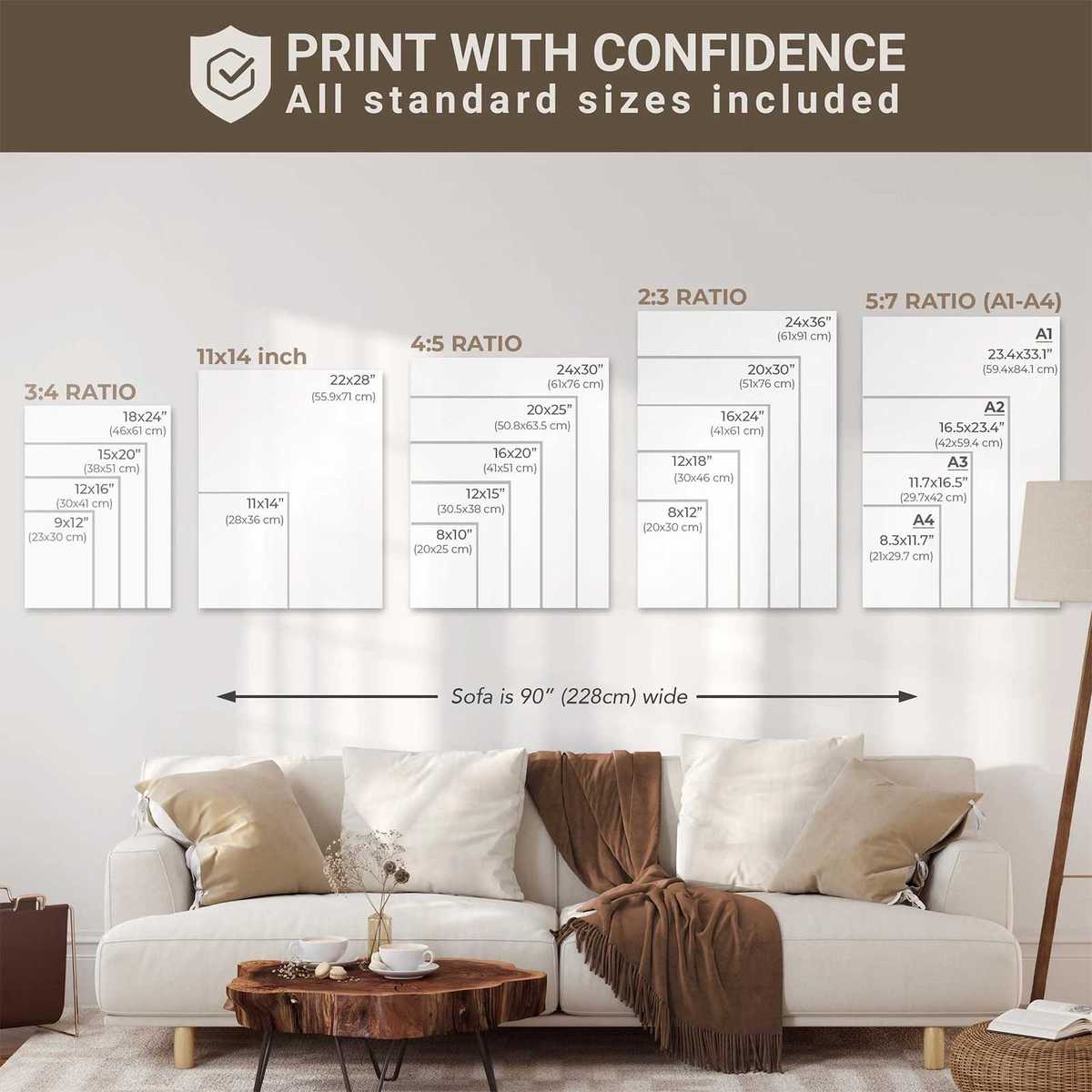
A ballerina-led poster brings a sense of refined composure to any interior. Its vertical emphasis and elongated lines complement high ceilings, narrow hallways, or above-a-sofa placement, while the night-city palette—deep charcoals, muted blues, warm streetlight amber—anchors softer textiles and metallic accents. More than matching colour schemes, the image introduces an emotional density that furniture alone rarely achieves: poise that calms, tension that intrigues, and a quiet glamour that reframes the room as a thoughtful stage.
Emotionally, the poster offers both distance and intimacy. The city suggests a wider world and the sculptural silhouette offers an inward focus. Viewers who bring their own histories—of performances seen, lessons learned, or nights in the city—find the composition resonant. For those who never danced, the poster still communicates aspiration and grace: a reminder that precision and softness can coexist, that strength can be expressed as elegance.
Ultimately, a ballet poster built around a ballerina silhouette against a nocturnal cityscape is more than an image: it is a carefully balanced proposition. It asks to be looked at slowly and rewards repeated glances. On your wall, it becomes a quiet proclamation of taste—an artwork that holds a room together with a single, eloquent line.