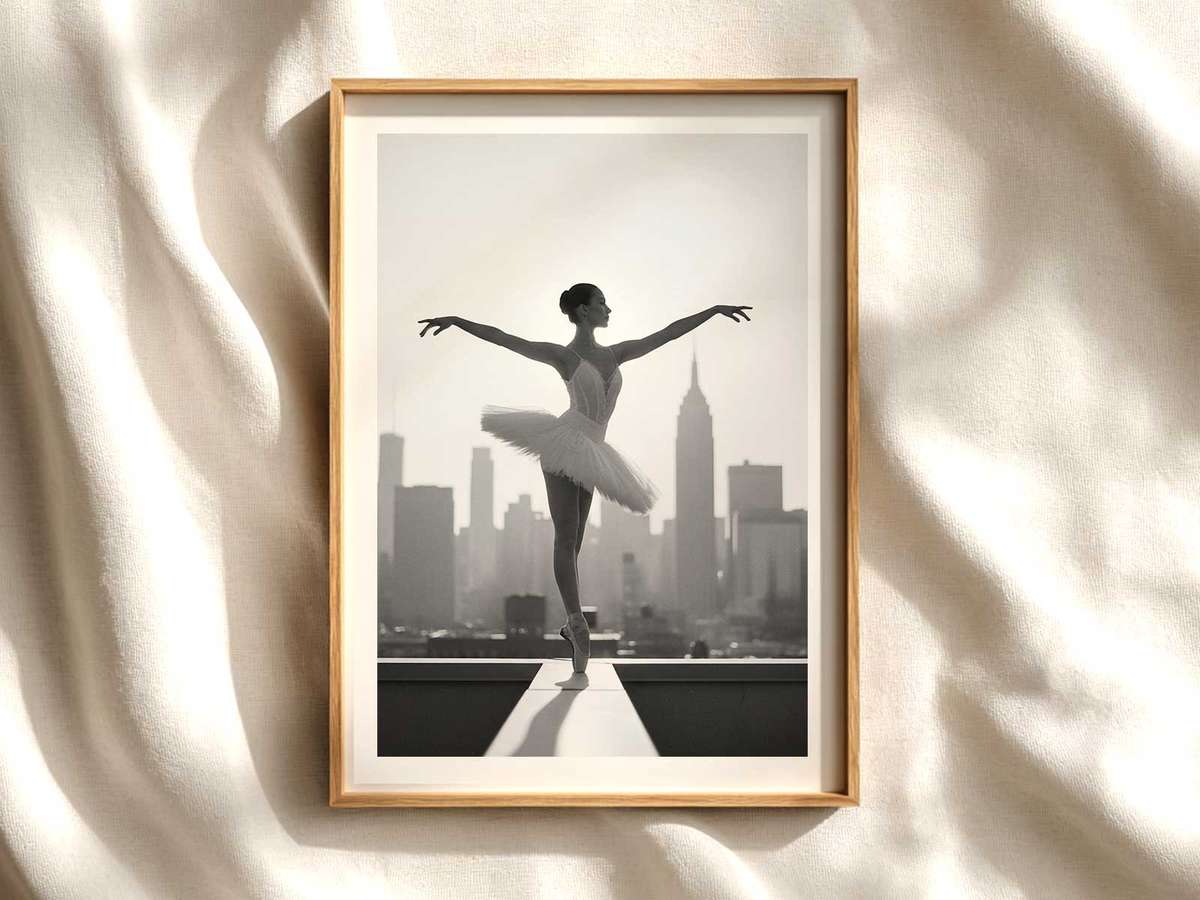
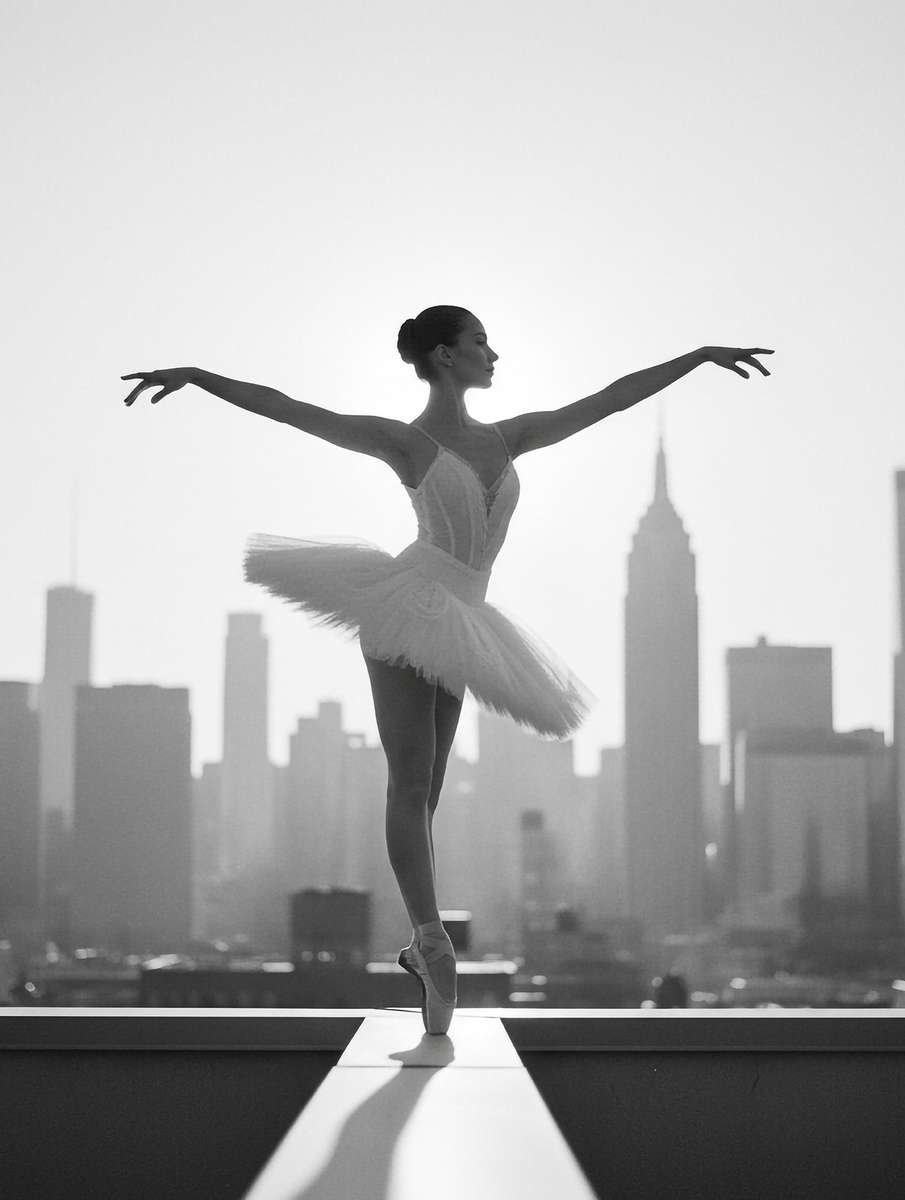
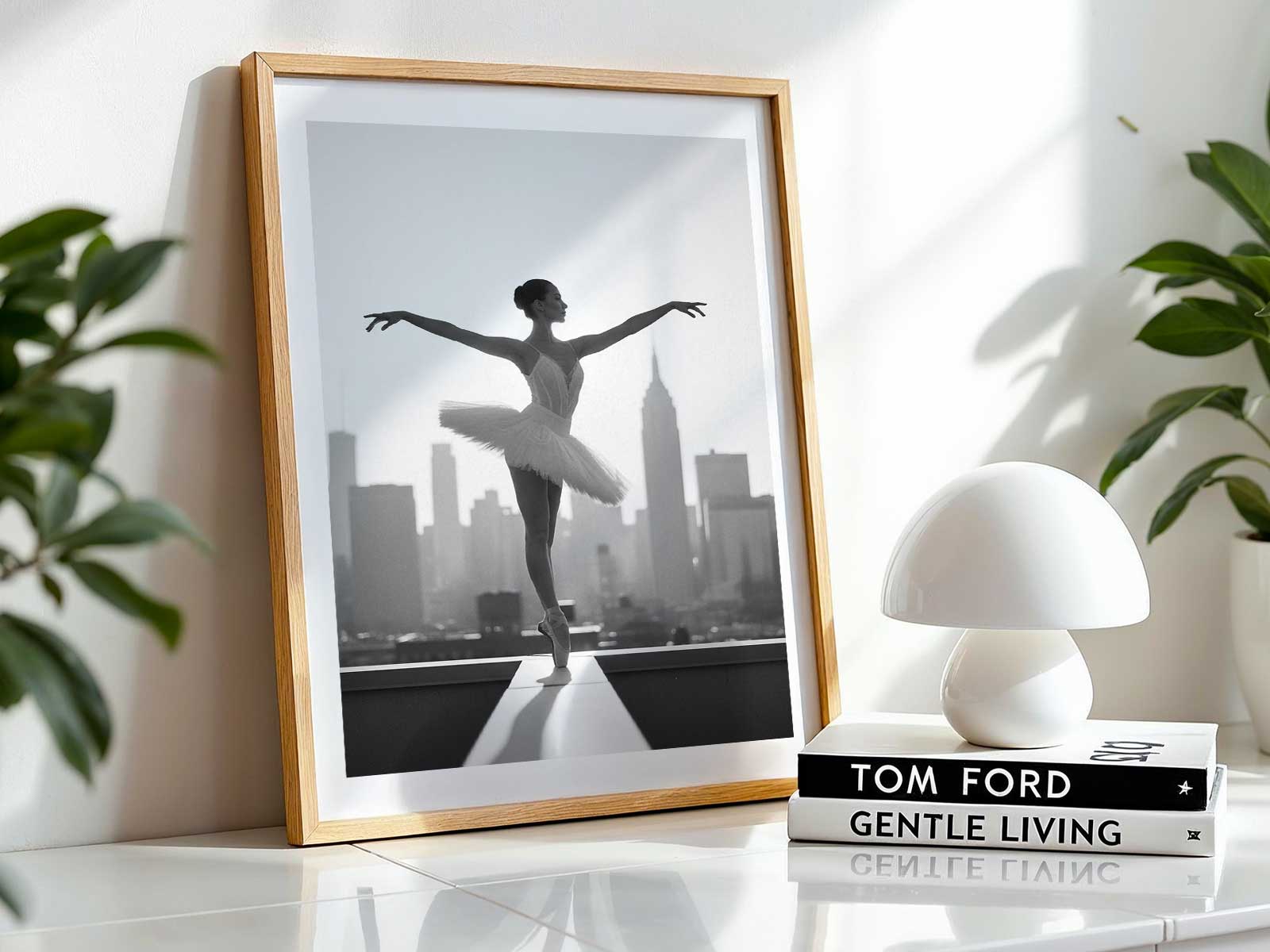
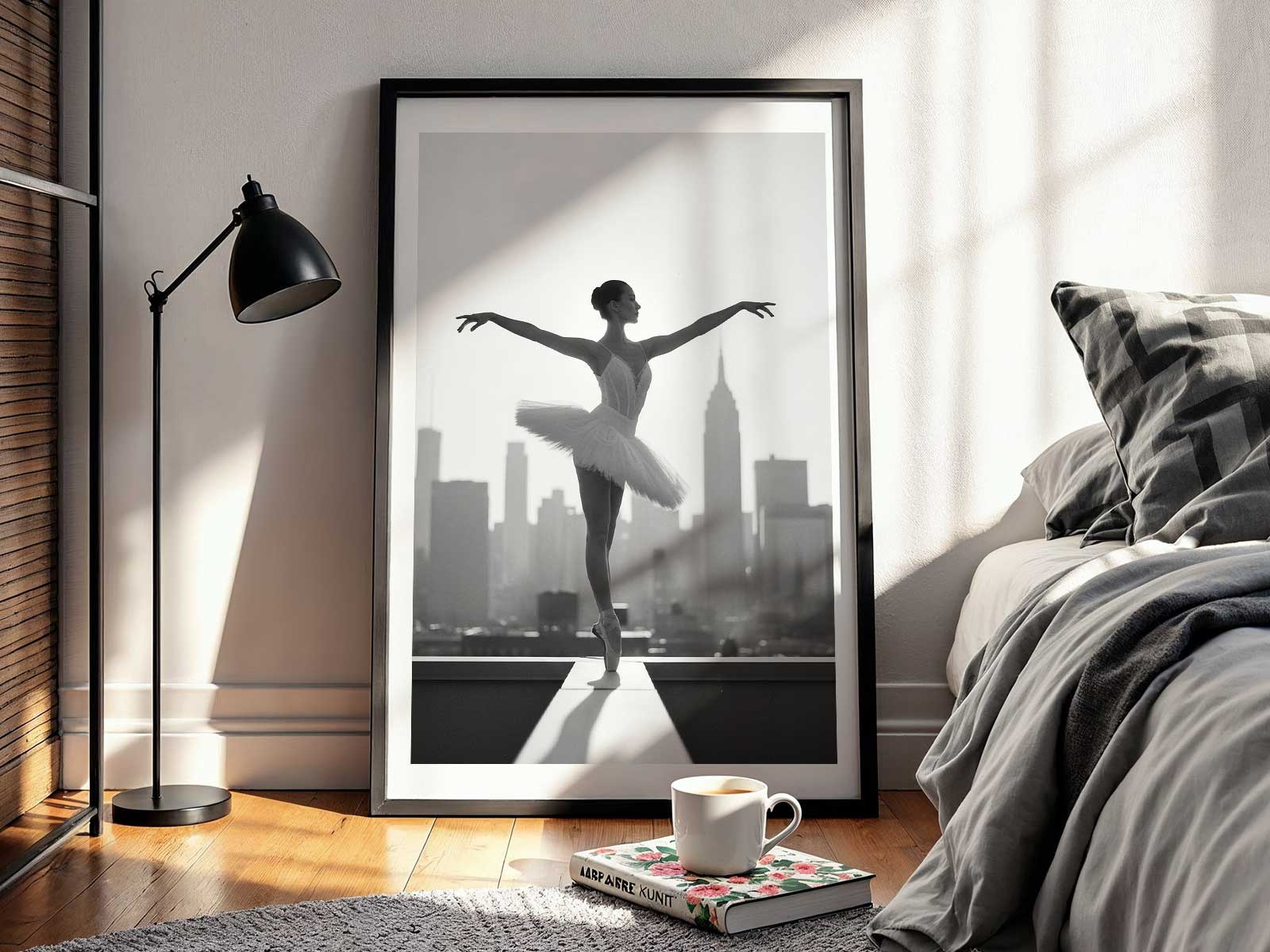
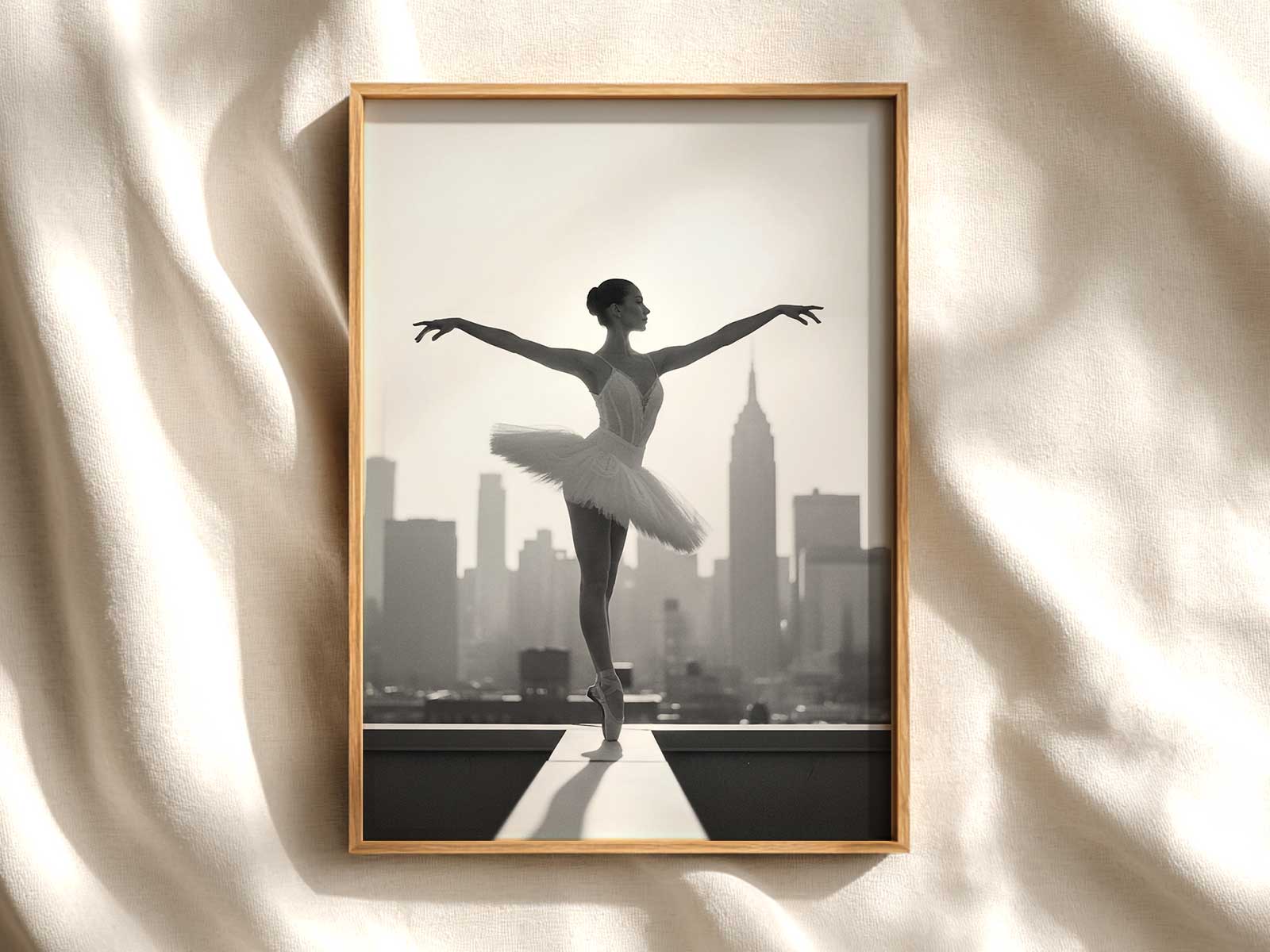
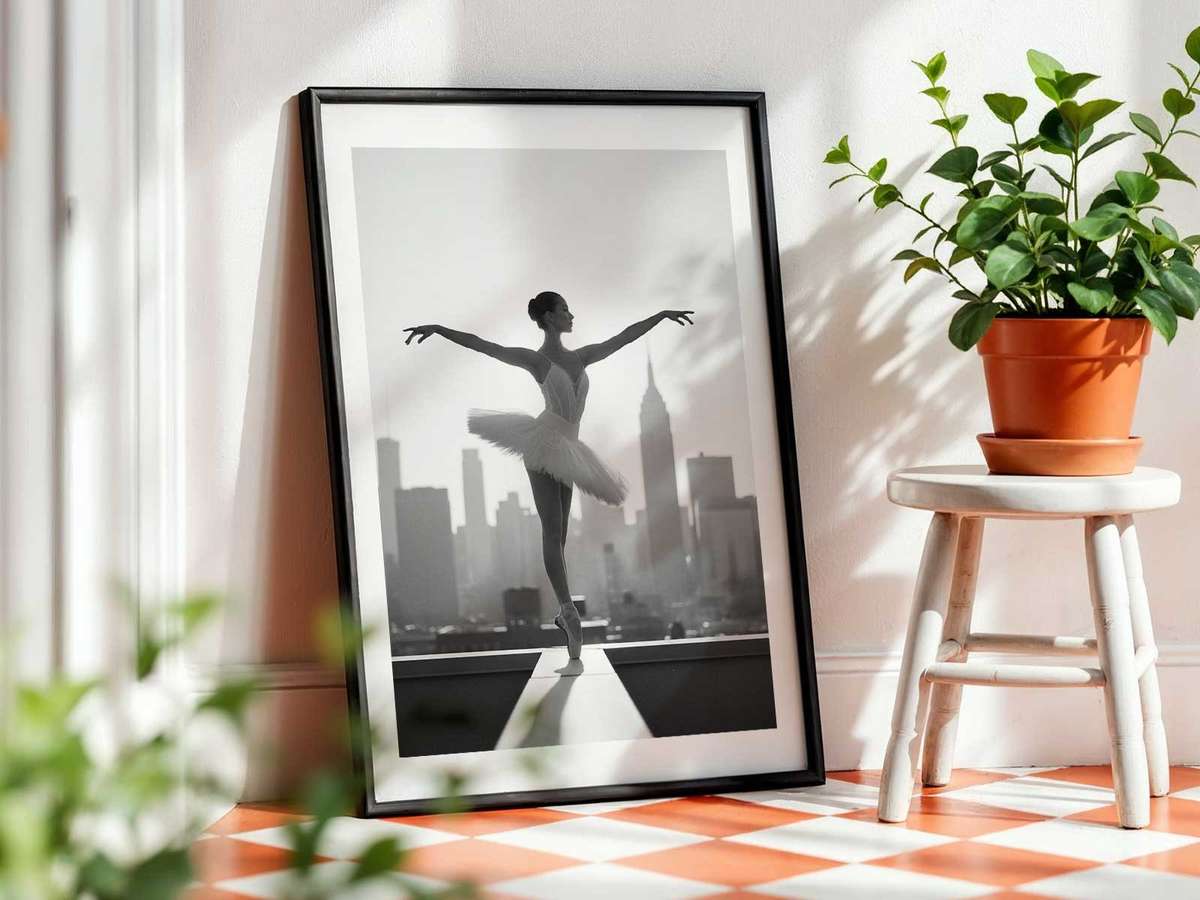
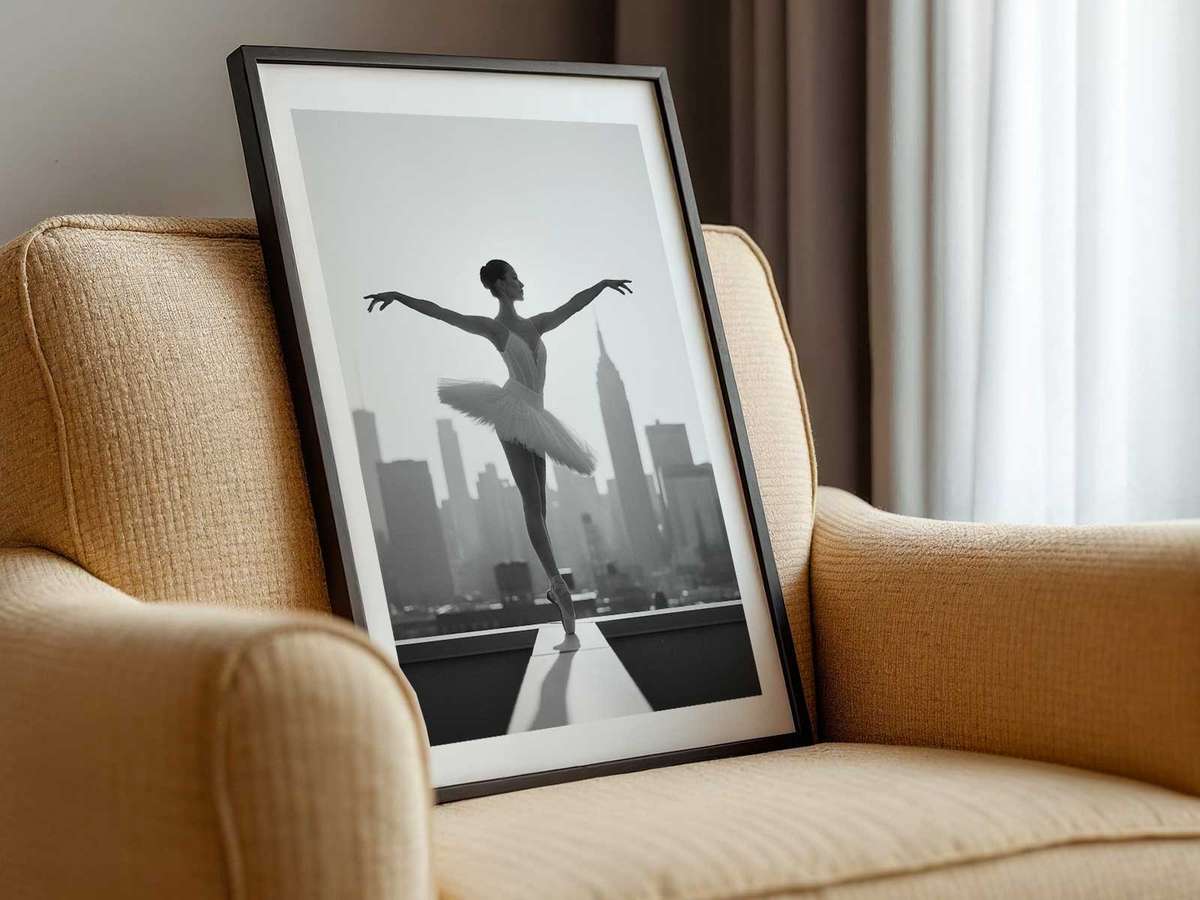
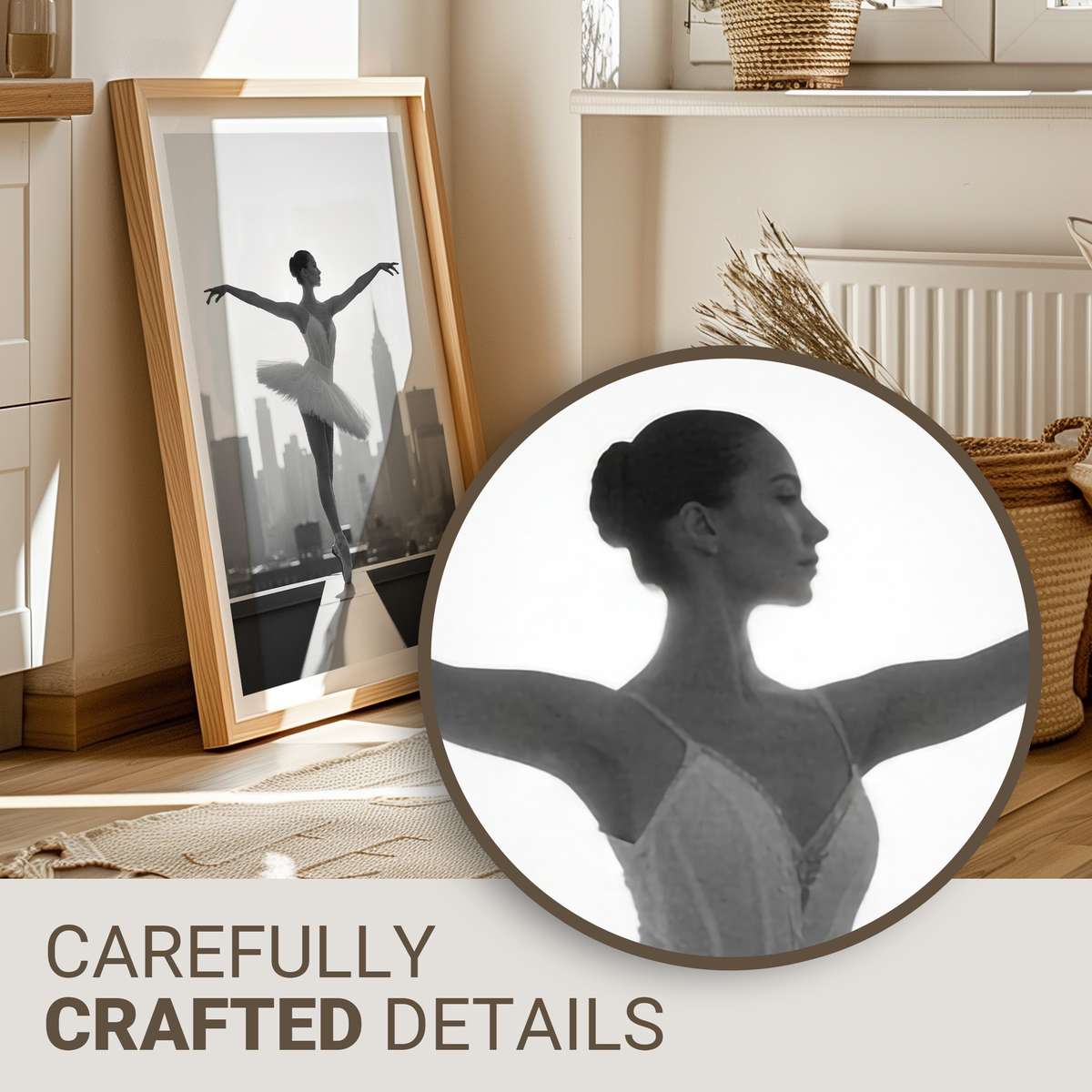
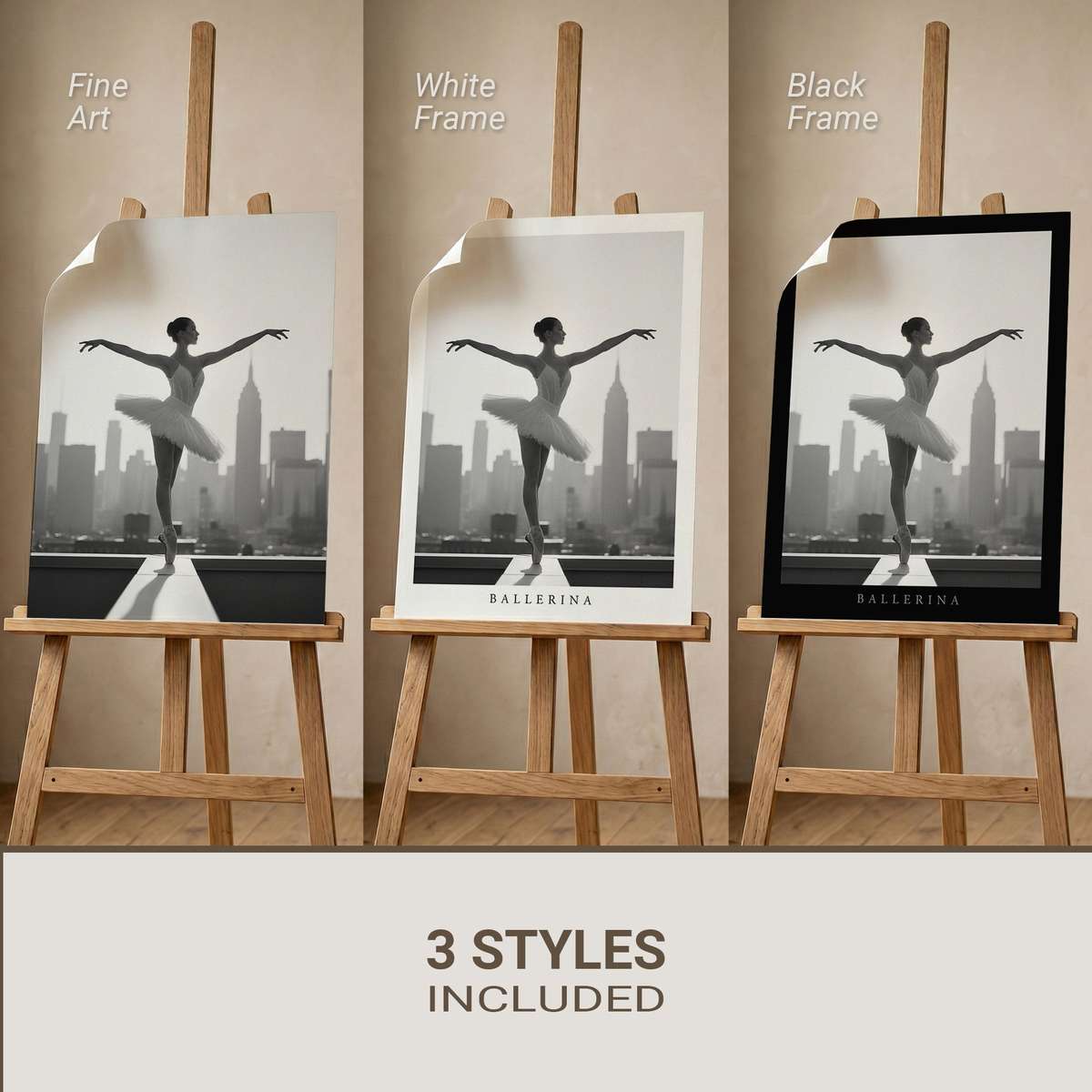
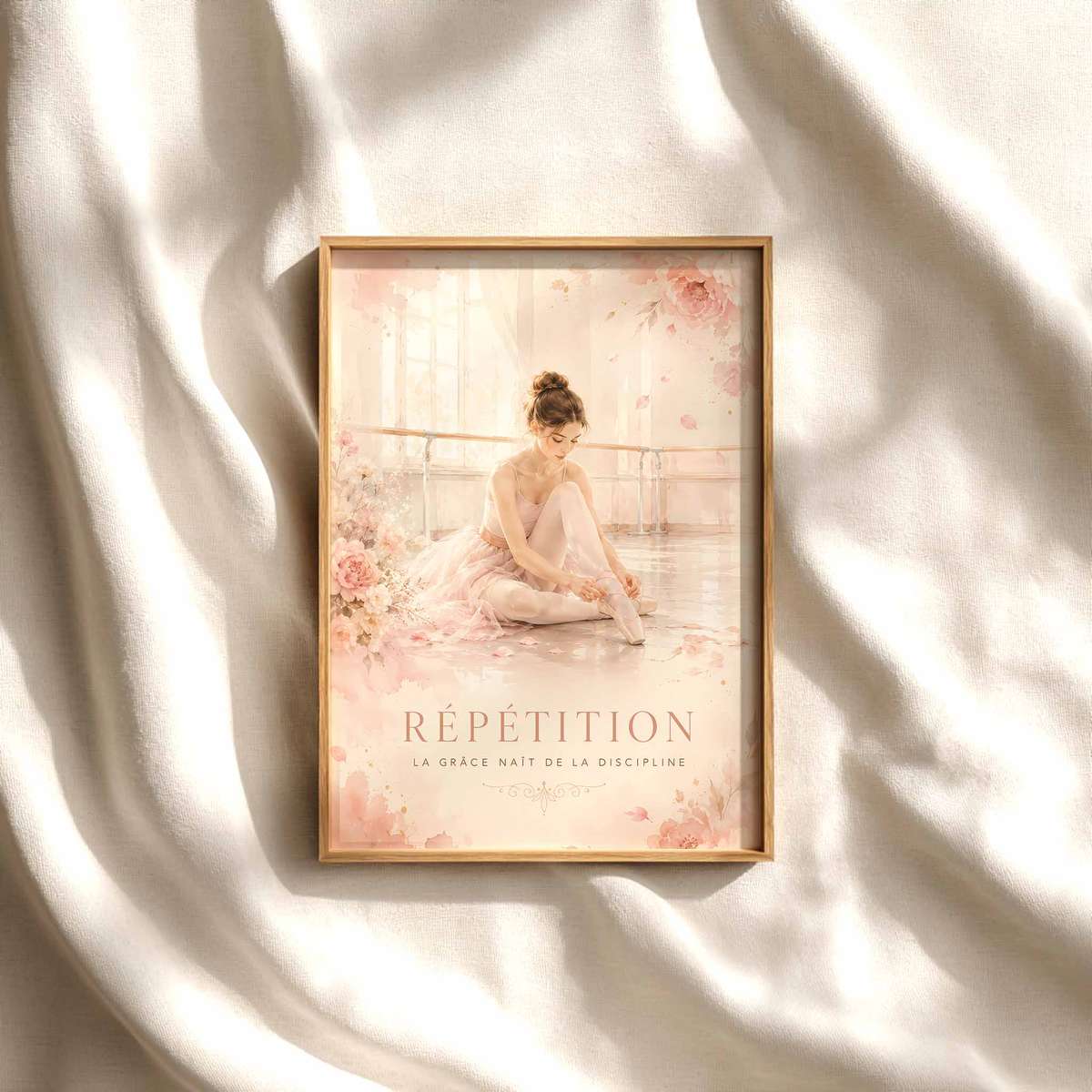
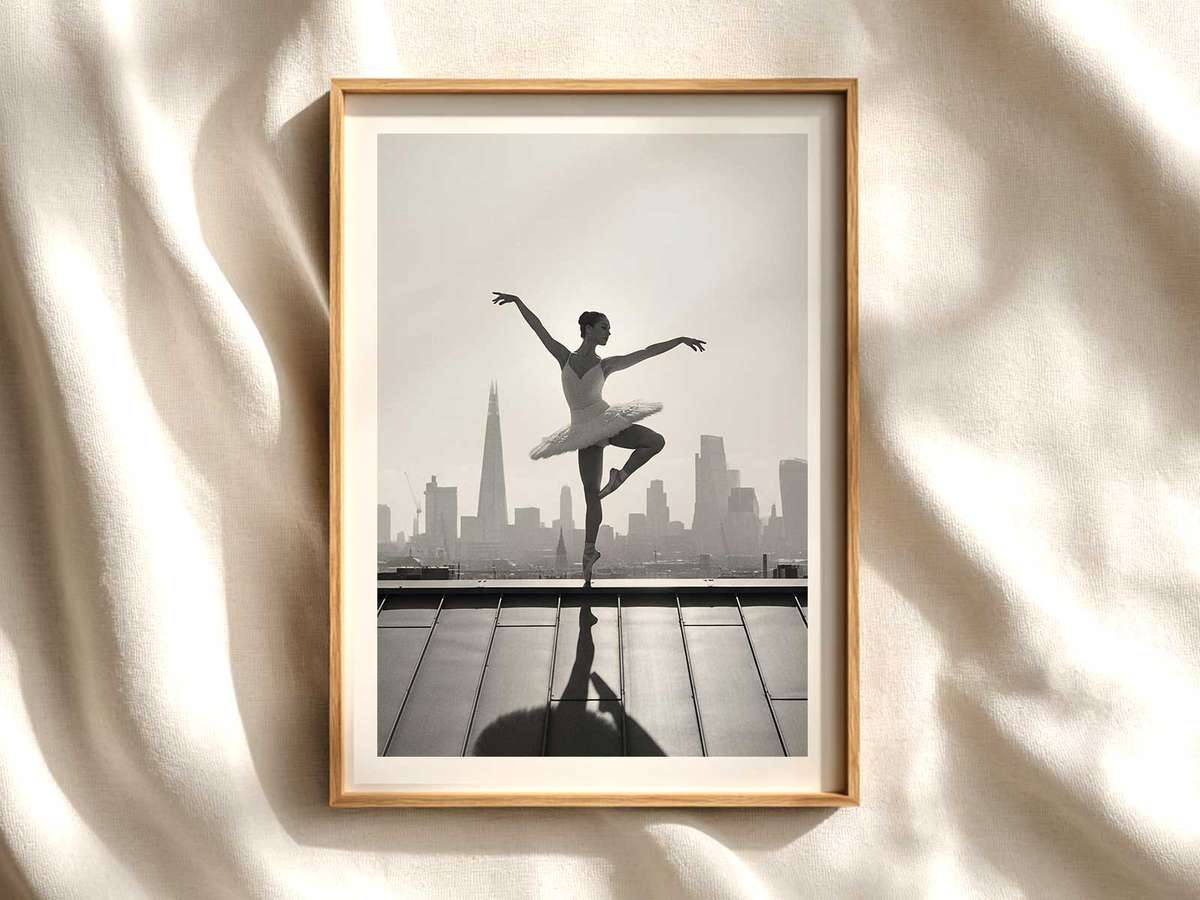
The first glance at this ballerina poster arrests the room. Against a softened urban horizon, one dancer stands alone, her vertical line slicing the skyline with composure. That single figure—seen in profile, in arabesque, in a poised stillness—becomes the poster’s entire argument: grace made visible, tension resolved into calm.
The ballerina as visual heart
A dancer centered against an urban skyline carries an immediacy that few subjects achieve. The human line—neck, spine, extended limb—reads cleanly at a distance and rewards close viewing with minute details: the tilt of the head, the carriage of the shoulders, the soft arc of an arm. In a well-composed poster, the city’s horizontal plane provides contrast: the skyline’s geometry anchors the space while the ballerina’s vertical elegance lifts the eye. This interplay creates a dynamic stillness, a moment that feels both cinematic and intimate.
[IMAGE_INSERT_ARTICLE_01]
Mood, presence, and the power of posture
Posture is language. The way a dancer holds her torso and sets her gaze communicates serenity, resolve, or quiet introspection without words. In this image, the ballerina’s posture translates inner calm into an outward presence that fills a room. Her silhouette reads as a statement of restraint and refinement: an elegant punctuation against the sprawling city. That clarity of line invites the viewer to settle into the work, to pause and let the poster’s quiet assurance shape the atmosphere of the space.
Because the figure is solitary, the viewer projects easily—aspirations, memories, a need for order—making the poster feel personal. A dancer’s balance and poise suggest mastery and control, qualities that decorate a living room, bedroom, or study as elegantly as any textile or piece of furniture.
Why this image elevates interiors
A dancer-centered image is an instant stylistic anchor. Its simplicity complements layered interiors without clashing; its vertical emphasis elongates walls and adds a sense of scale and sophistication. Placed above a mantel or a console, the poster becomes a focal point that organizes other decorative elements. In neutrals or muted hues, the ballerina introduces a calming motif; in bolder palettes, she tempers color with a disciplined silhouette. Either way, the figure’s timelessness ensures the work remains relevant as tastes shift.
Ultimately, the appeal of this poster lies in its double gift: a visual form that is both exquisitely observed and quietly evocative. It offers decorative efficacy—line, balance, contrast—while offering an emotional encounter. The ballerina is not merely an image to fill a wall; she is a presence that invites reflection, elevates a room’s tone, and endures as a refined, personal choice for those who value beauty in restraint.