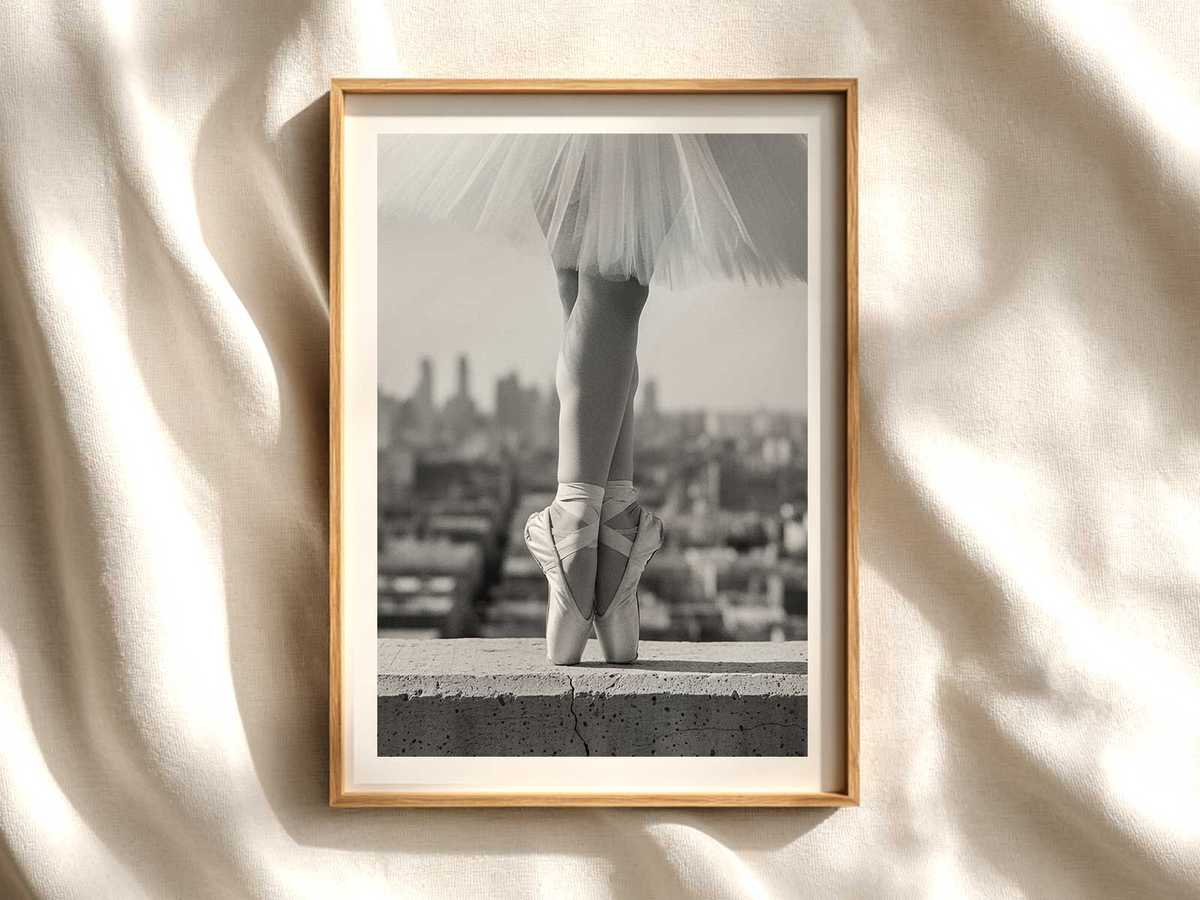
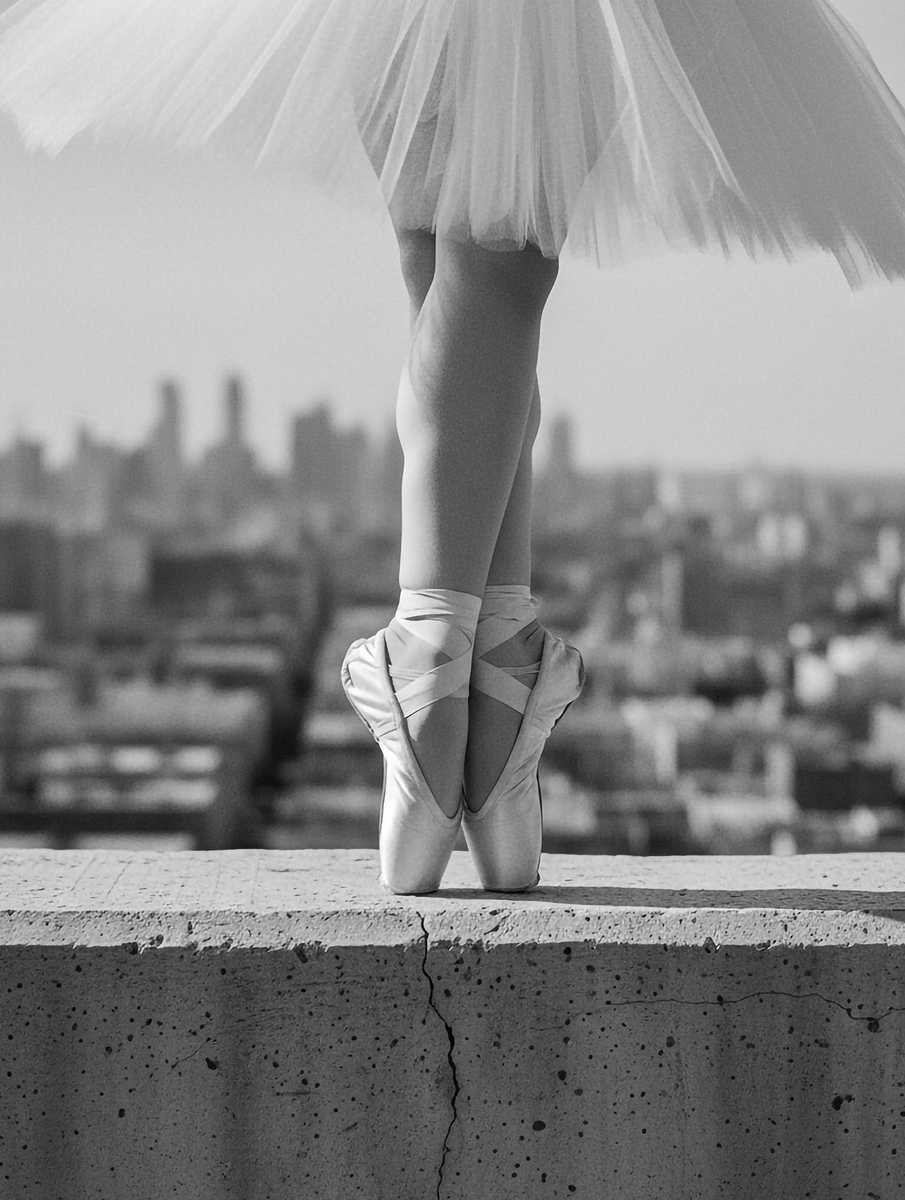
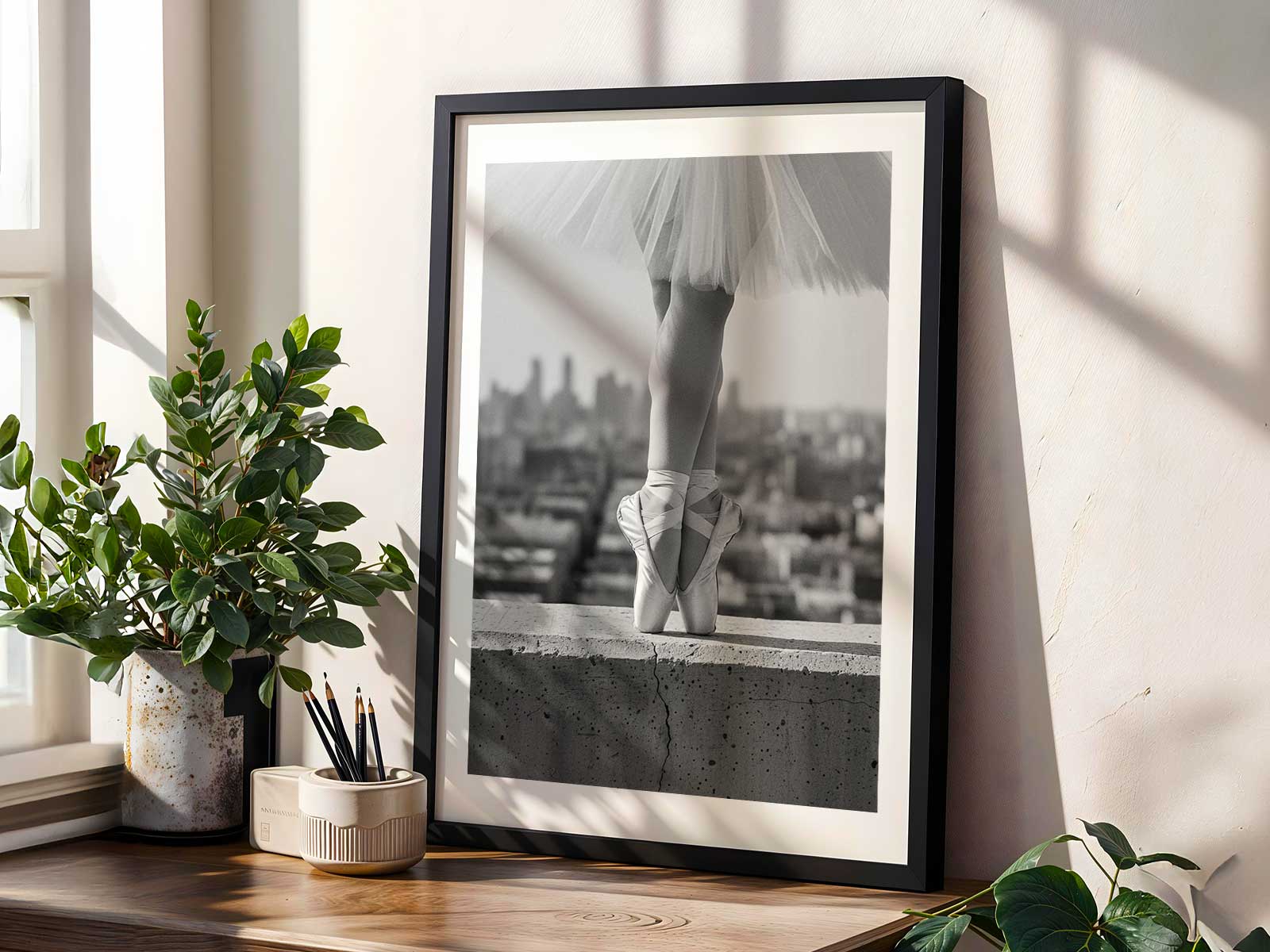
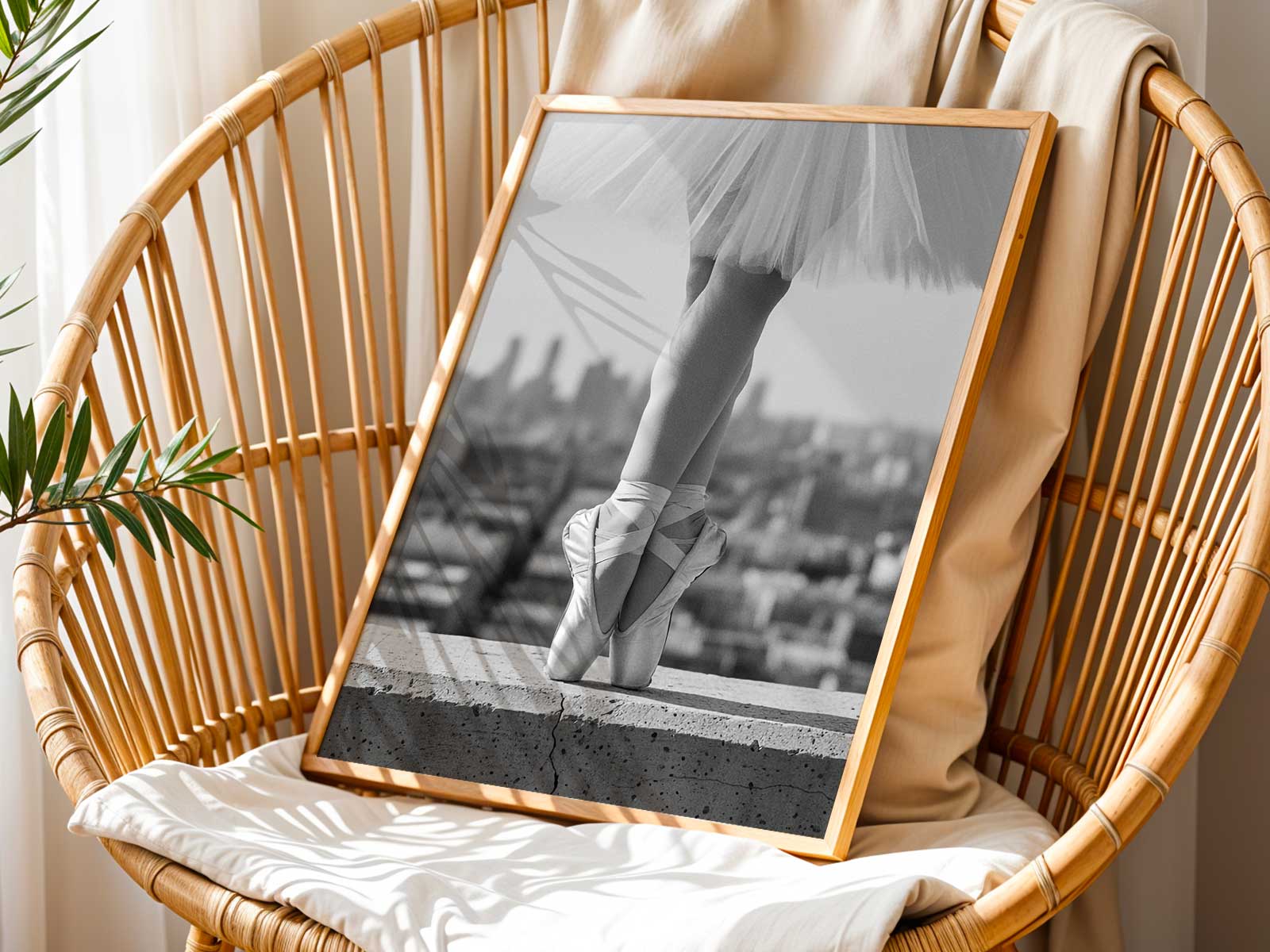
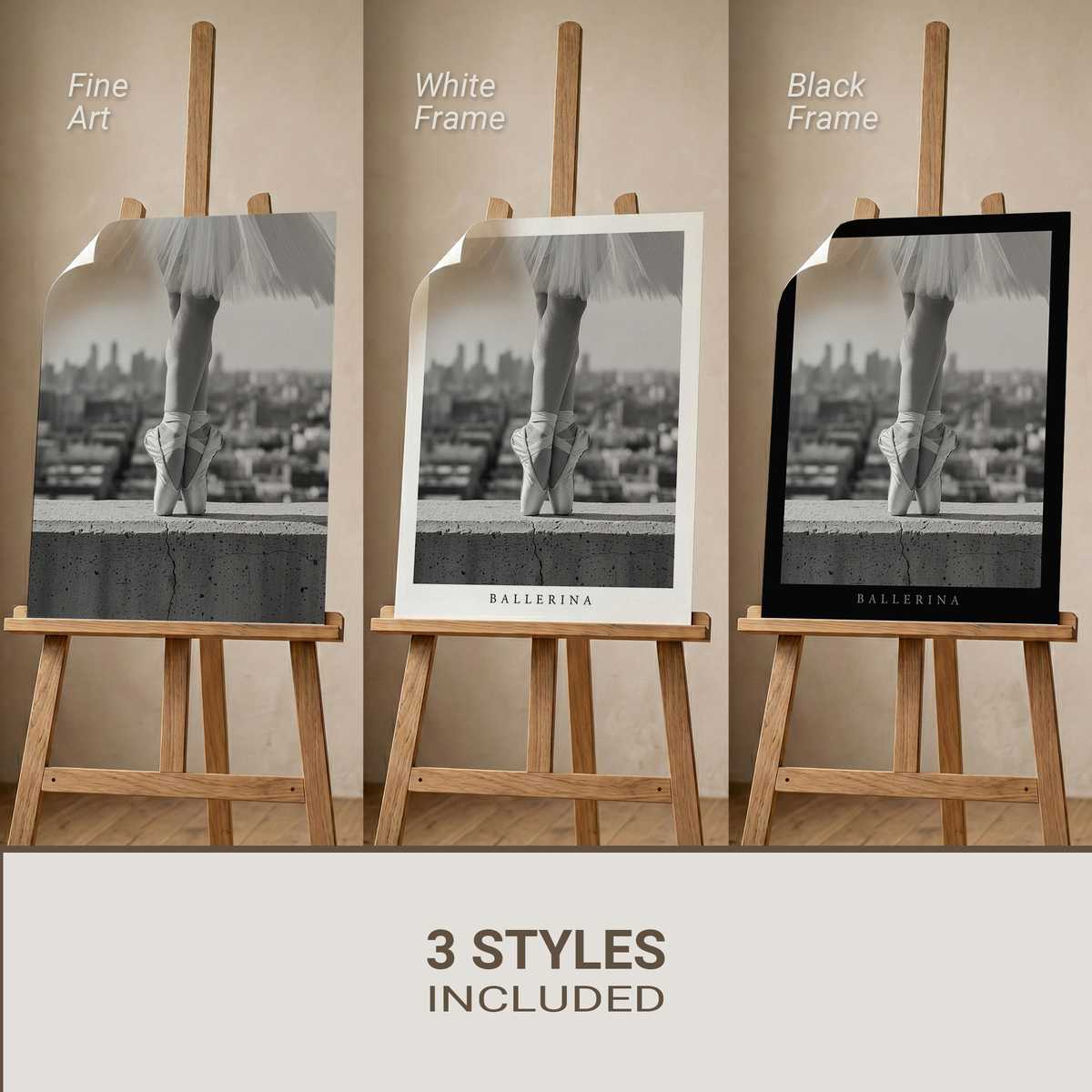
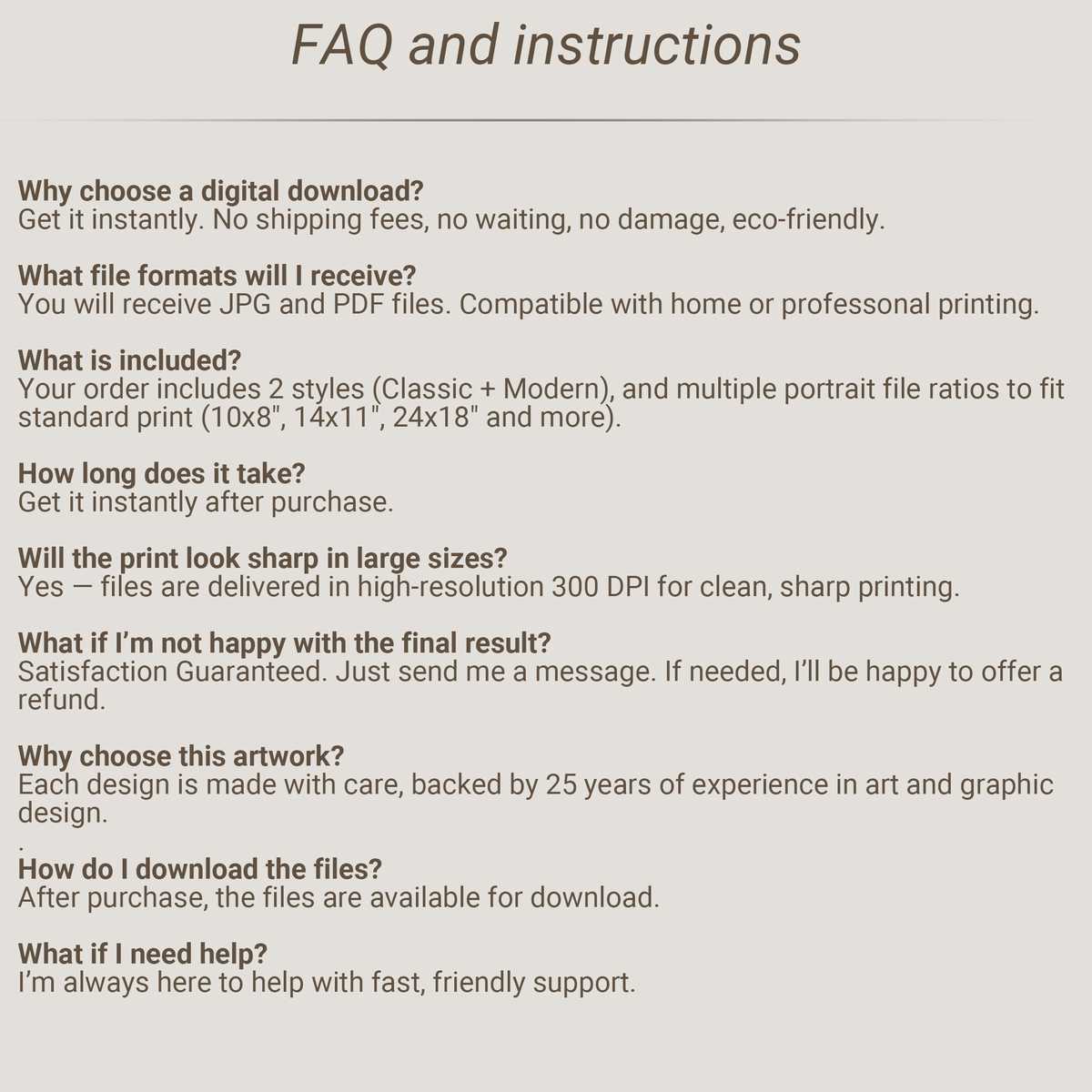
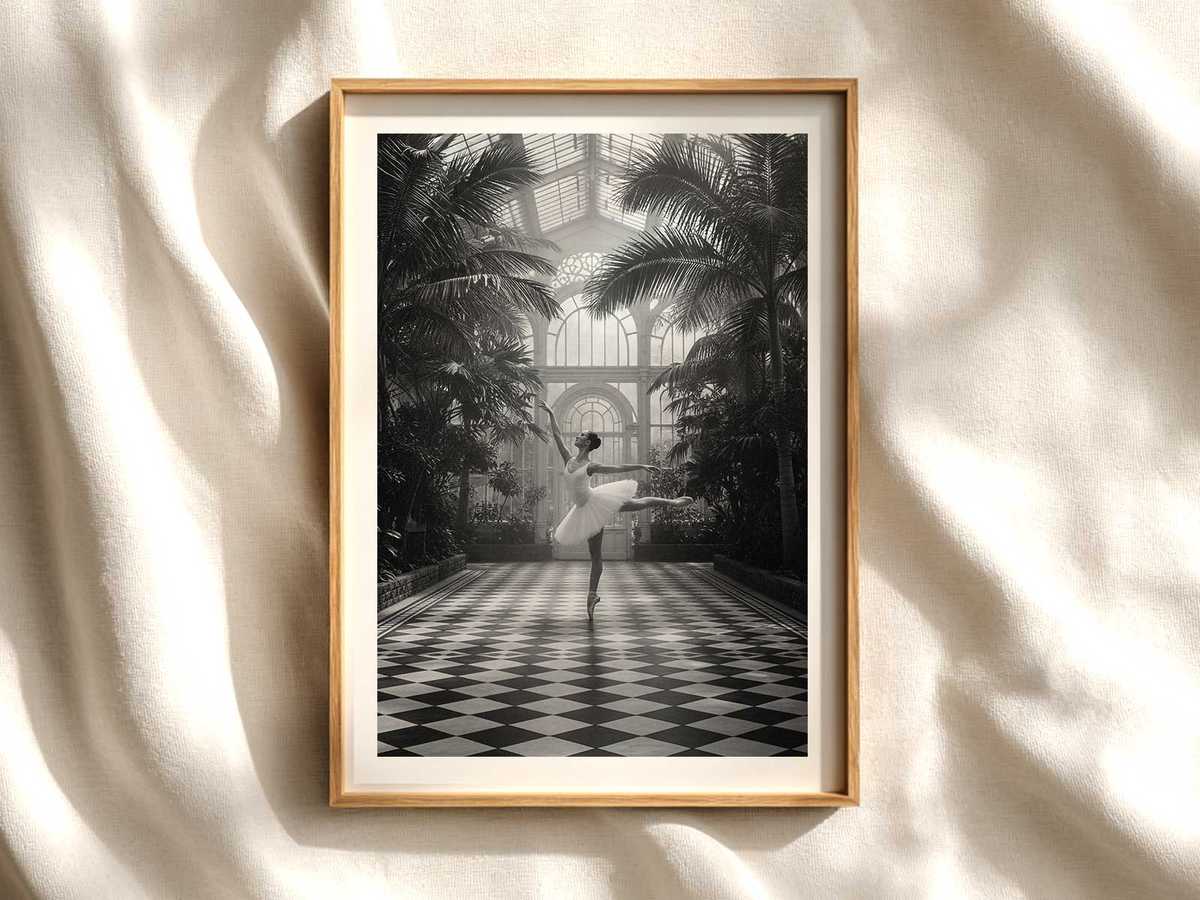
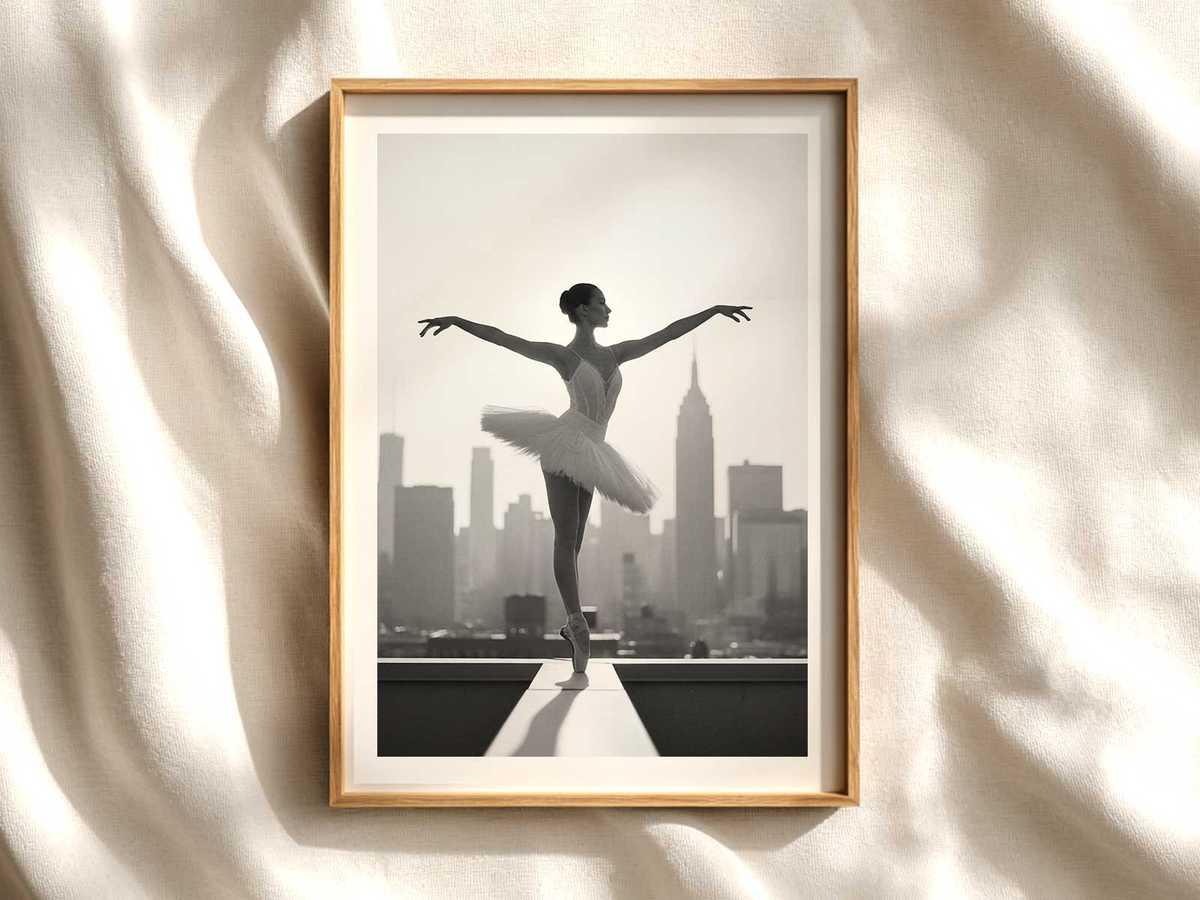
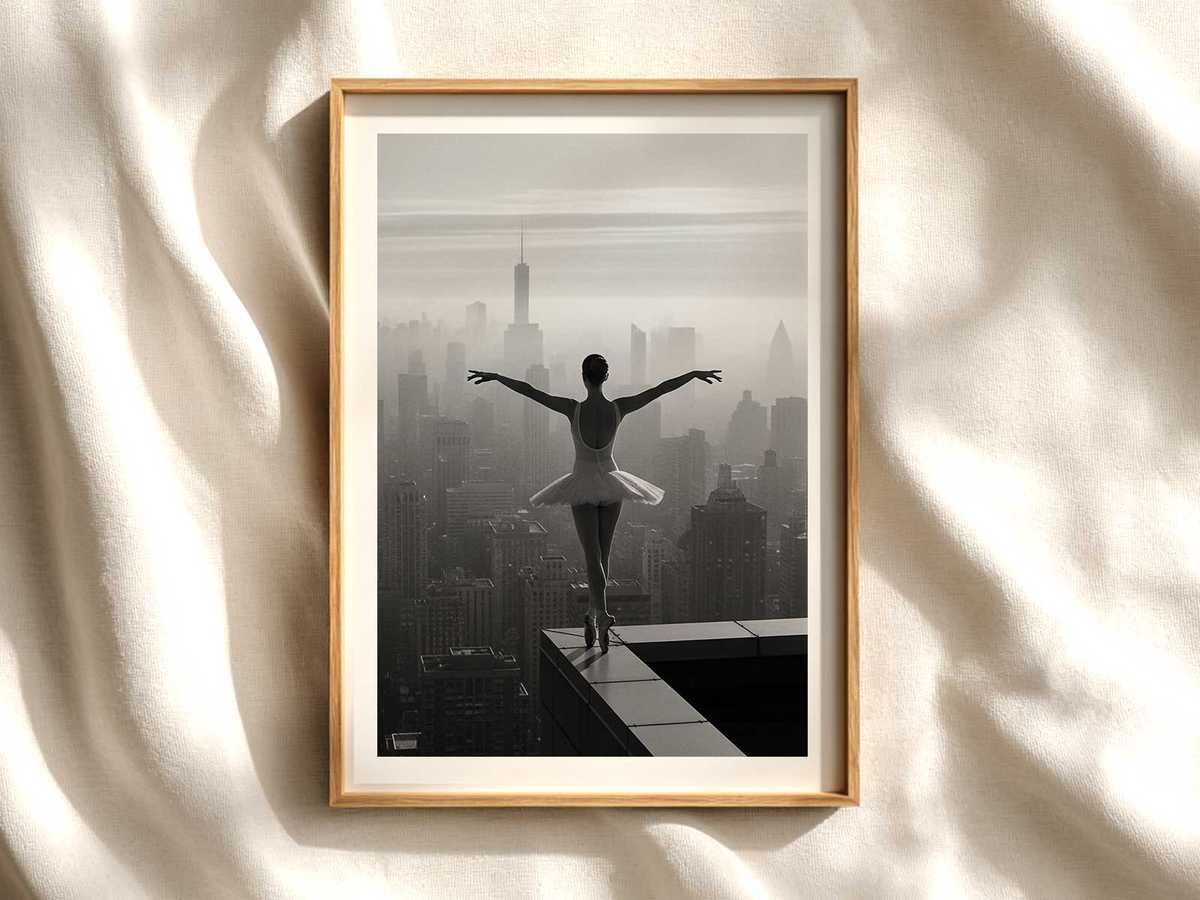
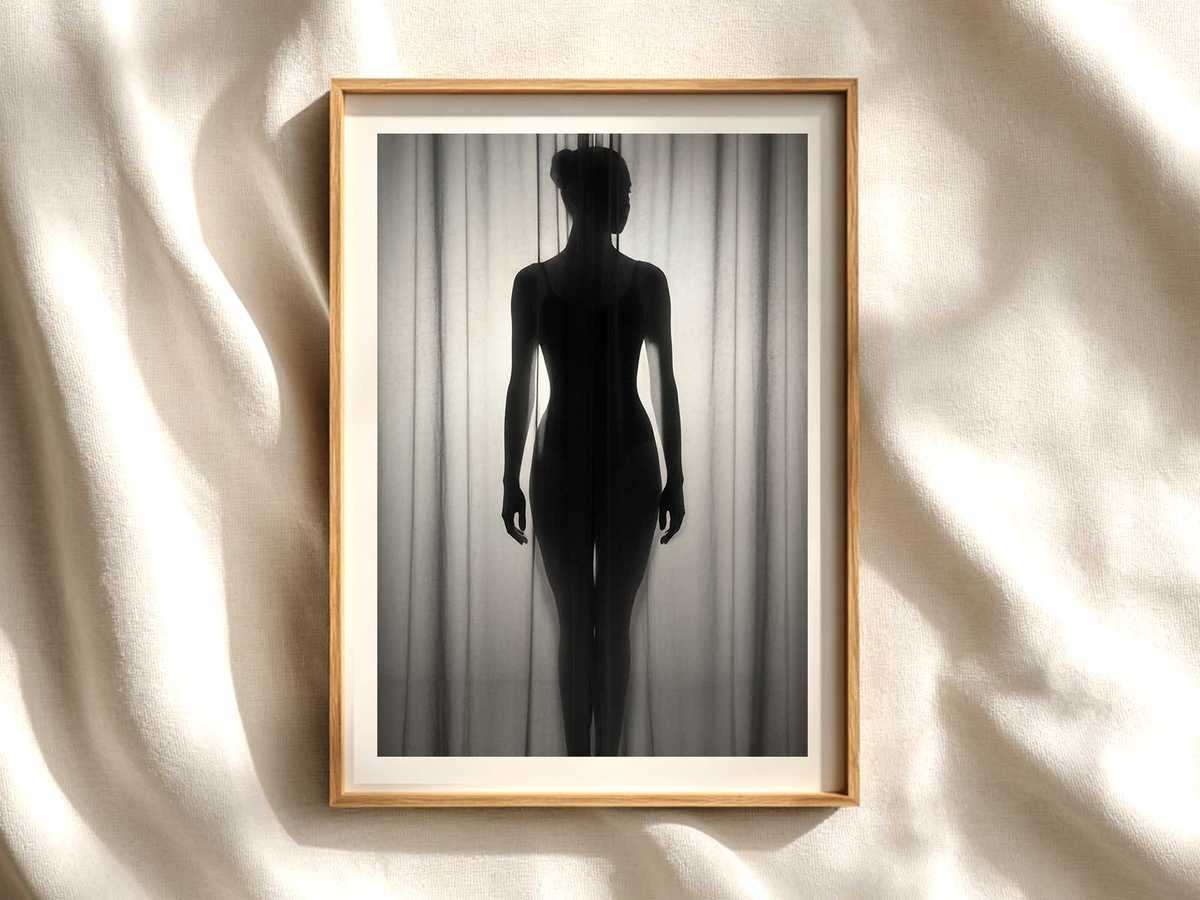
There is an instant in dance that asks to be preserved: a hand held like a question, a torso suspended between inhale and fall, the precise cut of a leg against an empty light. In black and white, that instant becomes architecture. Removing color foregrounds form, contrast and silhouette, so the viewer meets the dancer as line and volume rather than as part of a stage décor. This austere economy turns a single captured beat into something cinematic and memorable.
Why this moment works as a poster
A poster depends on immediate recognition. In monochrome, the suspension of a gesture reads at a glance: backlighting and silhouette sharpen the outline, creating a sculptural presence that seems to hover in space. Photographers and collectors have long used these techniques to emphasize elevation and mythic suspension; the dancer's profile or extended limb becomes a bold graphic element that anchors a room. The absence of color removes distraction, so timing, tension and the purity of pose dominate the eye.
The captured beat carries both physical concentration and an emotional residue. Black-and-white sequencing has been used historically to craft a memory-like rhythm in ballet imagery—placing single images in the mind as if they belong to a longer, filmic narrative. When you hang such a poster, you are not merely displaying a pose but inviting an imagined sequence: what came before, what follows, the hush around the gesture. That suggestion of narrative gives the image depth on a wall and rewards repeated viewing.
[IMAGE_INSERT_ARTICLE_01]
Decorative appeal and lasting presence
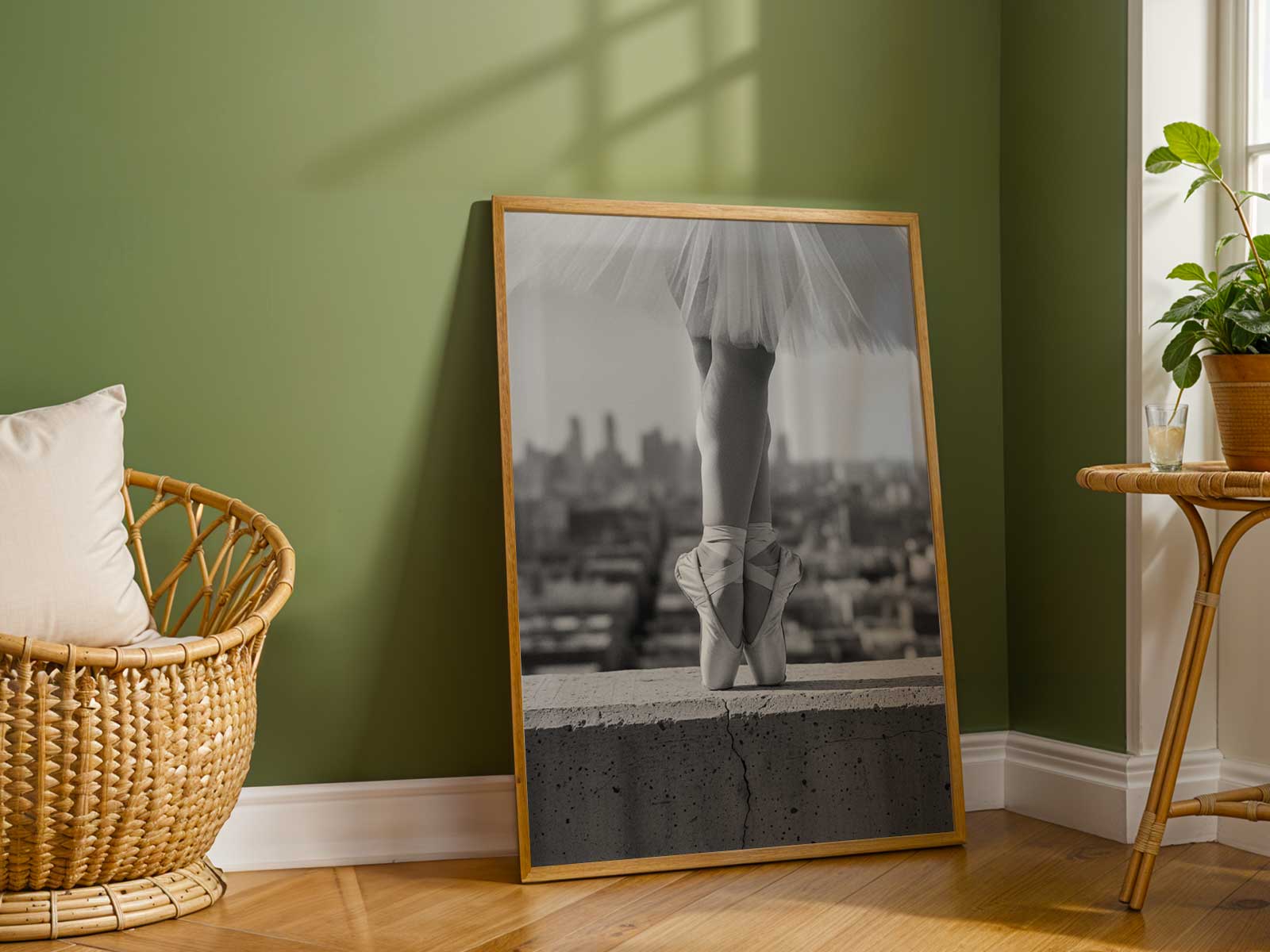
Decoratively, a monochrome ballerina poster reads as modern and timeless. Its high-contrast silhouette works with many interiors because it behaves like a sculptural object rather than a mere photograph; it holds compositional authority whether placed above a mantel or beside a reading chair. The emotional charge of the suspended instant—its tension, implied motion and refined restraint—brings focused energy to a room without competing with existing color schemes or ornament.
Ultimately, this precise instant endures because it preserves a fleeting contract between gravity and will: a suspended gesture that resists collapse and asks the viewer to pause. In black and white, that refusal to fall is amplified into a visual statement. For anyone choosing wall art, such a poster offers both the clarity of silhouette and the cinematic suggestion of a larger story—an image that belongs as much to memory and mood as it does to a stage.