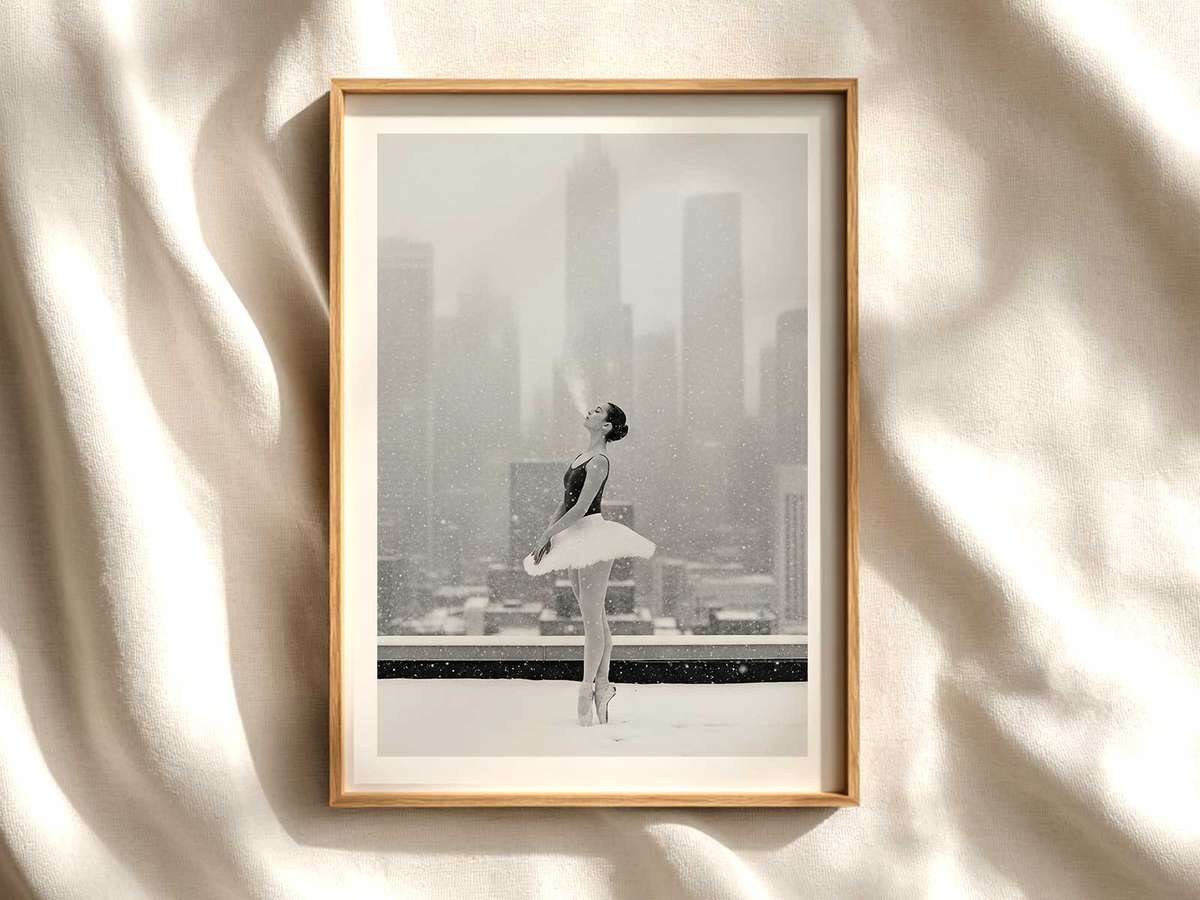
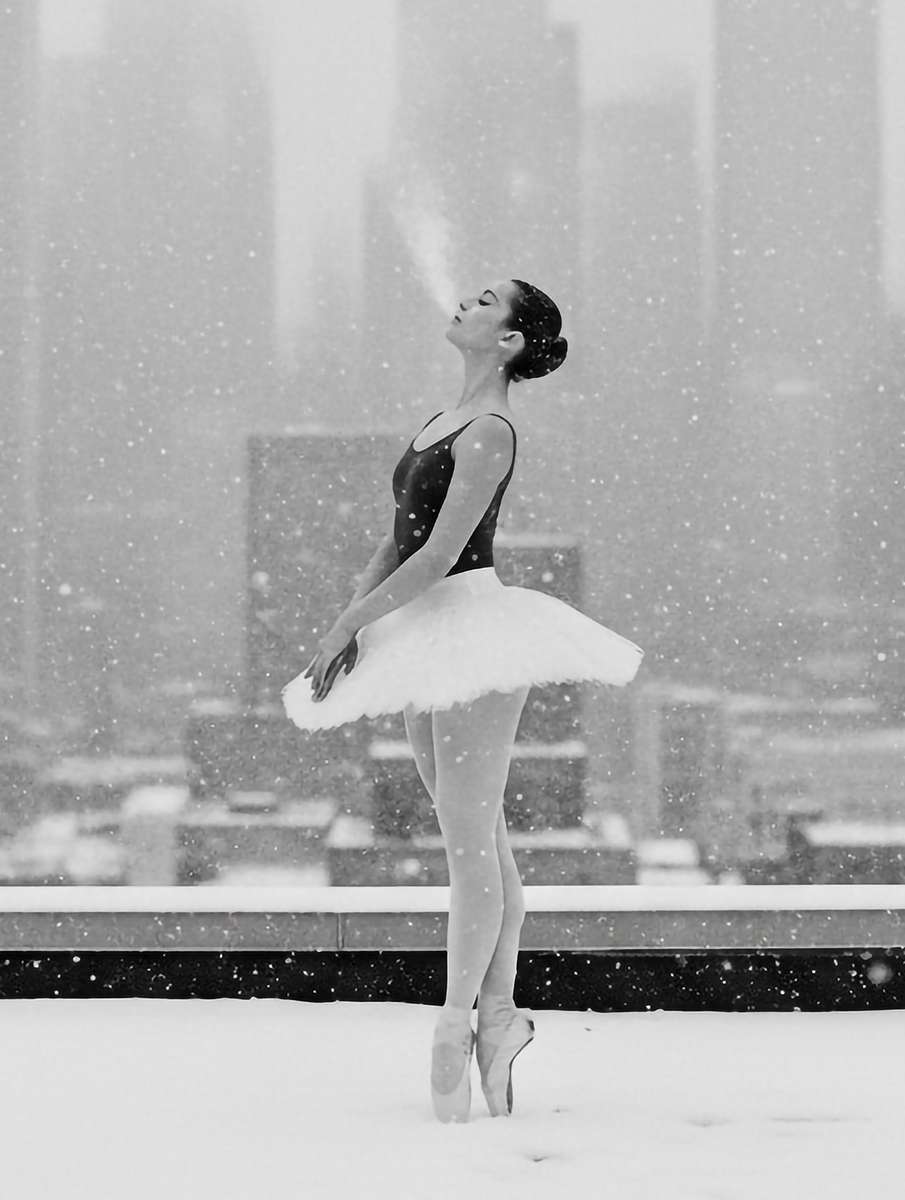
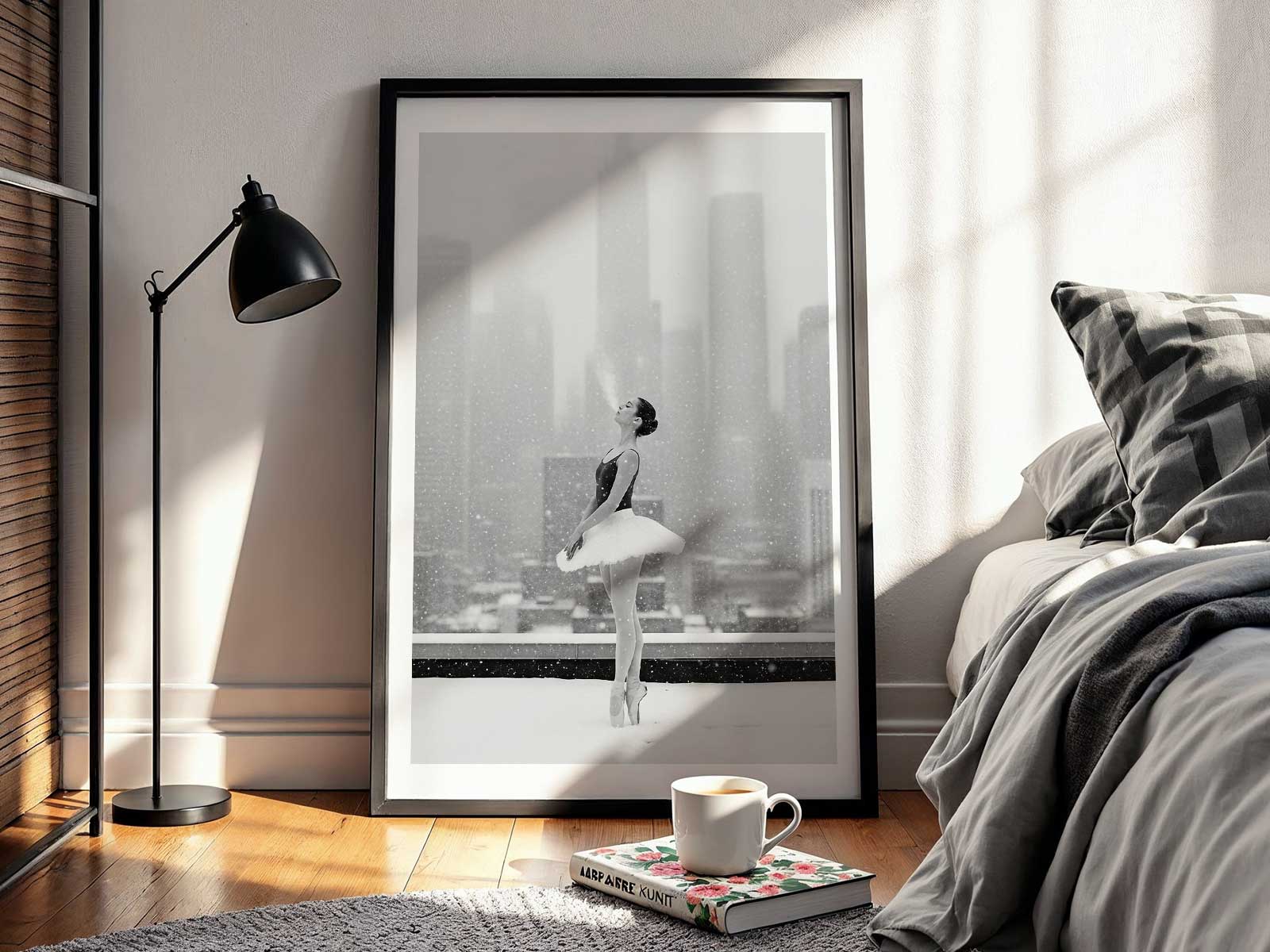
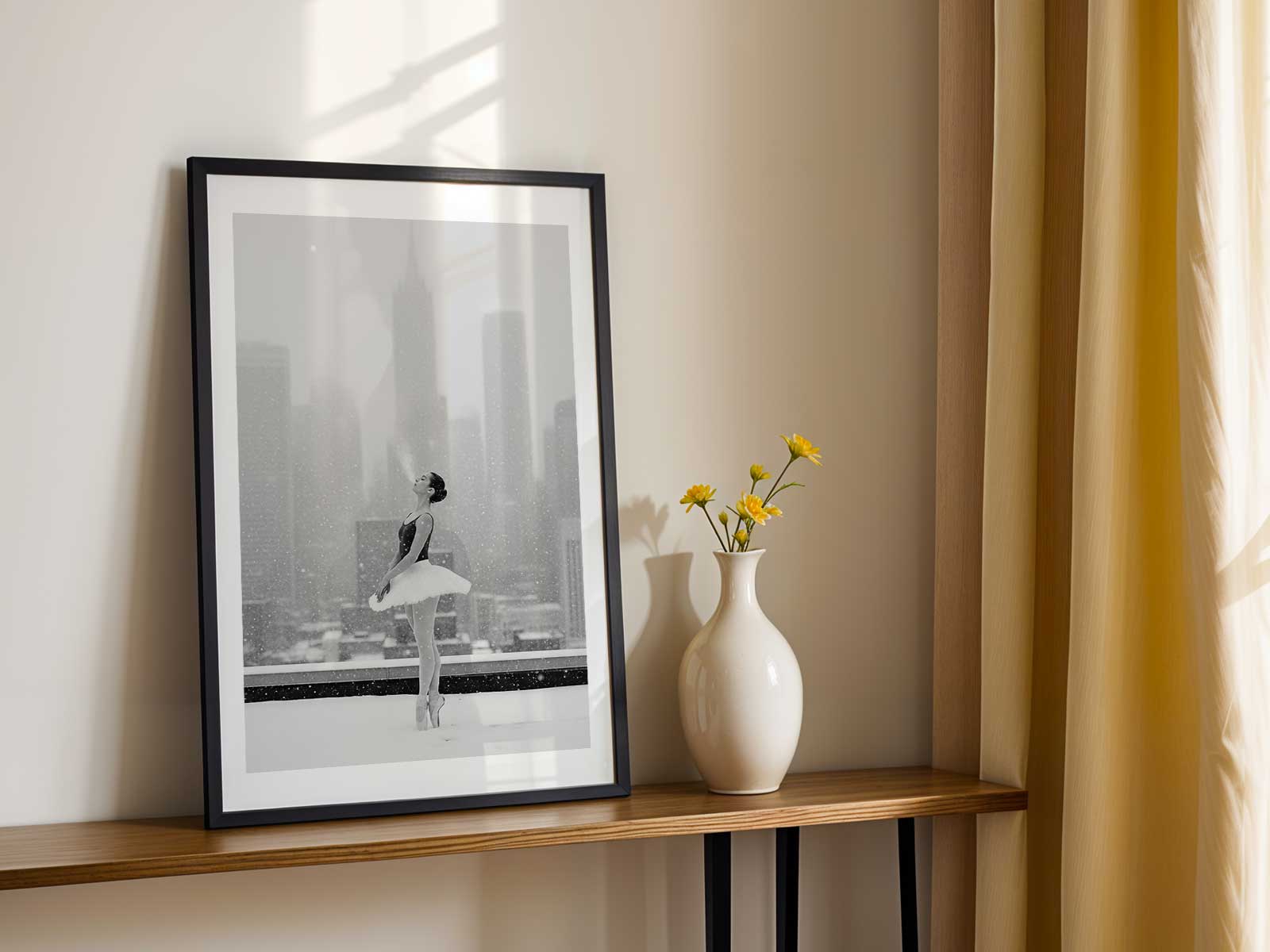
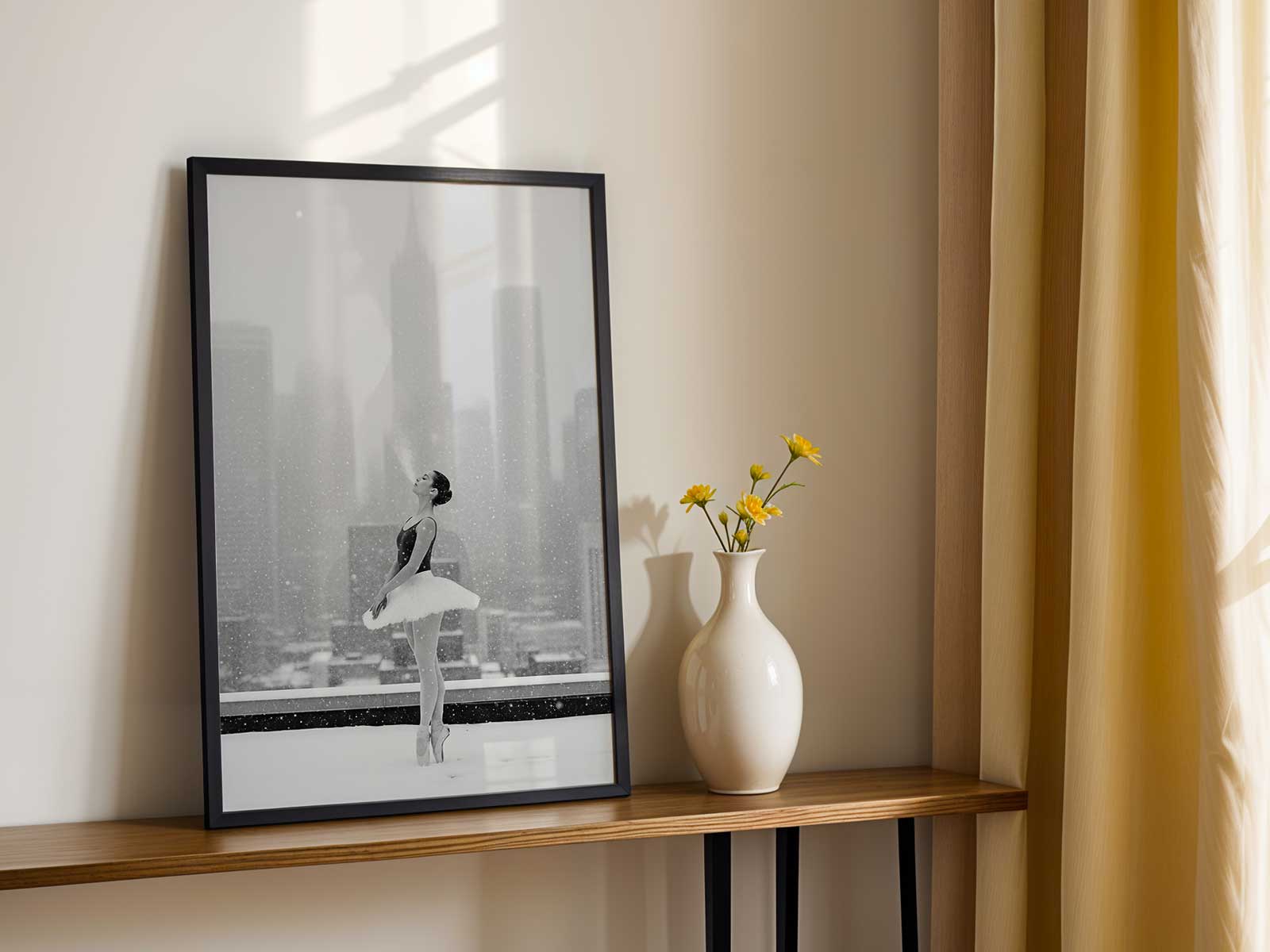
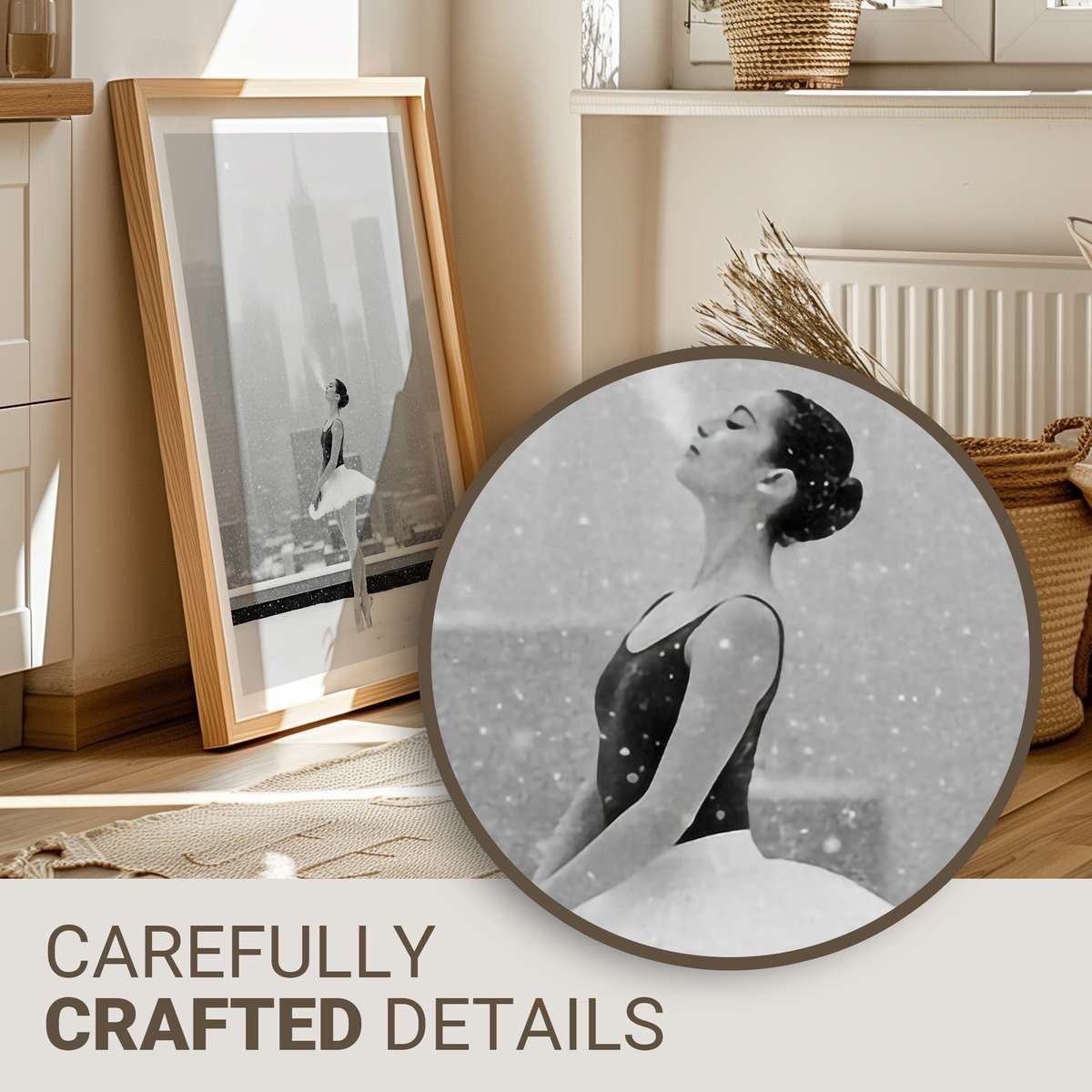
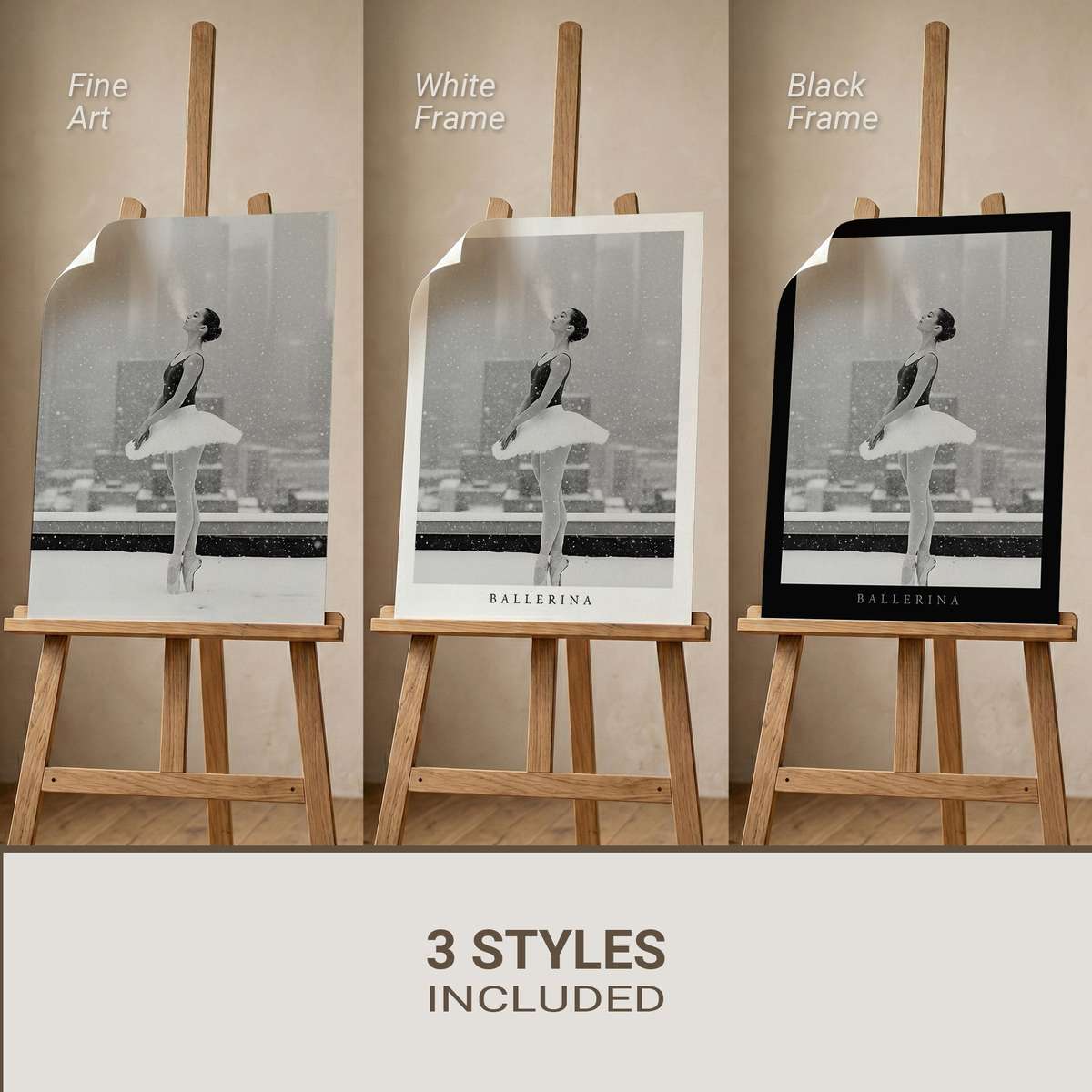
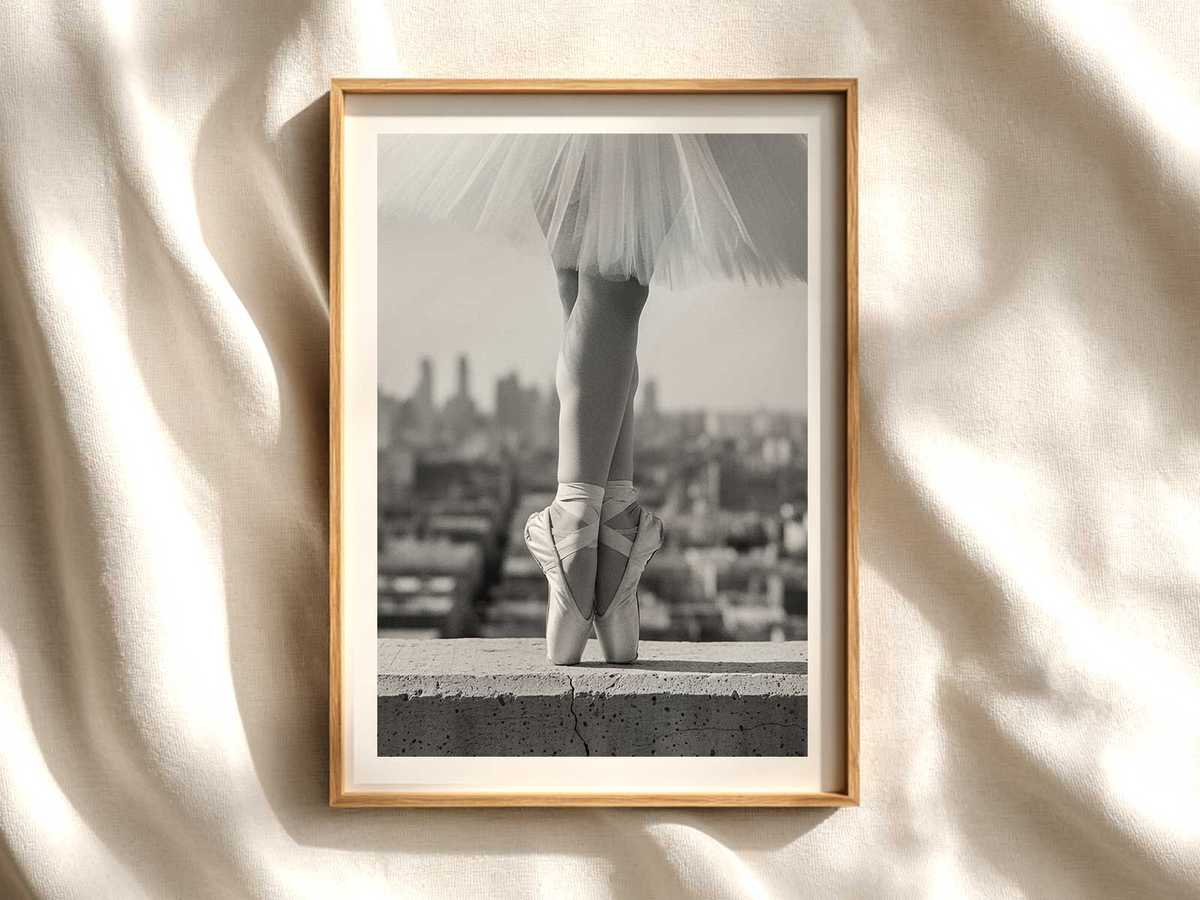
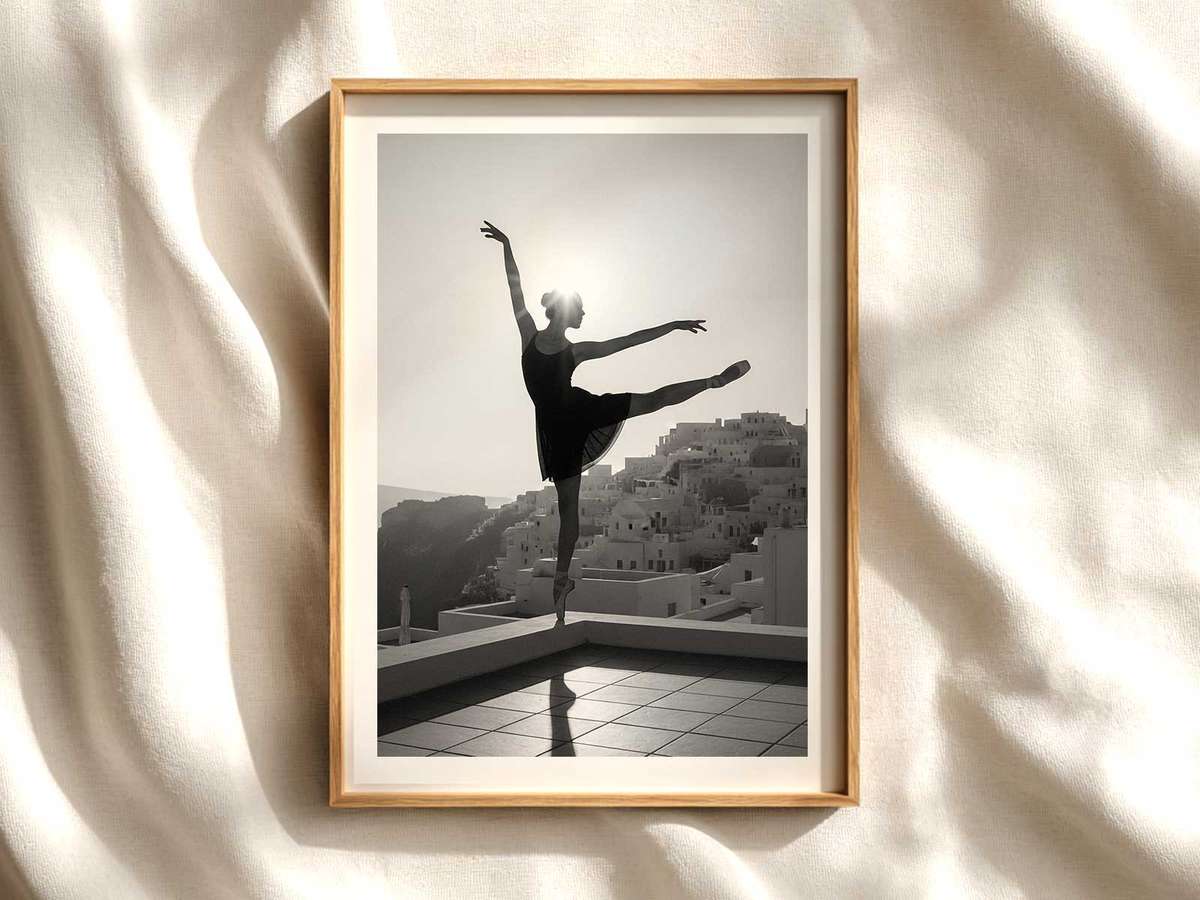
At first glance the poster reads like a memory of a performance: a single frozen gesture set against a hush of falling snow. Outside, the world is stripped to tonal clarity; the cold light sculpts the dancer and the space around her, and silence becomes visible. This is not merely a portrait of movement but a capture of atmosphere—the stage extends beyond the figure into a spare, theatrical landscape that invites the eye to rest.
Light and Silence
The snow acts as a natural reflector, bathing the scene in a cool, crystalline light that flattens distractions and heightens intent. Shadows are soft yet decisive: they suggest depth without clutter. In this imagery the white ground and pale sky form a quiet proscenium, while the dancer’s silhouette and the subtle gradations of gray become the only punctuation. That interplay of cold light and stillness creates a sensation of suspension—time seems to pause mid-breath—making the poster feel contemplative rather than busy.
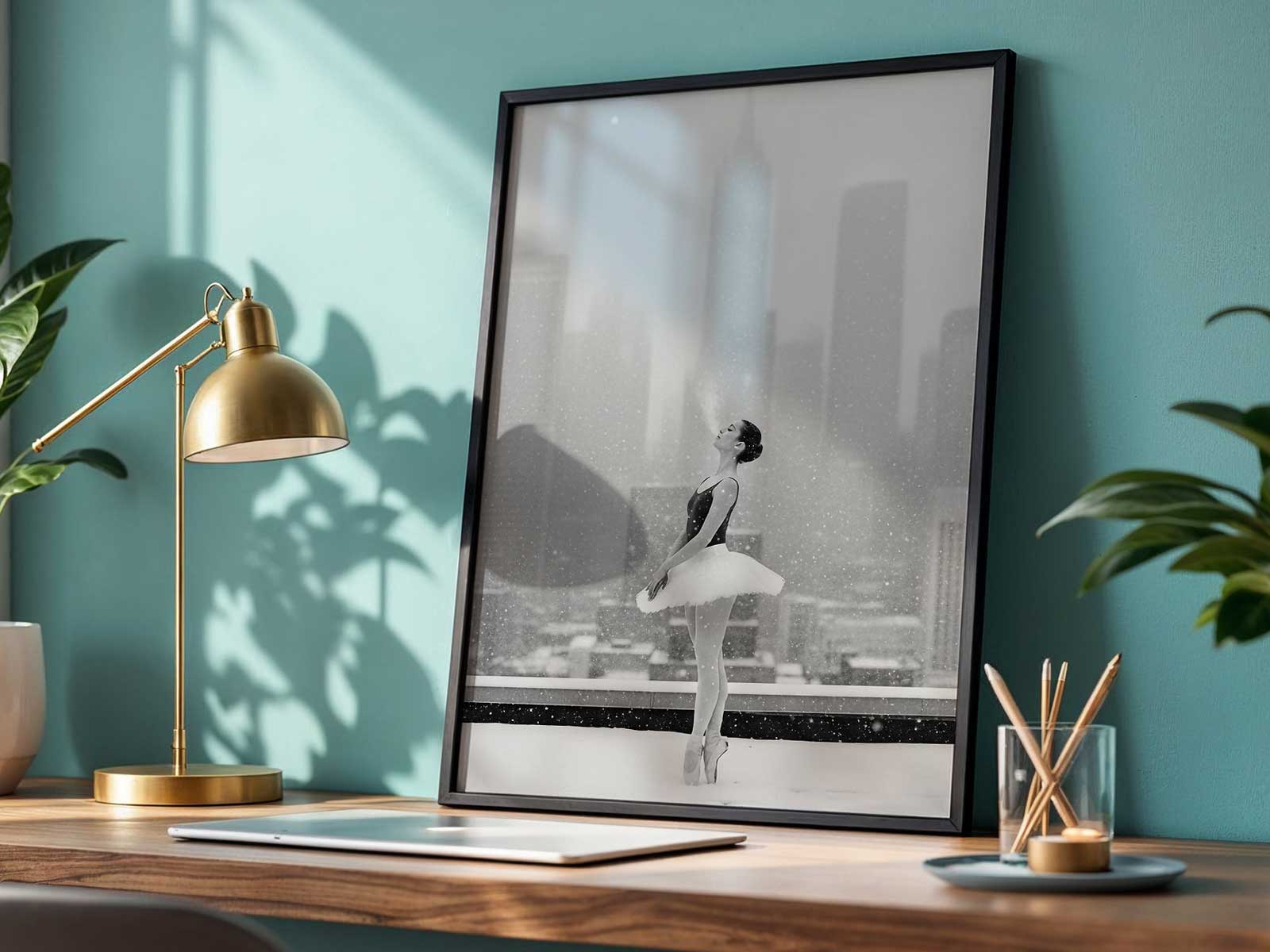
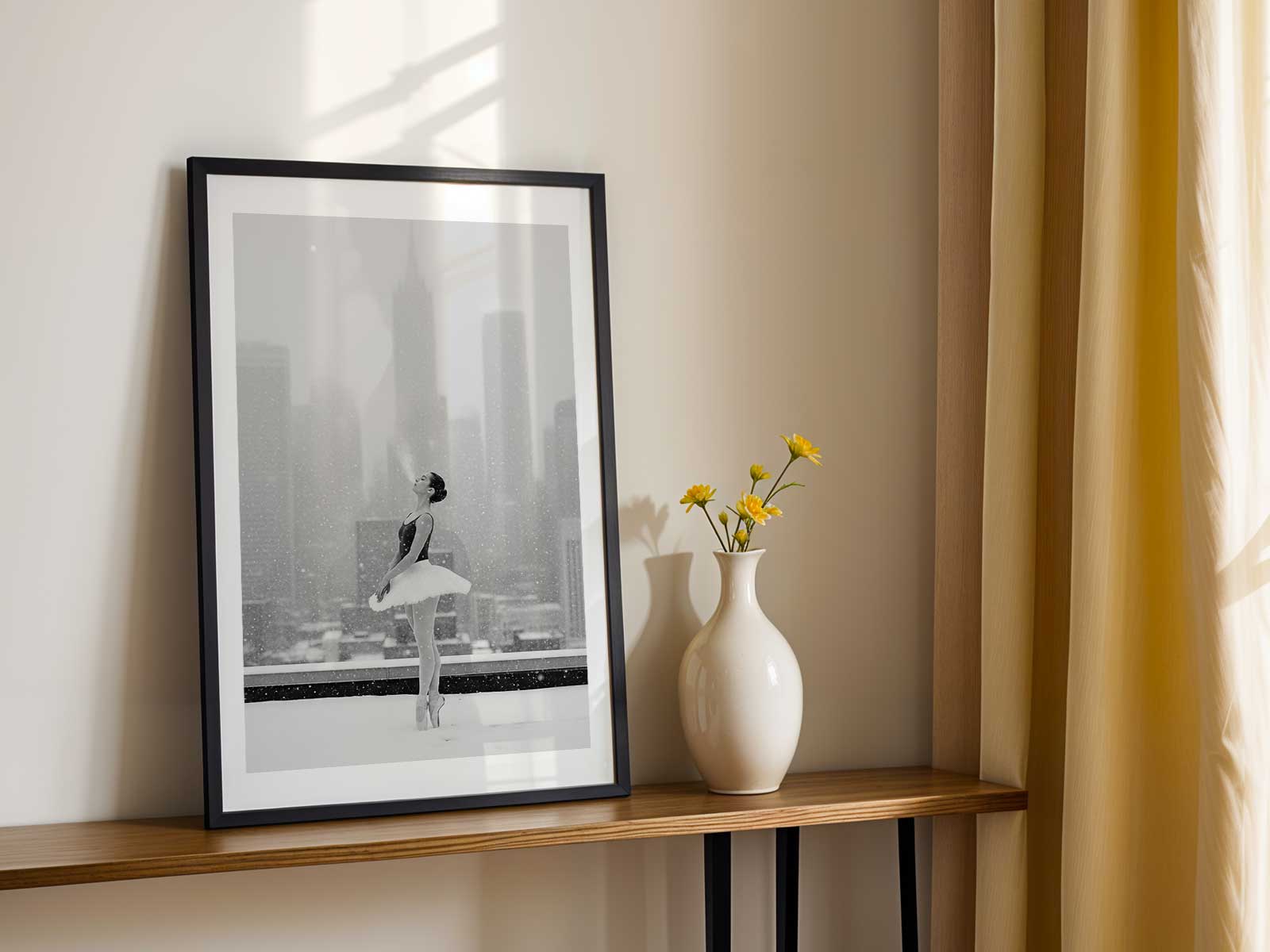
Because the palette is restrained, the mood reads immediately across a room. It brings a serene, meditative temperature to interiors: a living room gains composure, a study feels cleaner, a hallway becomes a moment of calm. The image’s silence is a design element; it reduces visual noise and adds a rarefied calm to contemporary settings.
Stage Space and Depth
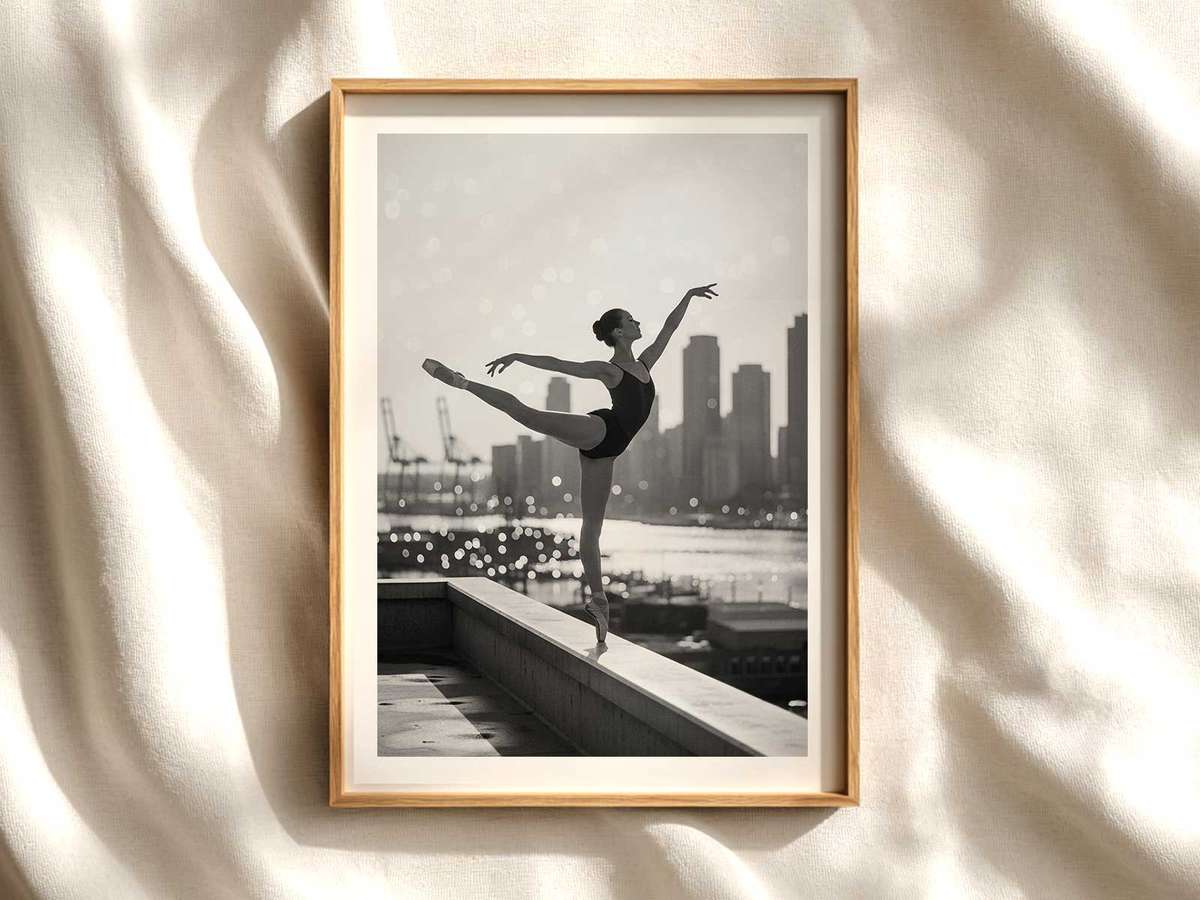
What makes outdoor ballet photos especially compelling as wall art is how they treat space. Snow flattens perspective in places and reveals it in others, so the stage feels both intimate and expansive. You sense the distance between the dancer and the far horizon, the way breath might hang in the air. This architectural sense of stage—front, middle, and back—translates beautifully to a wall where the poster becomes a window rather than a picture. The mind finishes the scene, inviting the viewer to imagine the sound of silence and the feel of cold air.
[IMAGE_INSERT_ARTICLE_01]
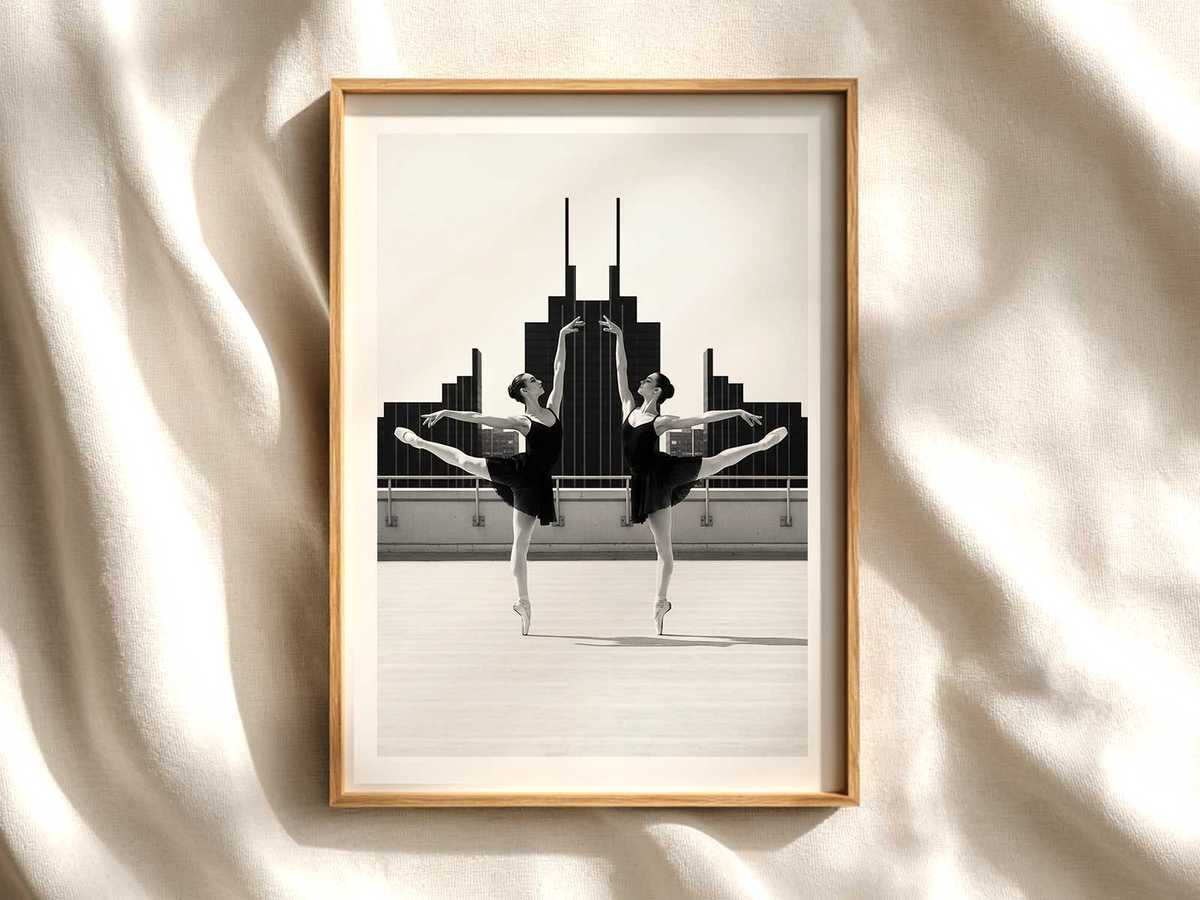
The compositional clarity lets the eye travel: from the clean line of an arm to the faint tracks in the snow, from the subtle texture of the costume to the negative space that frames the pose. That negative space is intentional breathing room; it allows the poster to anchor an interior without competing with other decor. In a minimalist scheme it reads like an elegant statement; in a layered room it acts as an artful counterpoint.
Choosing this kind of poster is choosing an atmosphere. It is for people who prefer mood over narrative, for rooms that benefit from restraint, and for collectors who appreciate how lighting and setting can tell as much of a story as the performer. The image offers a quiet drama—an invitation to linger and to let your walls echo the hush of a snowy night on stage.
Author: