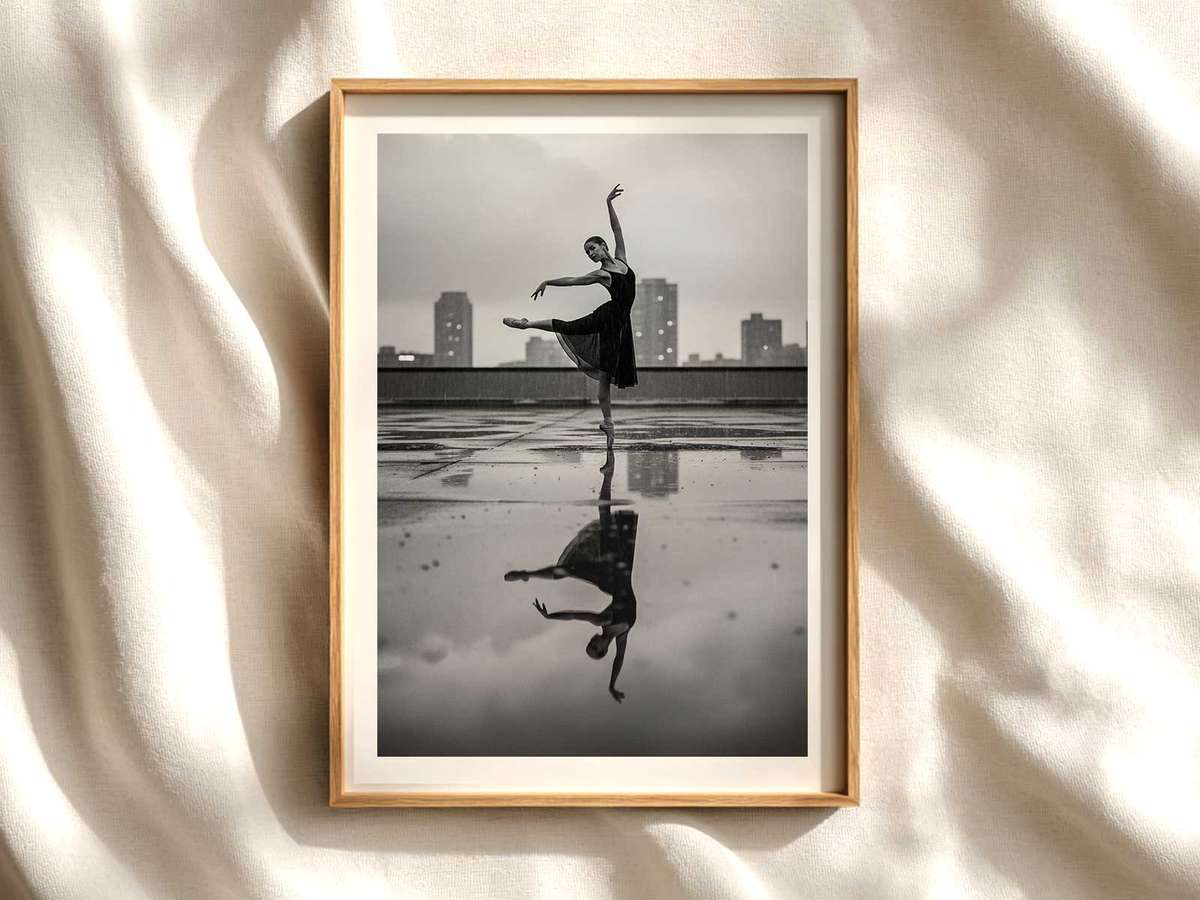
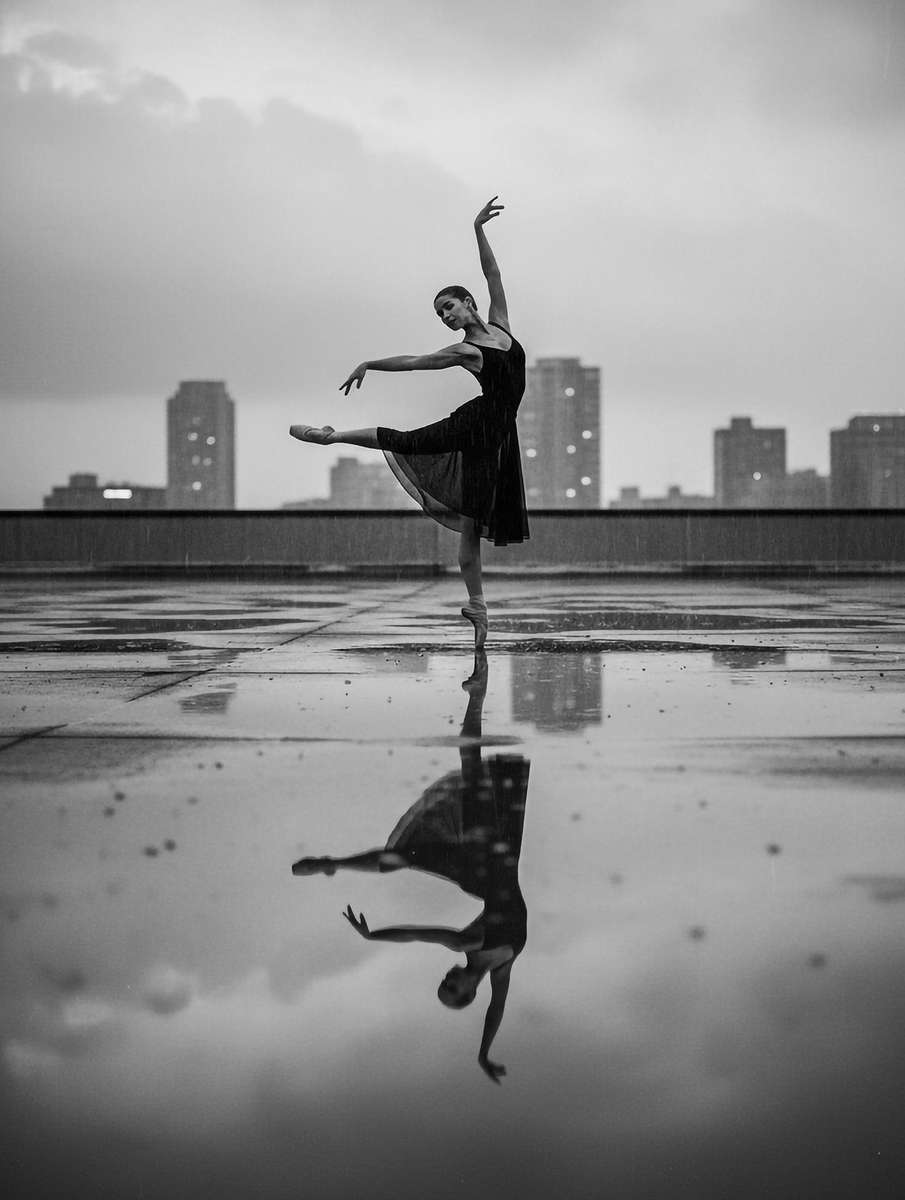
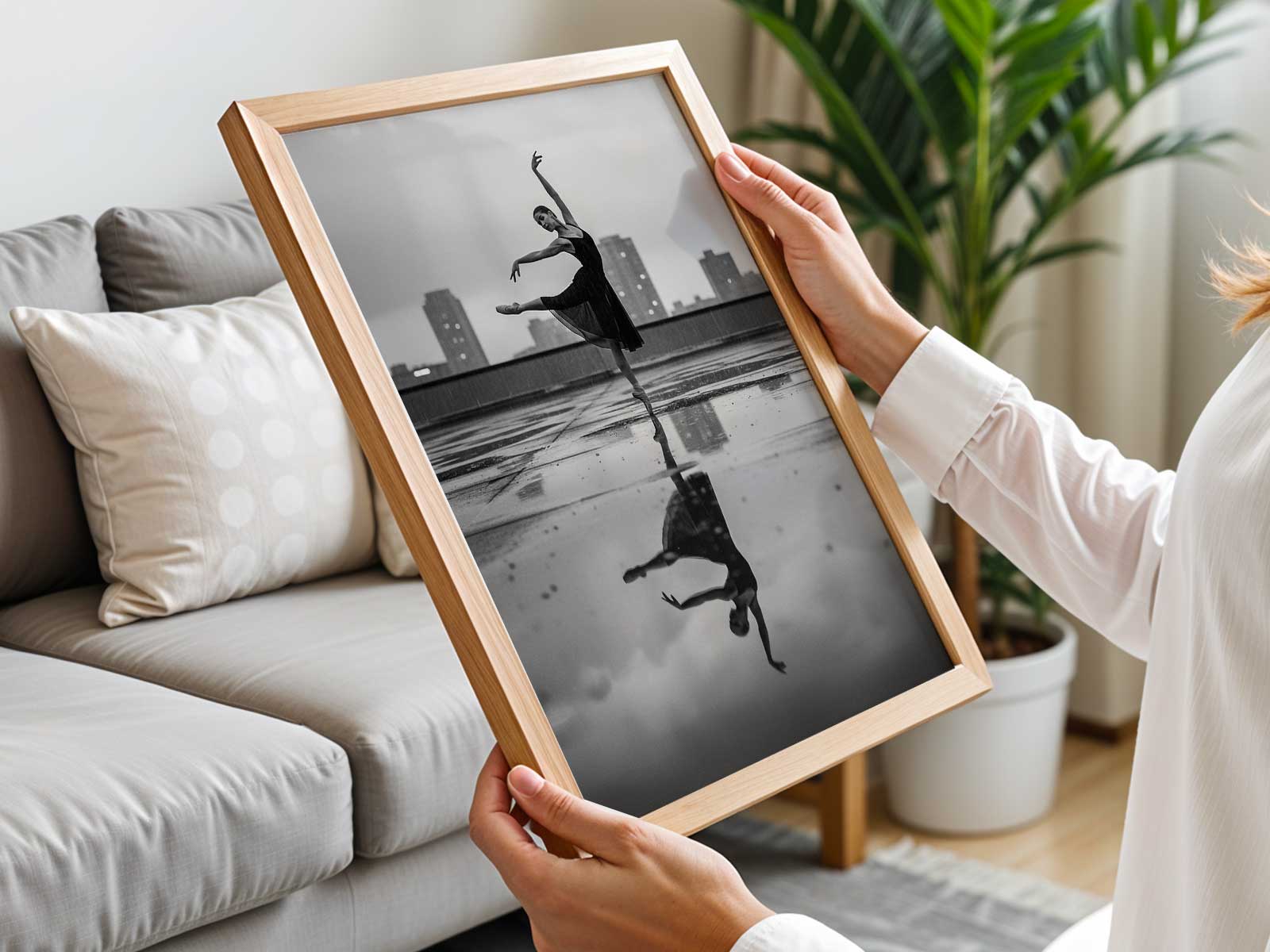
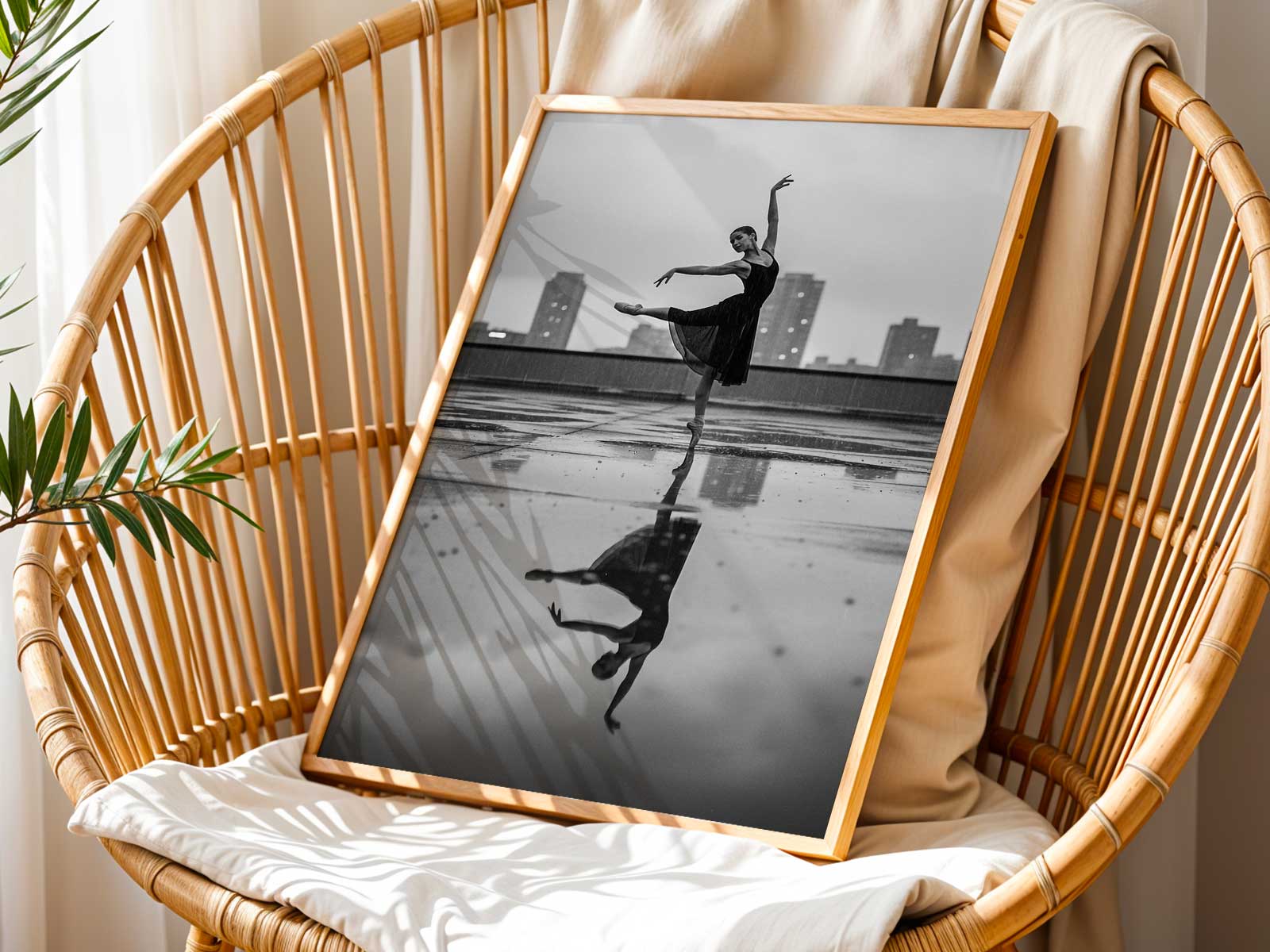
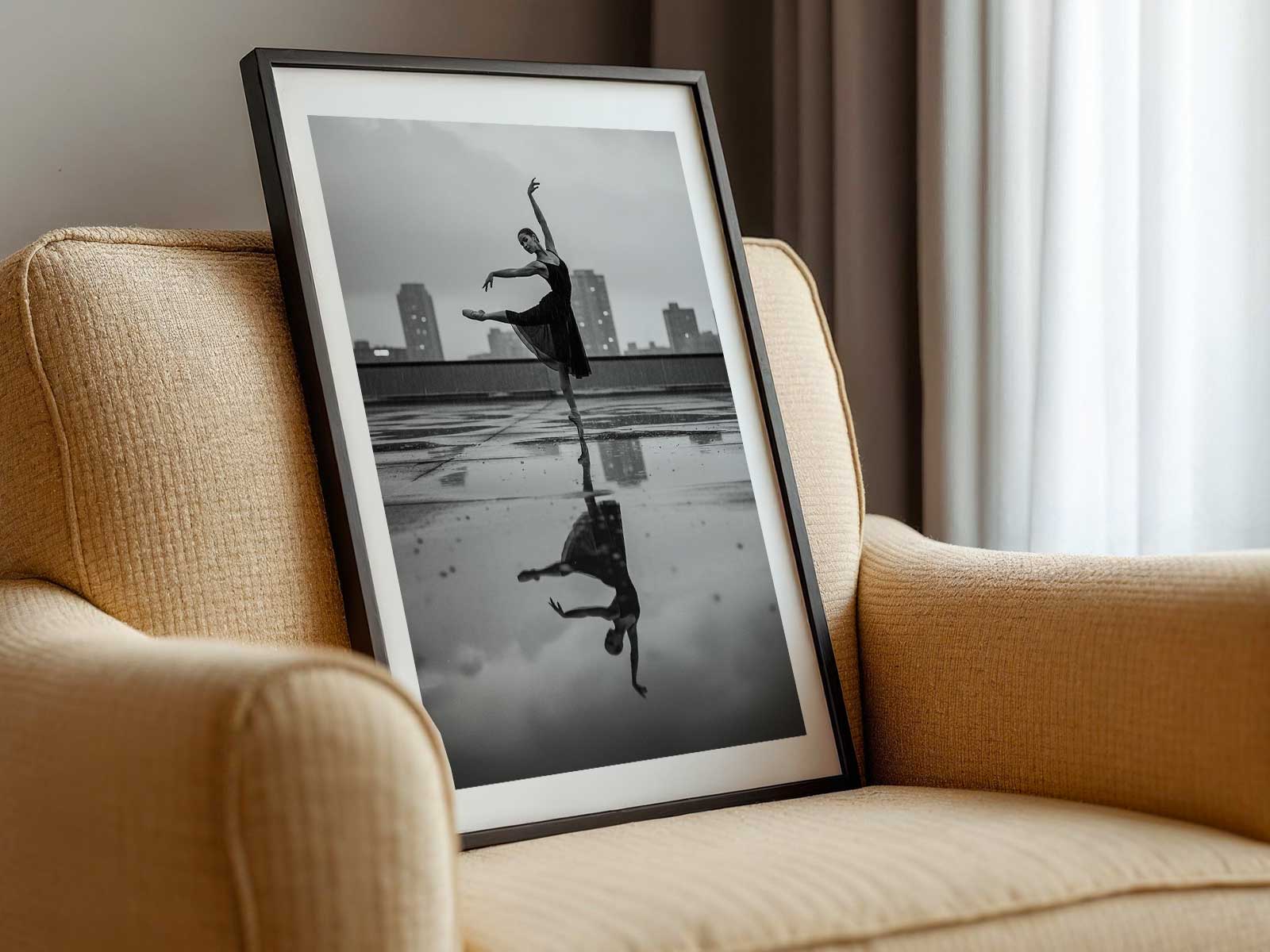
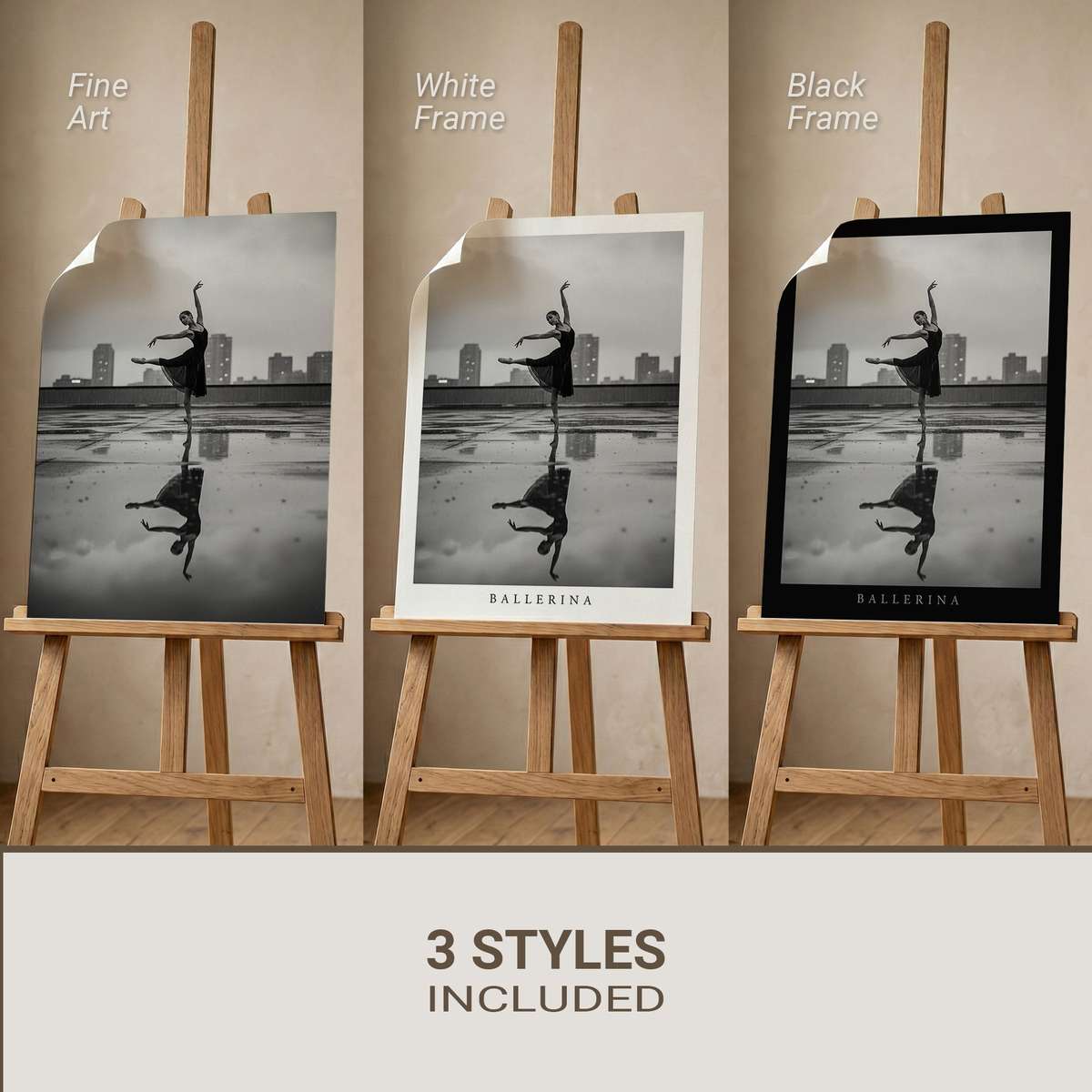
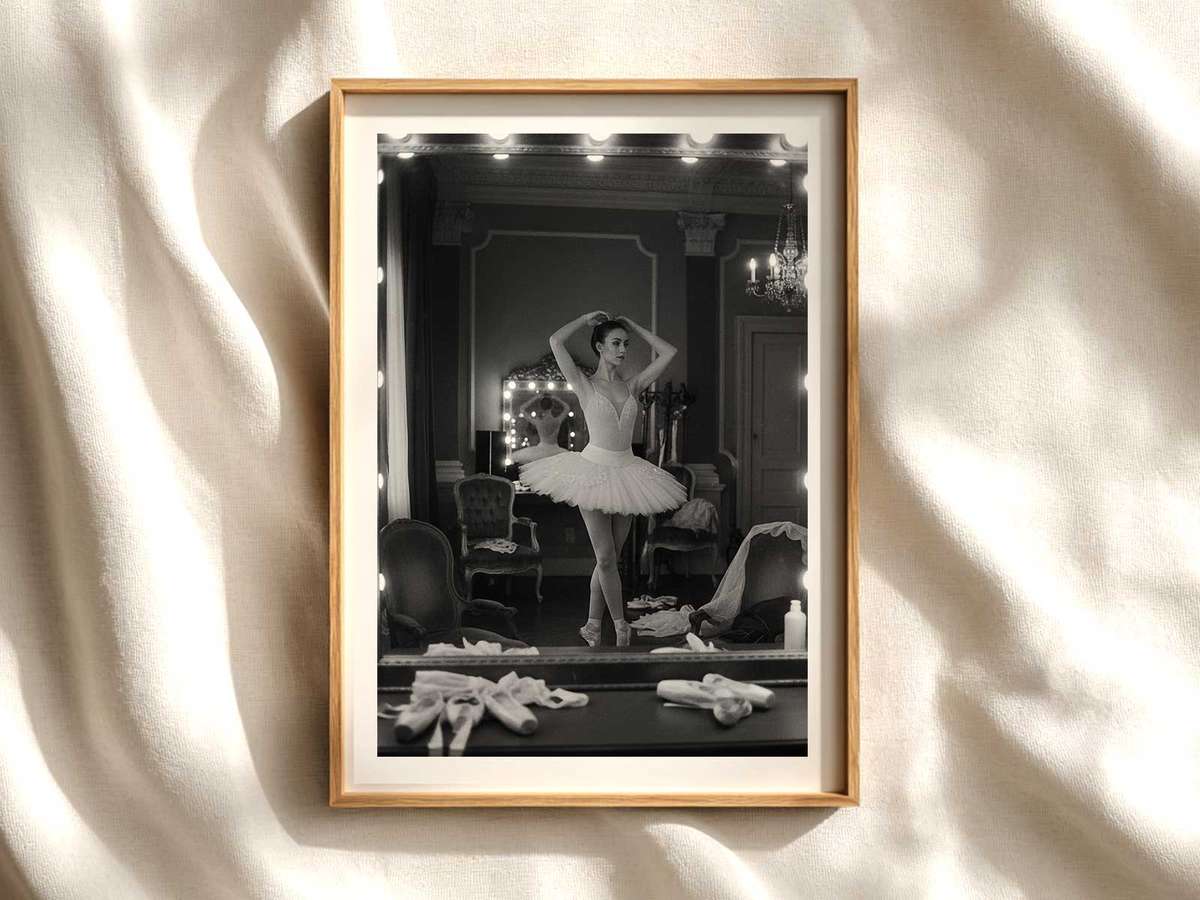
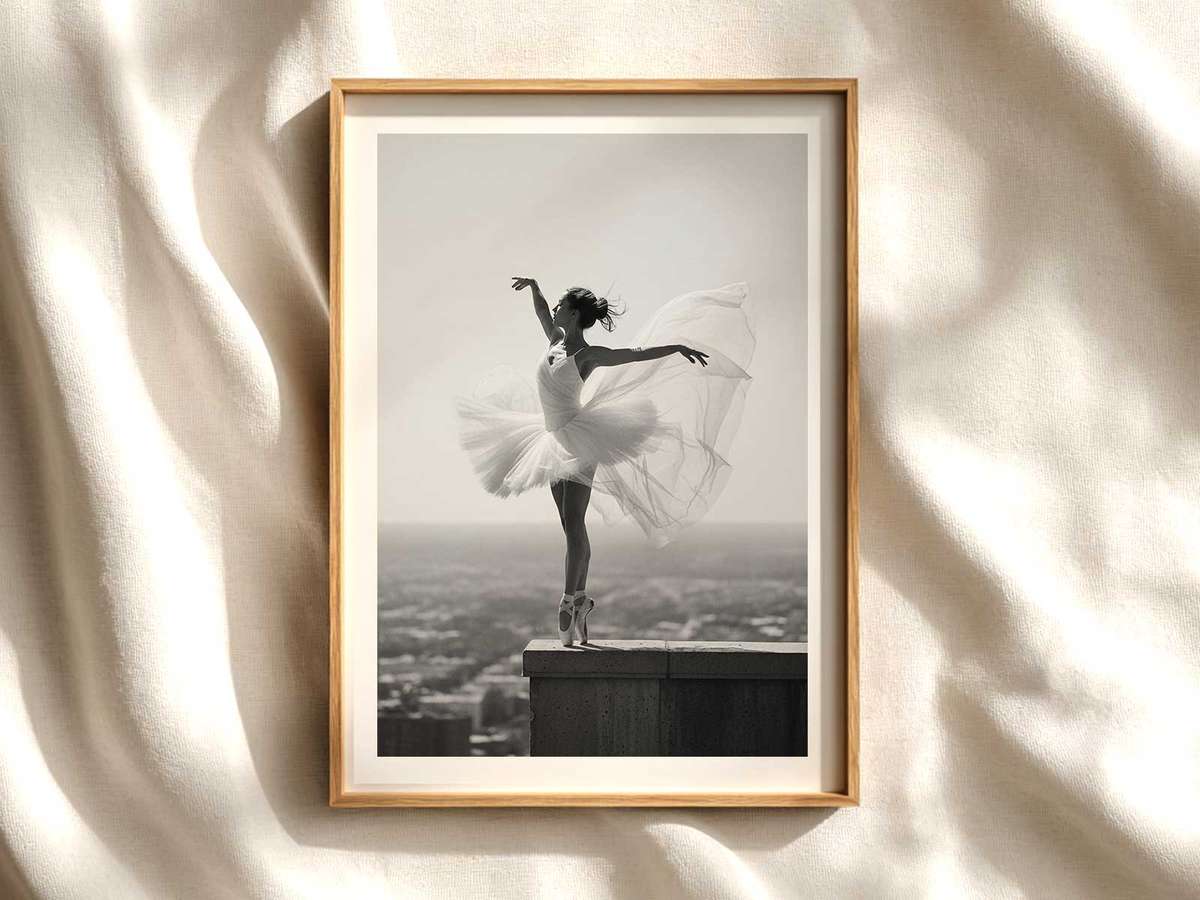
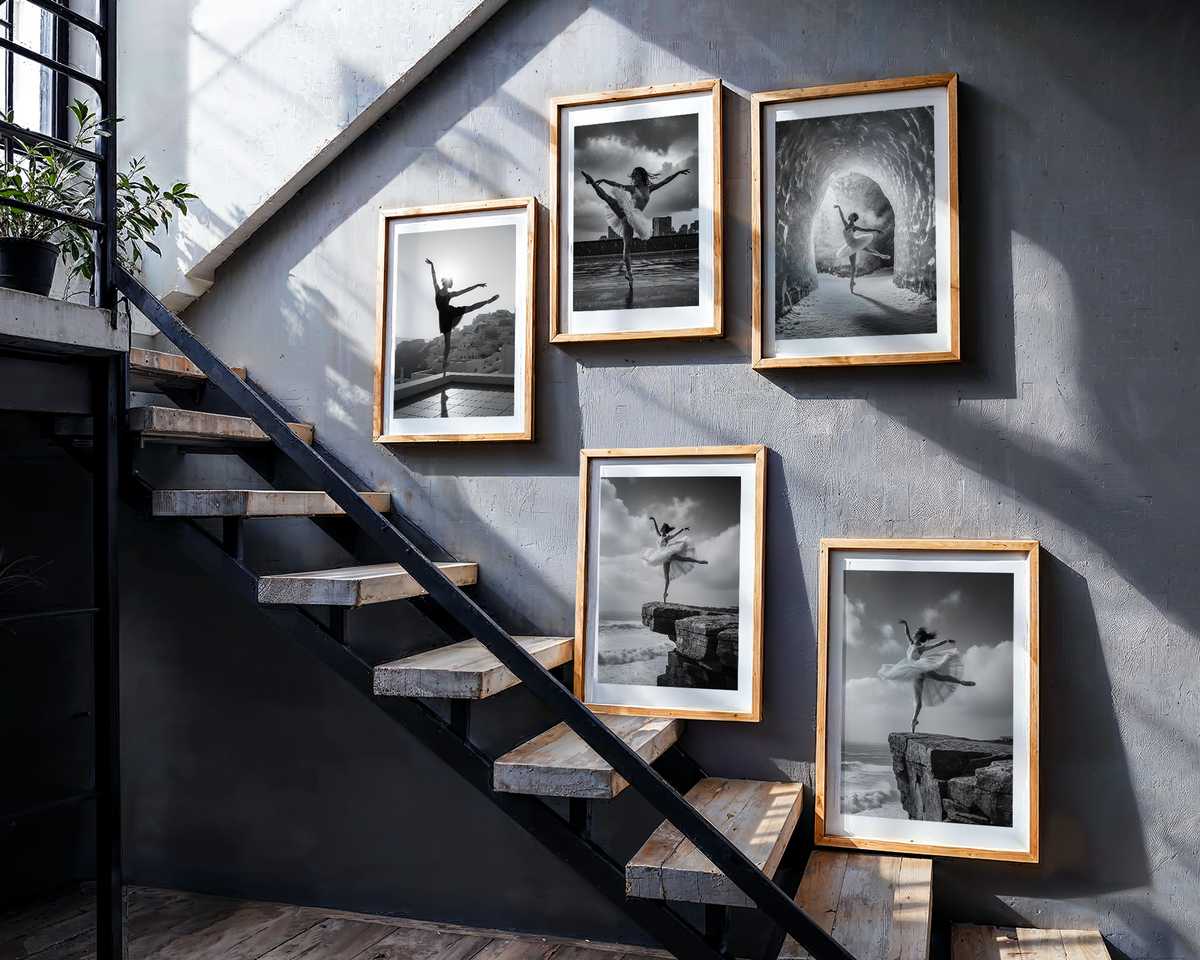
The first thing you notice is not the street, the brickwork or the sky, but the ballerina. Set against an expansive urban backdrop, her body becomes the quiet axis around which the scene arranges itself. The scale and openness of the city amplify rather than diminish her presence; negative space and architectural lines lead the eye back to the purity of her silhouette, turning a cityscape into a stage and the poster into a study of poise.
Line and Silhouette
A ballerina’s line is an economical language: the soft arc of an arm, the clear extension of a leg, the lift of the torso. In an urban-framed poster this language reads with unusual clarity. Hard edges of buildings and the horizontal planes of streets set up strong visual counterpoints that make her curves and elongations feel deliberate and lyrical. The result is a silhouette that functions like a sculptural focal point—calm, exact, and immediately recognizable across a room.
[IMAGE_INSERT_ARTICLE_01]
Carriage and Emotional Tone
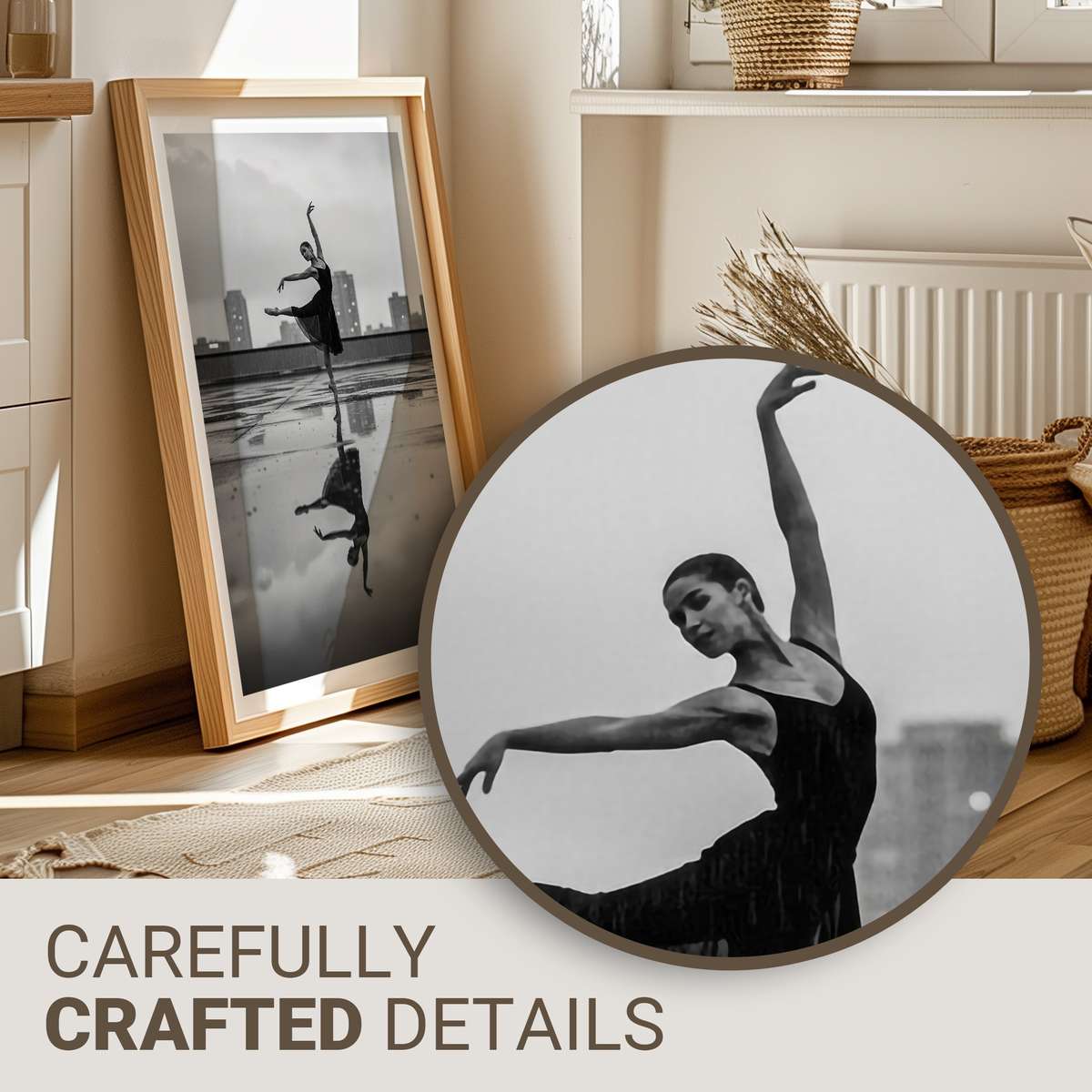
The carriage of the head and the subtle tilt of the chin do more than imply technique: they set the emotional temperature. A slight lift of the head conveys confidence; a lowered gaze suggests introspection. That single small decision—how she holds her head—pulls the viewer into a narrative without words. On a poster, where viewing is brief and repeated, these quiet cues accumulate, making the image feel familiar and resonant each time you pass it.
Balance and the sense of suspension are equally persuasive. The momentary suspension of a foot or the poised stillness between movements creates the illusion of time stretched. This suspended instant invites the room to slow down. A wall that contains such a poster instantly reads as more considered: a domestic stage where everyday rhythms take on a calmer tempo.
Why It Works in Your Home
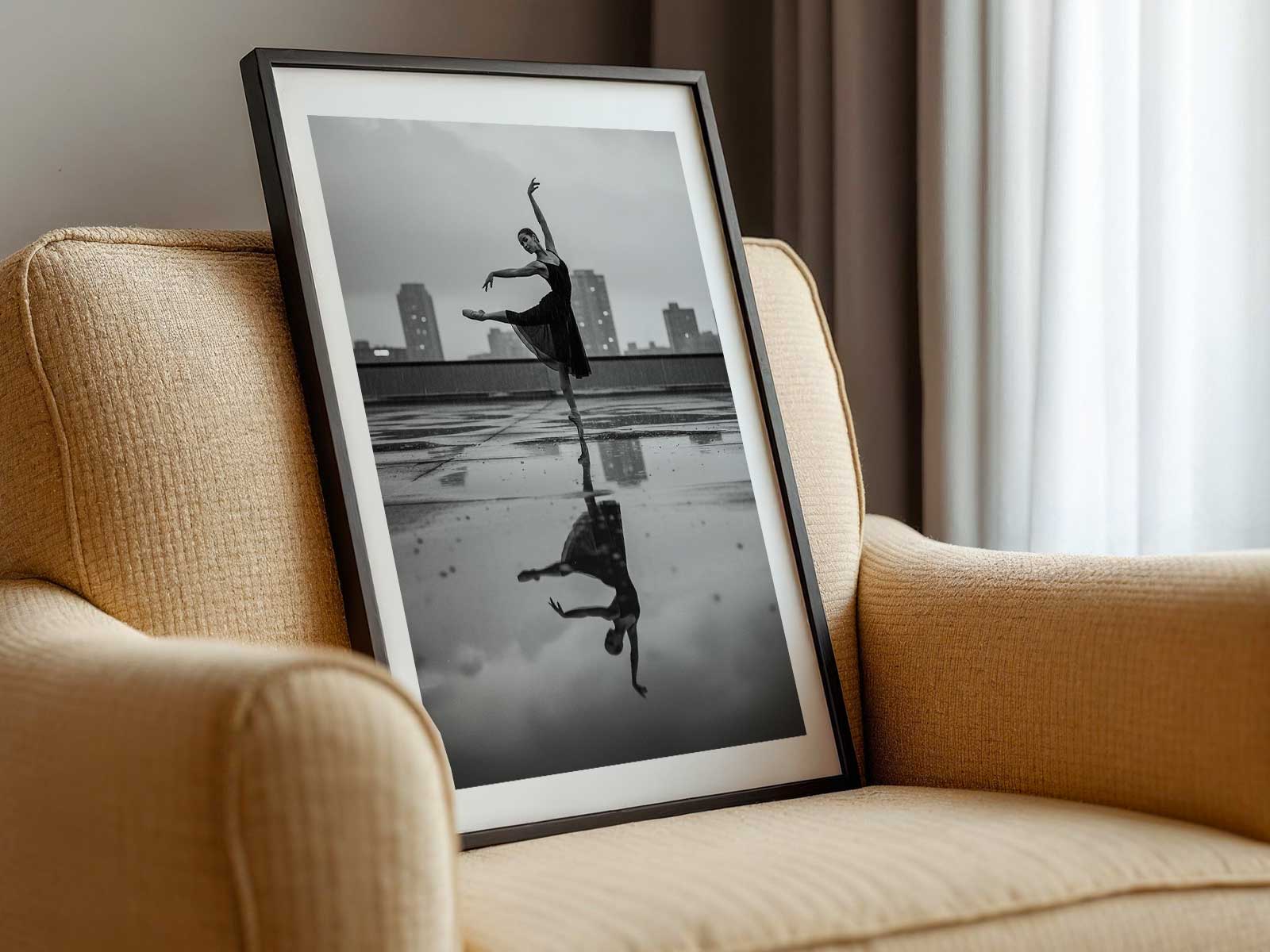
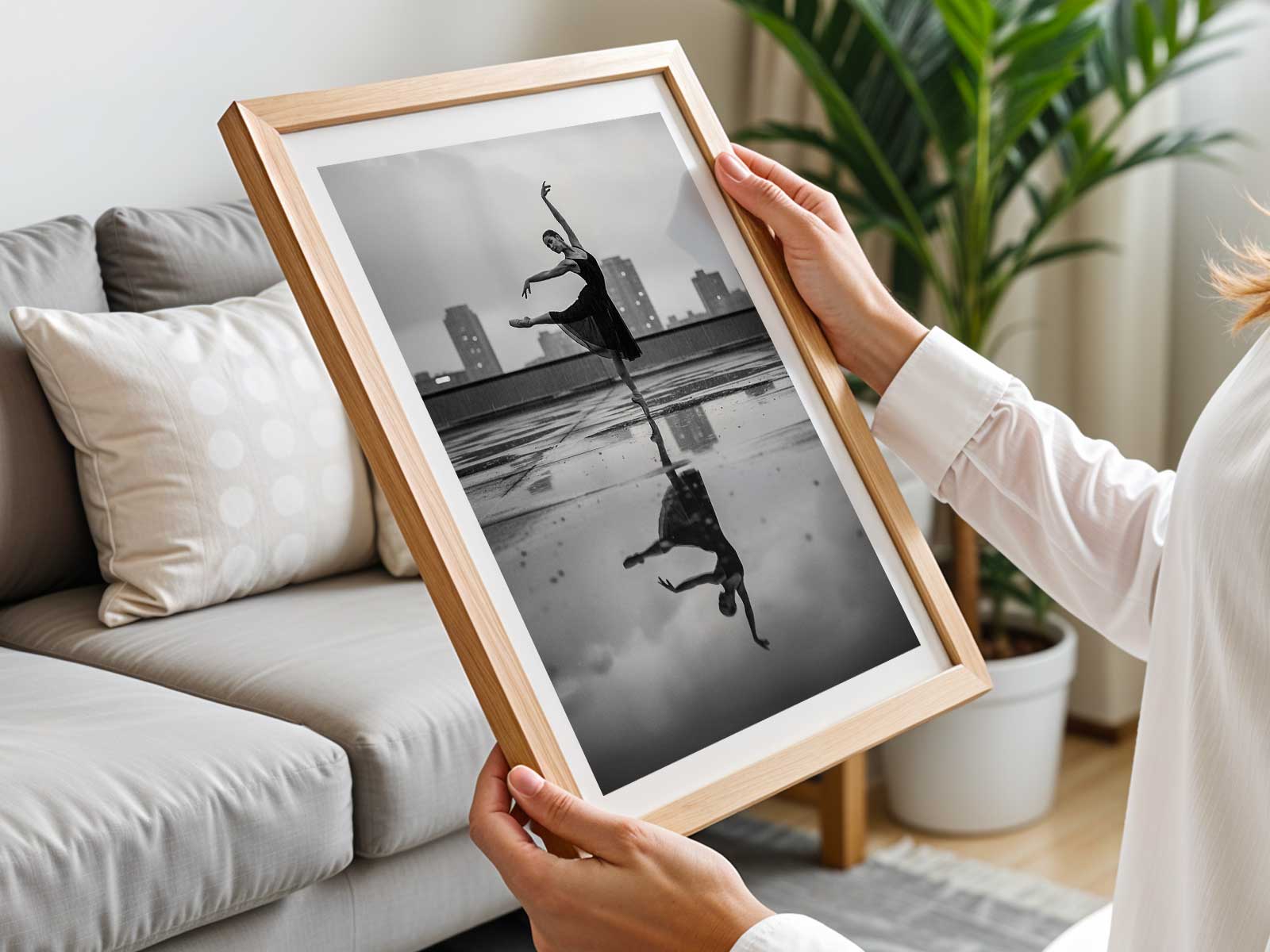
A dancer-centered image transcends fashion because it resolves ornament and restraint simultaneously. It provides a vertical anchor for furniture arrangements and a visual centre that can soften sharp corners or lift neutral palettes. The precision of the ballerina’s line introduces an understated luxury—an image that suggests refinement without shouting for attention. That balance is why such posters adapt so well to living rooms, bedrooms, studios and hallways: they are decorative and psychological in equal measure.
Ultimately, a poster with a ballerina in an open urban frame is compelling because it offers a human fulcrum. It invites personal projection: strength, grace, longing, focus. Each viewer brings a private story to the posture and finds, in the dancer’s economy of gesture, a concentrated place to rest the eye and the mind. The poster becomes less an image and more a presence—timeless, intimate and quietly transformative.