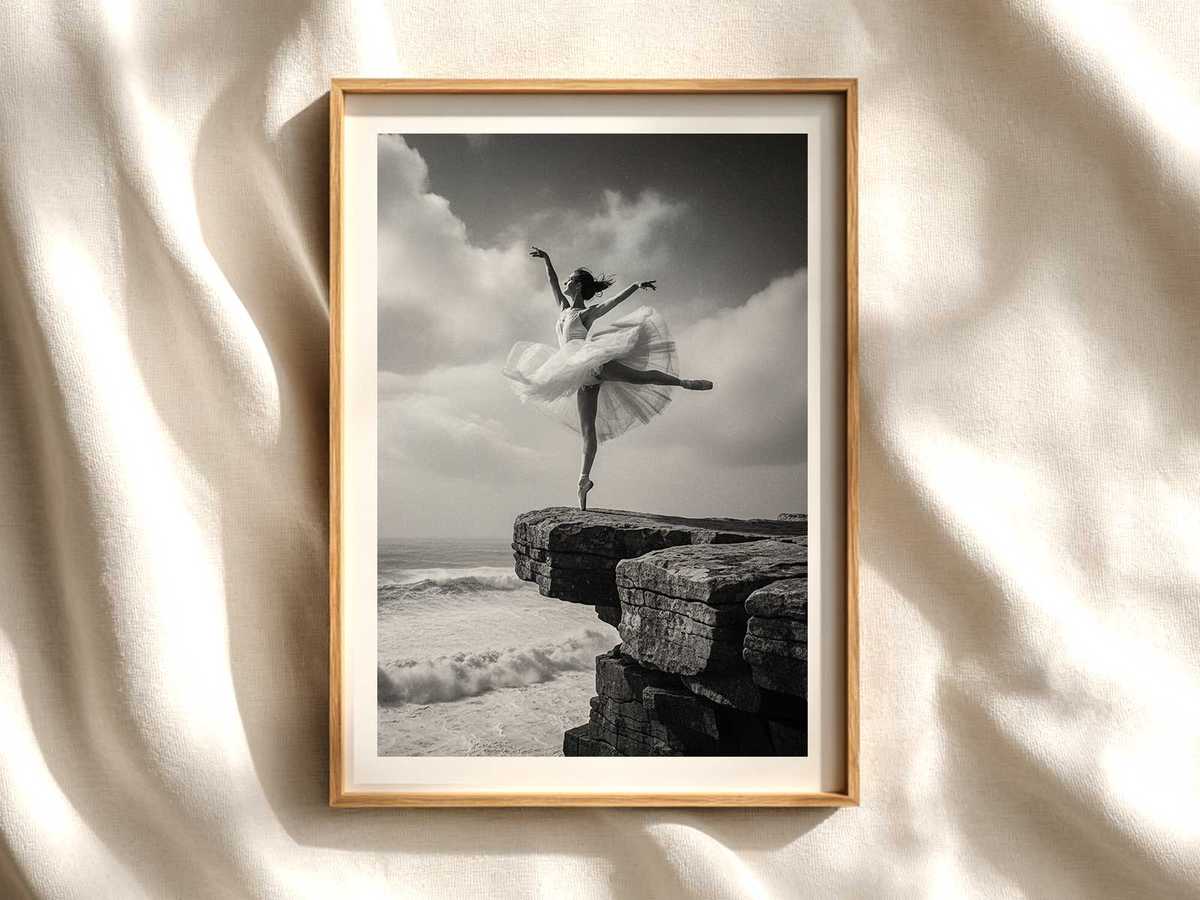
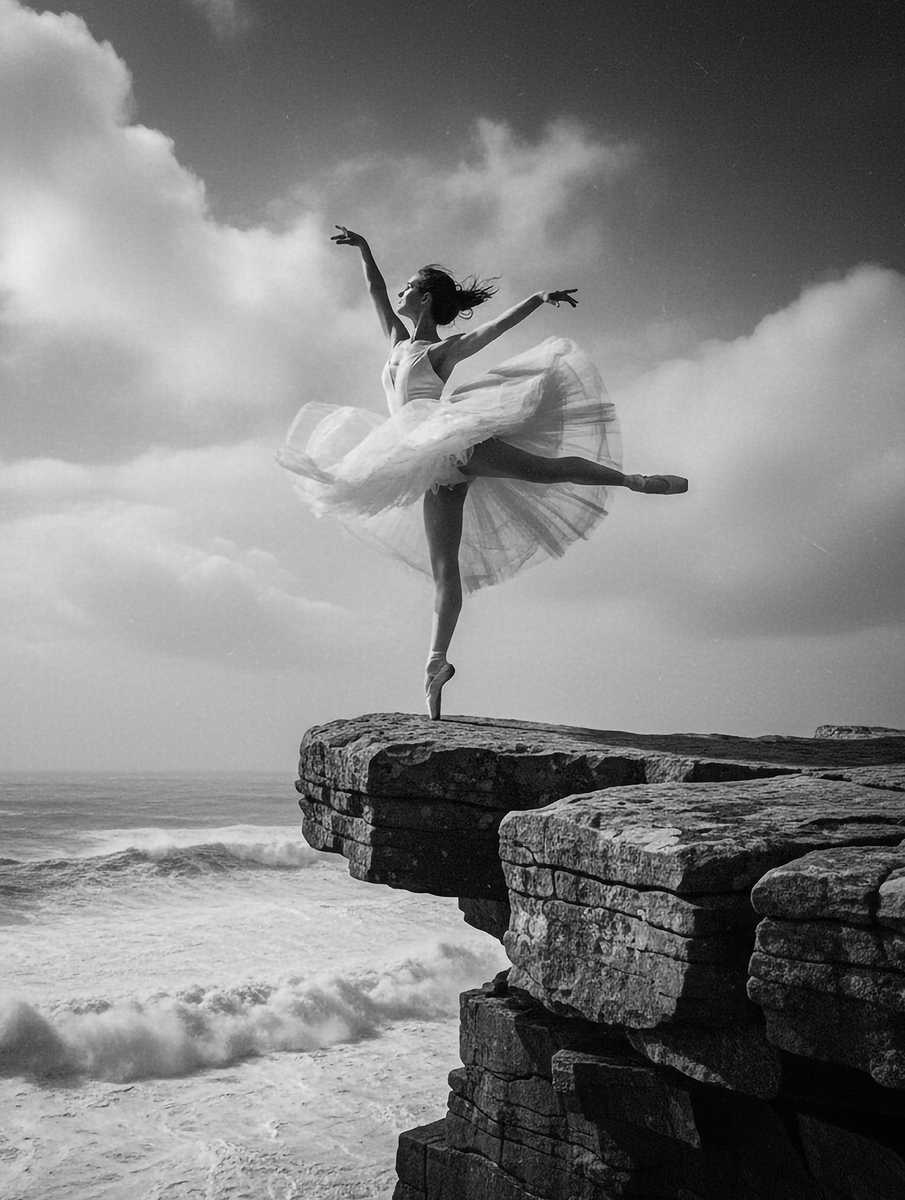
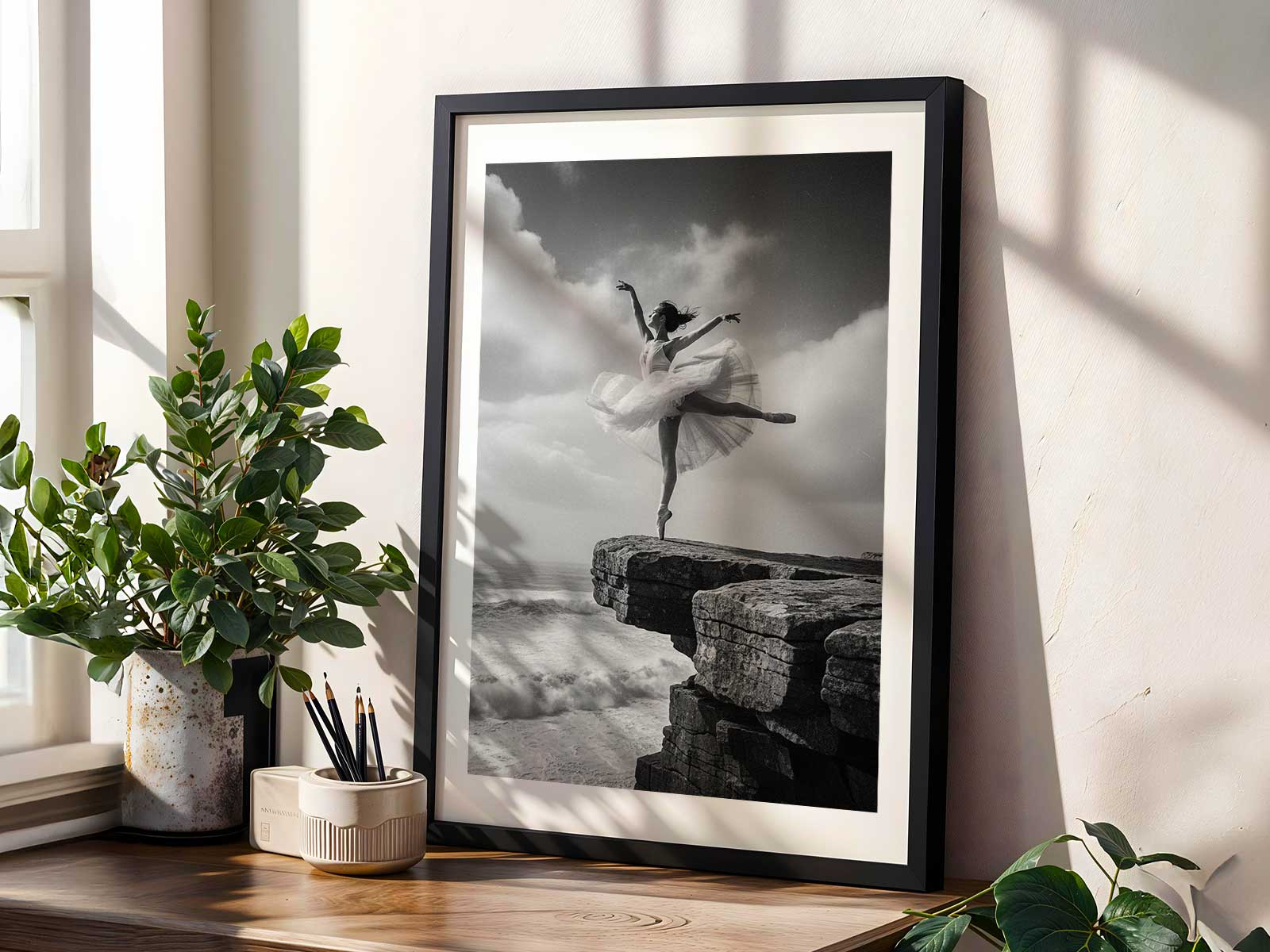
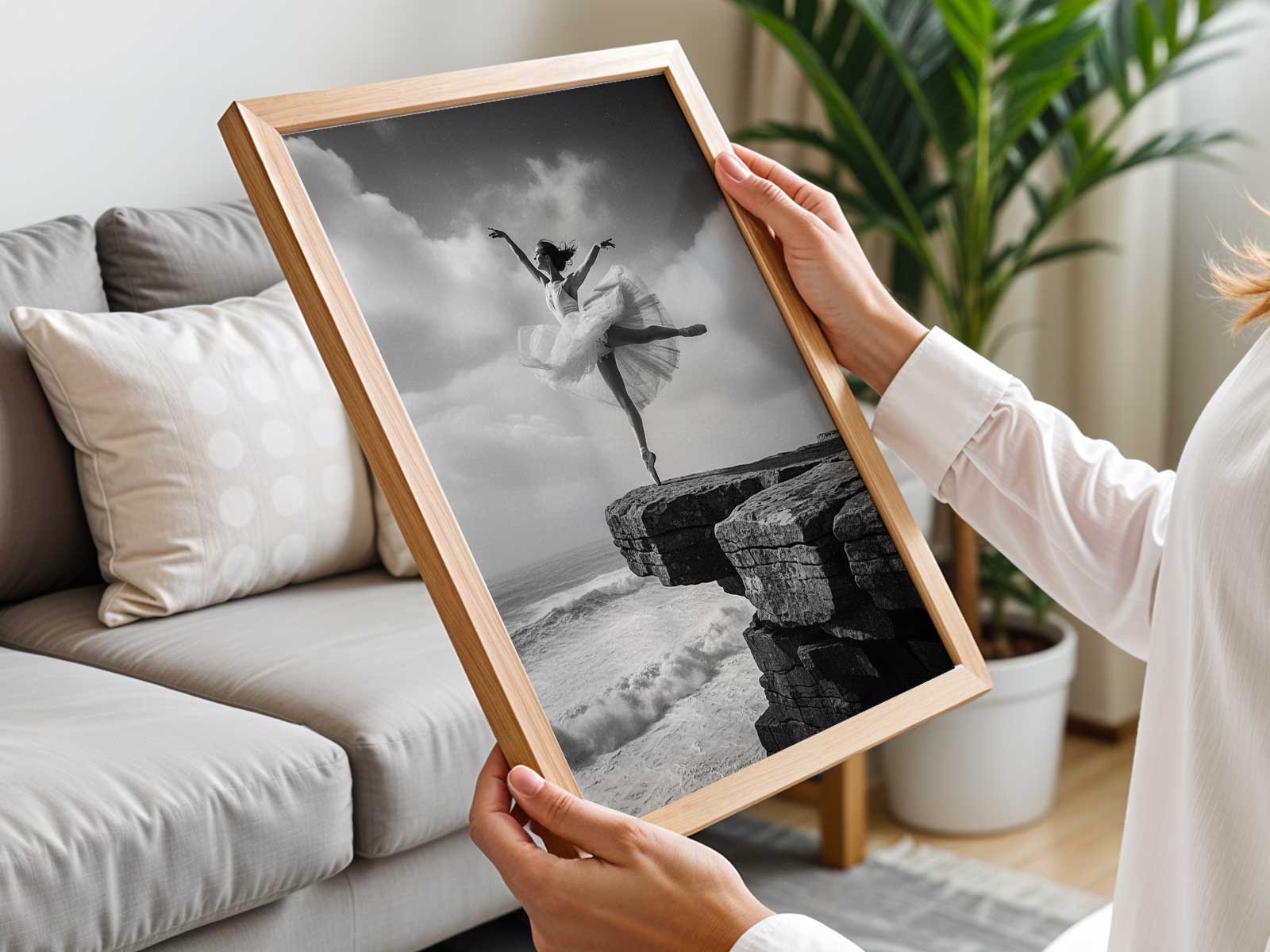
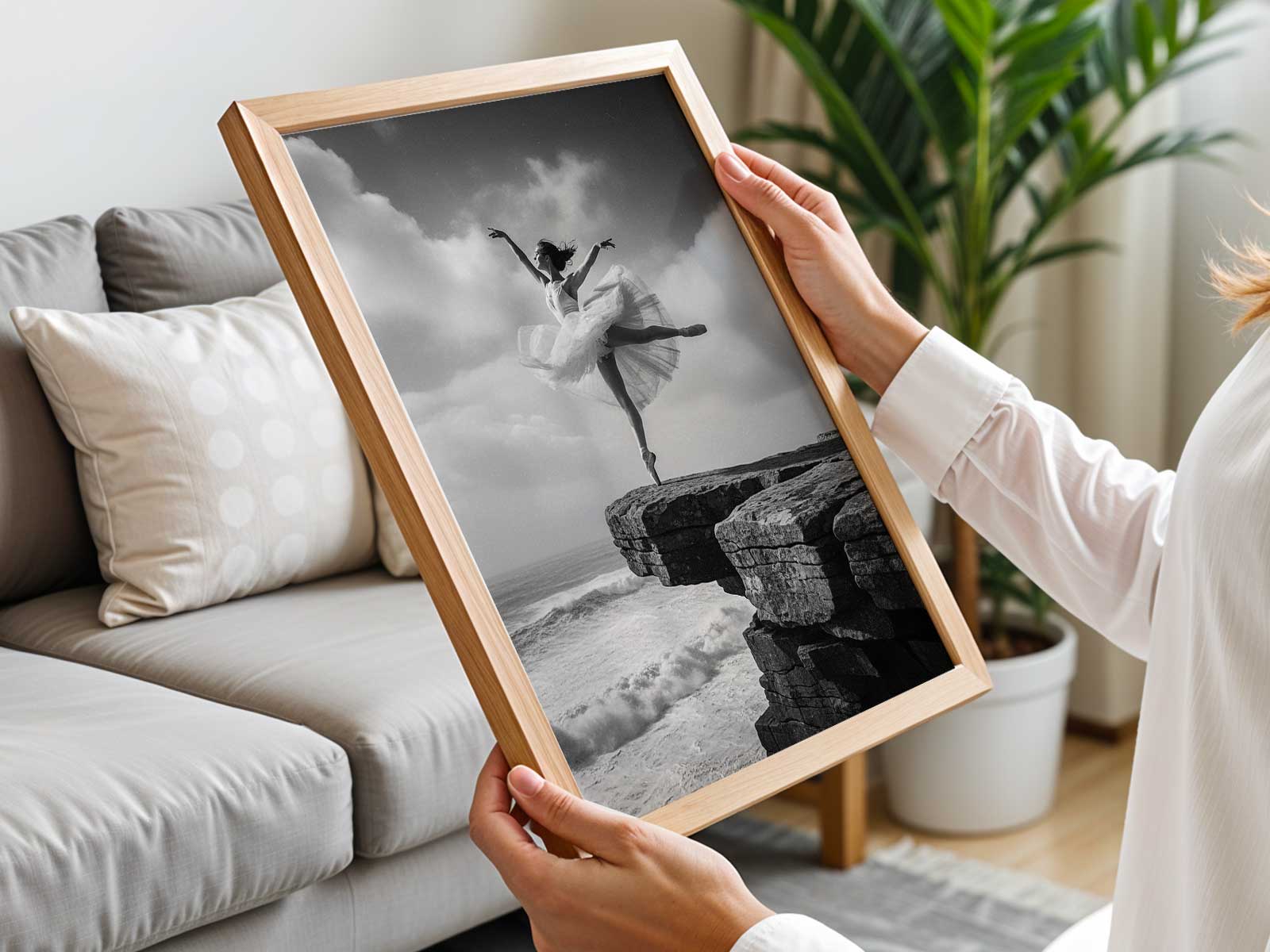
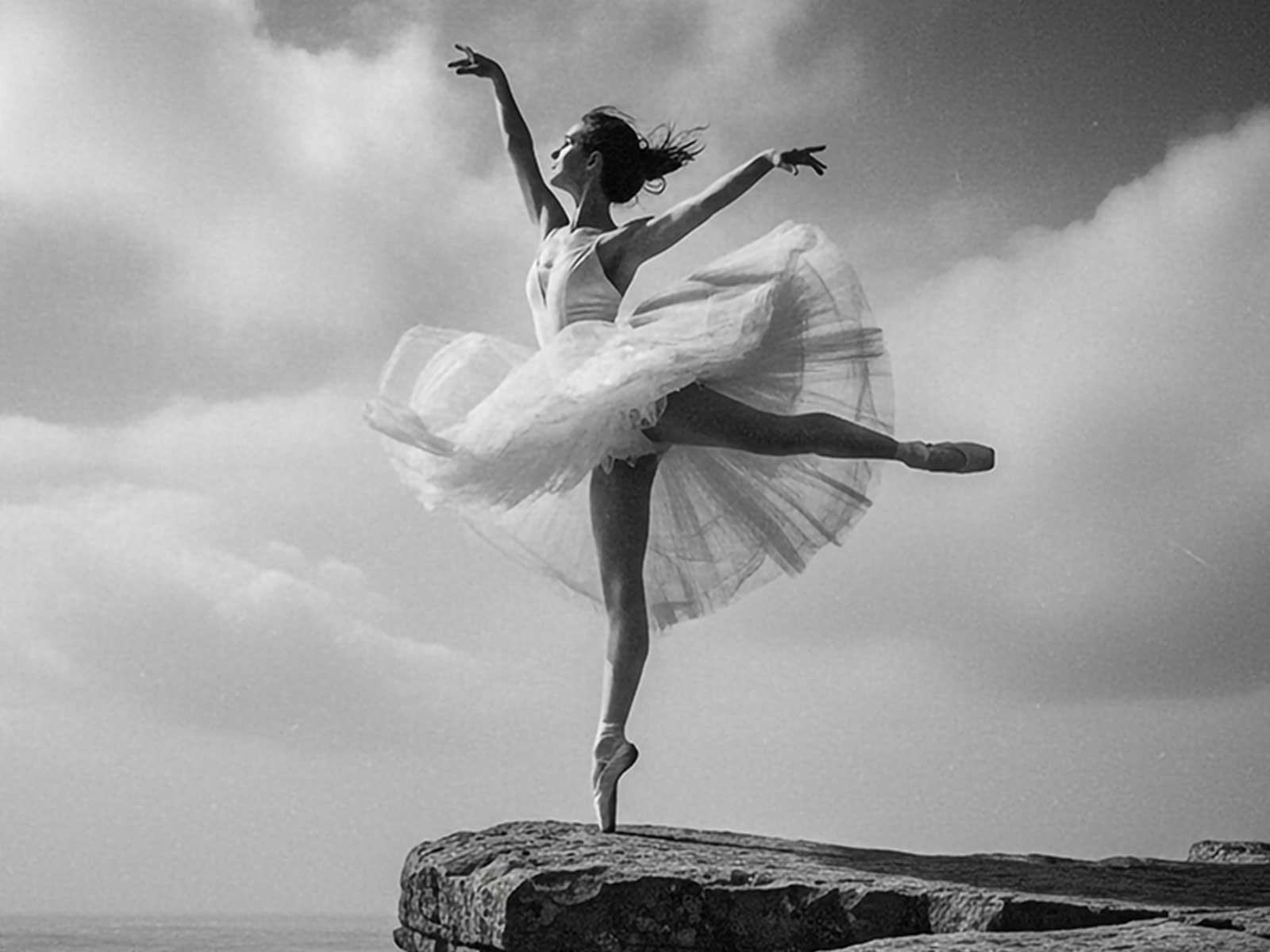
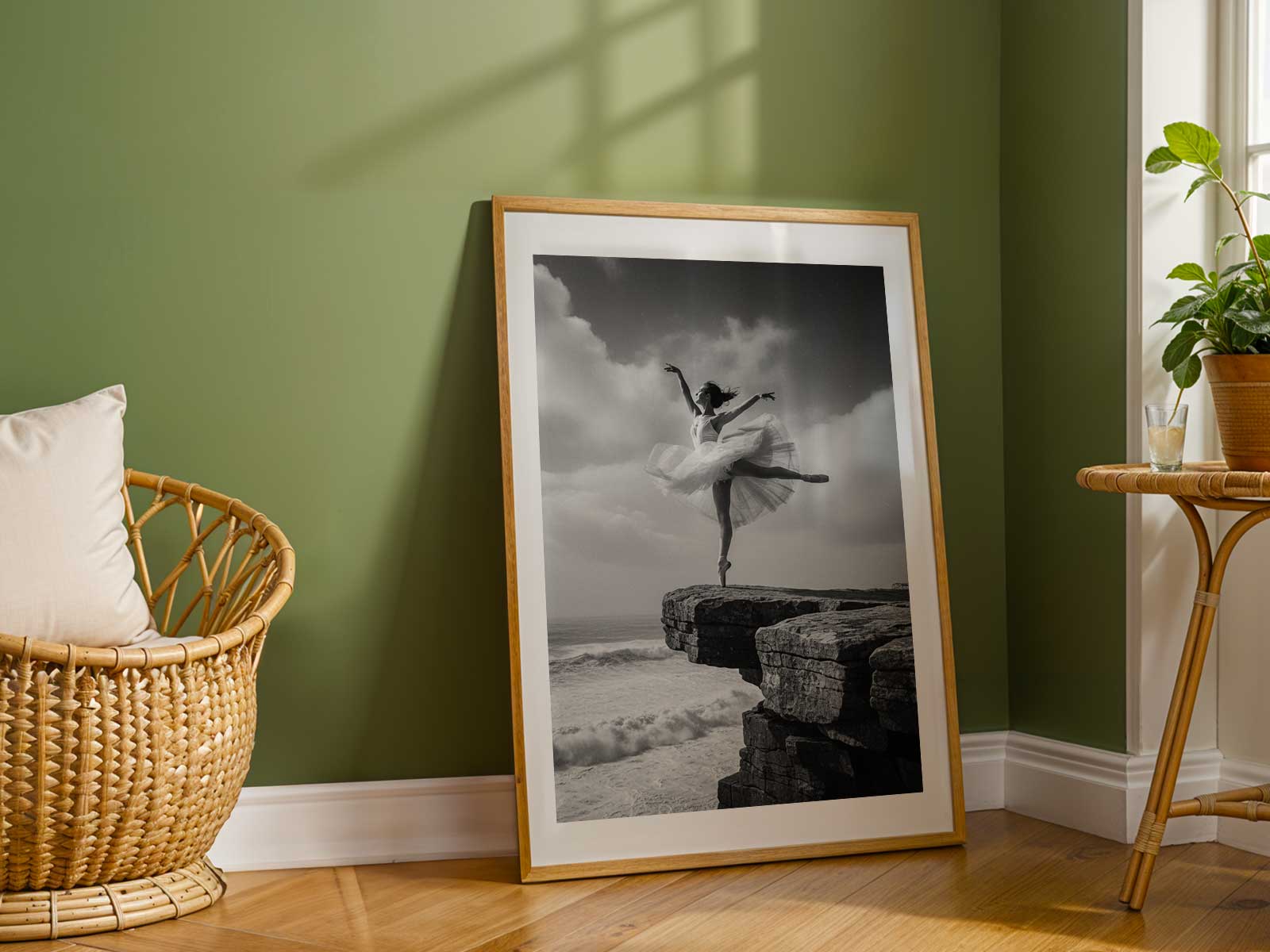
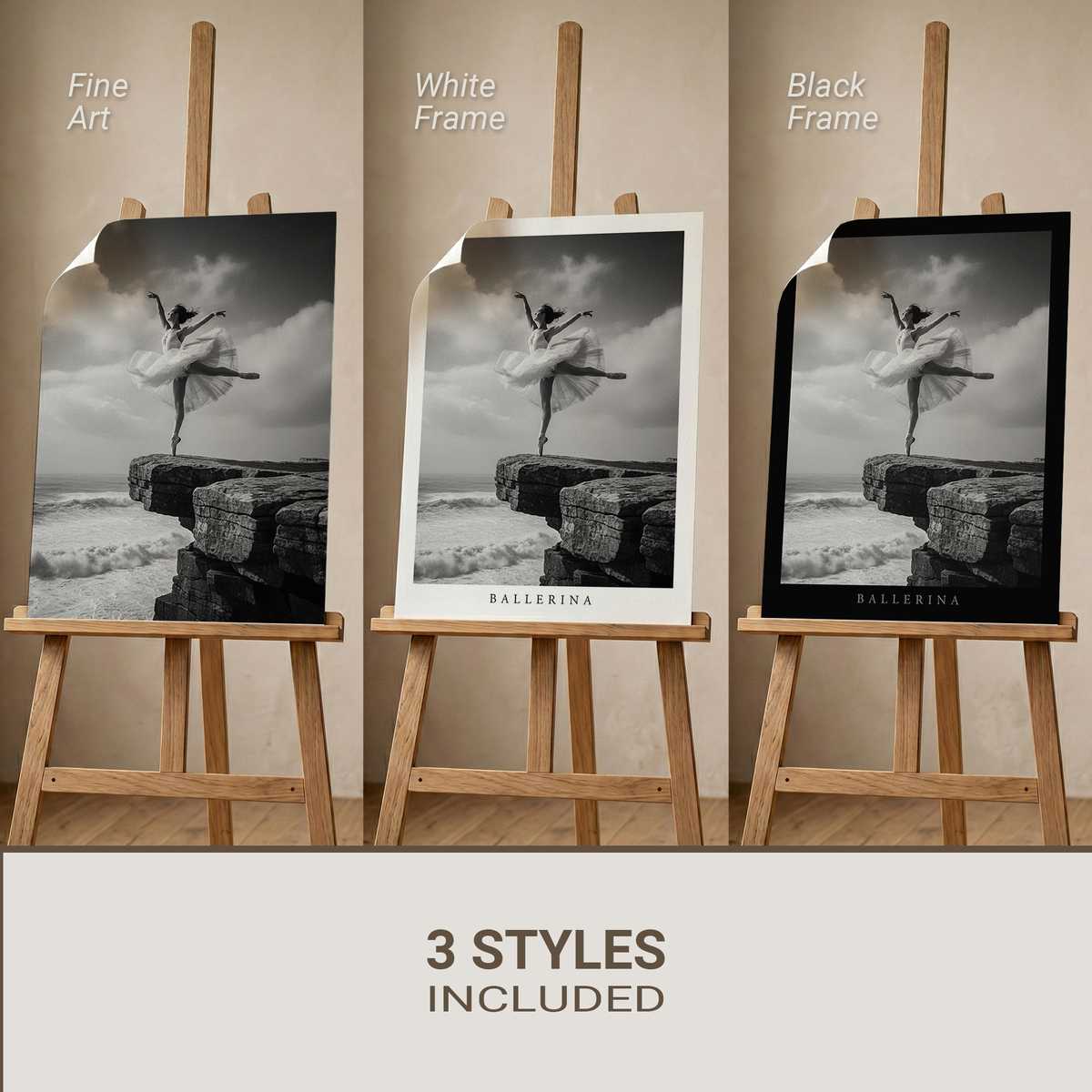
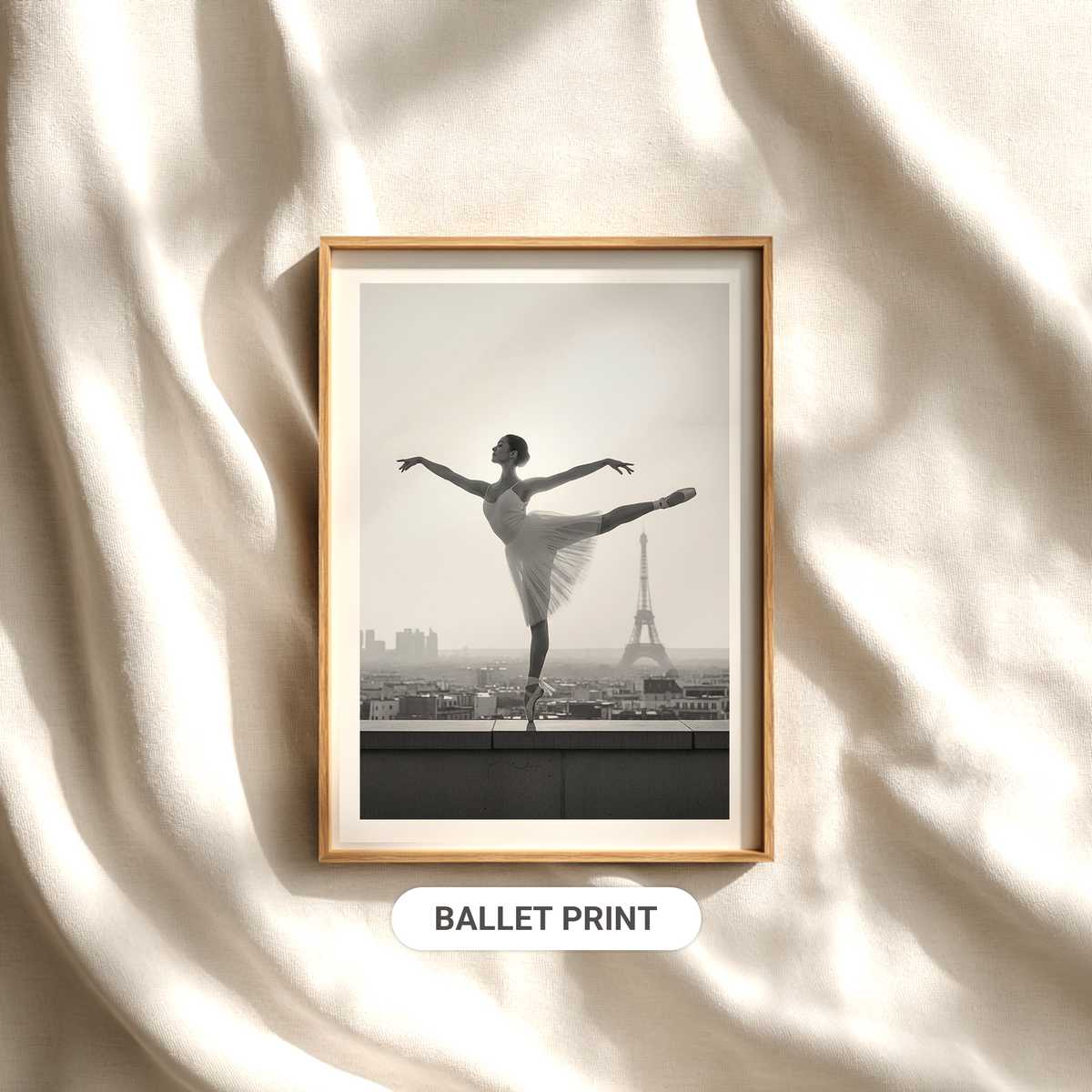
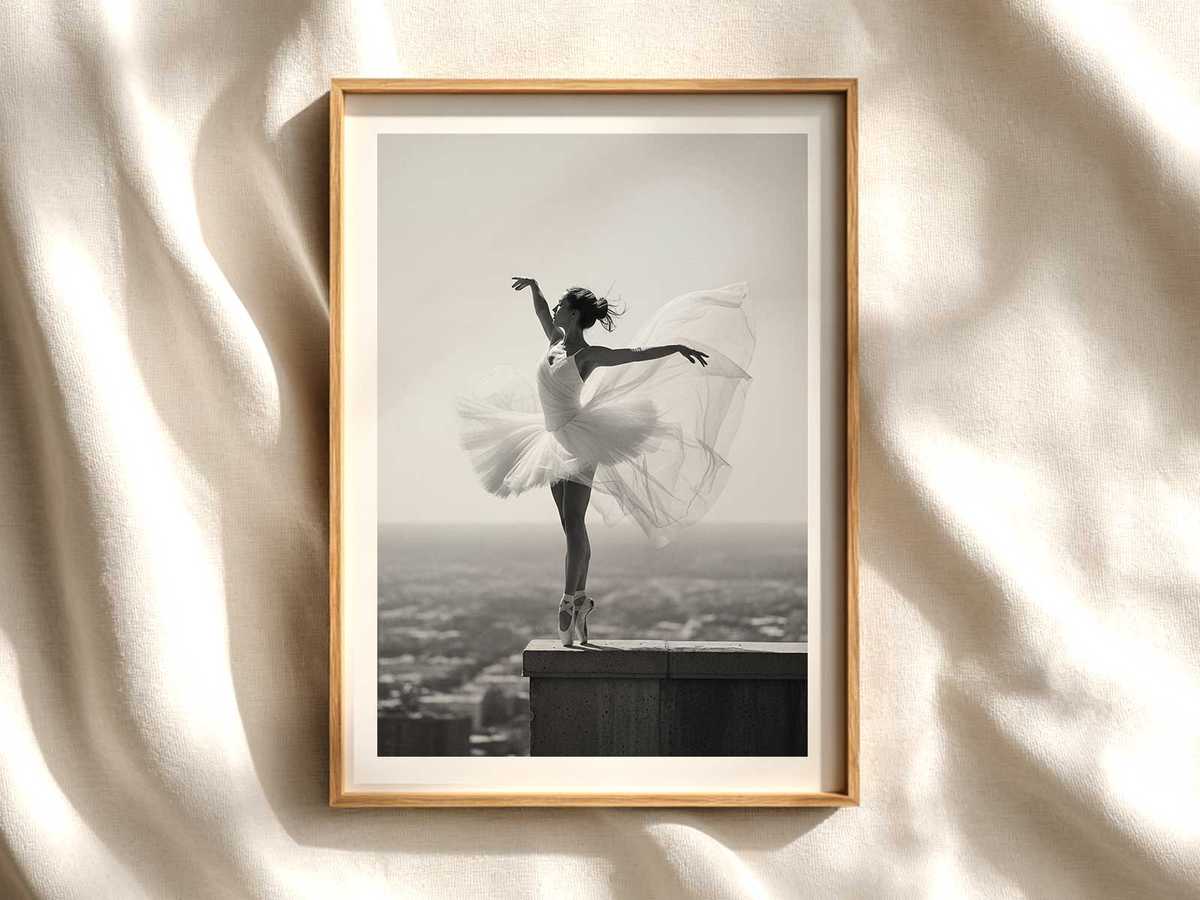
The photograph fixes a dancer poised at the edge of land and sea: an arm extended, a suspended foot, the dress lifted by wind and gravity. Placed against rock, surf or an open drop, that single instant acquires a peculiar tension—half ballet, half landscape—where the choreography meets horizon and the gesture reads like a daring punctuation. This is beach ballet photography: an image that converts a fleeting performance into a steady, resonant presence for the wall.
The moment that arrests the eye
What makes this frame compelling is not only the technical perfection of a turn or the height of a leap, but the way the immediate surroundings amplify the sensation. A foot hanging over rock, the sea widening beyond, the sky swallowing distance—these elements widen the stakes of the move. Timing becomes everything: the split-second before descent, the pause when muscles are taut and air fills the space around the body. The viewer senses both motion and the possibility of falling, and that paradox—grace held at the edge of vastness—creates a memory that lingers long after the gaze moves on.
[IMAGE_INSERT_ARTICLE_01]
Why this instant makes a strong poster
An effective poster captures not just appearance but charge. In beach ballet photography the charge comes from contrast: the dancer’s controlled line against the irregular geometry of cliff and sea, the intimacy of a human silhouette against monumental nature. That contrast translates to a decorative object that reads from across a room—poetic yet architectural. The image holds narrative compression: you can feel the wind, imagine the sound of waves, and invent the seconds that follow. It turns a private performance into a public artifact, ready to shape the mood of an interior.
Wall art thrives on suggestion. A framed beach ballet moment suggests stories of escape, risk and buoyancy without dictating them. The gaze meets a point of intensity and returns to the surrounding negative space—the horizon, the rock face, the sky—so the poster breathes within your décor. Its stillness is active: viewers supply movement and duration, making the piece perpetually alive.
Technically, such a poster benefits from strong composition and decisive cropping: the dancer placed so that arms, legs and line lead toward the horizon; rests of empty sea that give the eye a place to pause; natural textures that add tactile contrast to silk and skin. These elements create a framed architecture that suits modern interiors as readily as a classical salon, leaving the image both a focal point and a subtle companion to surrounding objects.
Ultimately, a single suspended second beside the sea becomes an invitation. It is an image that asks to be revisited—once for its aesthetic harmony, again for the emotional lift it offers, and always for the small shiver of vertigo it can deliver when you stand before it. As wall art, it does more than decorate: it opens a space of escape and holds it there, beautifully balanced between motion and stillness.