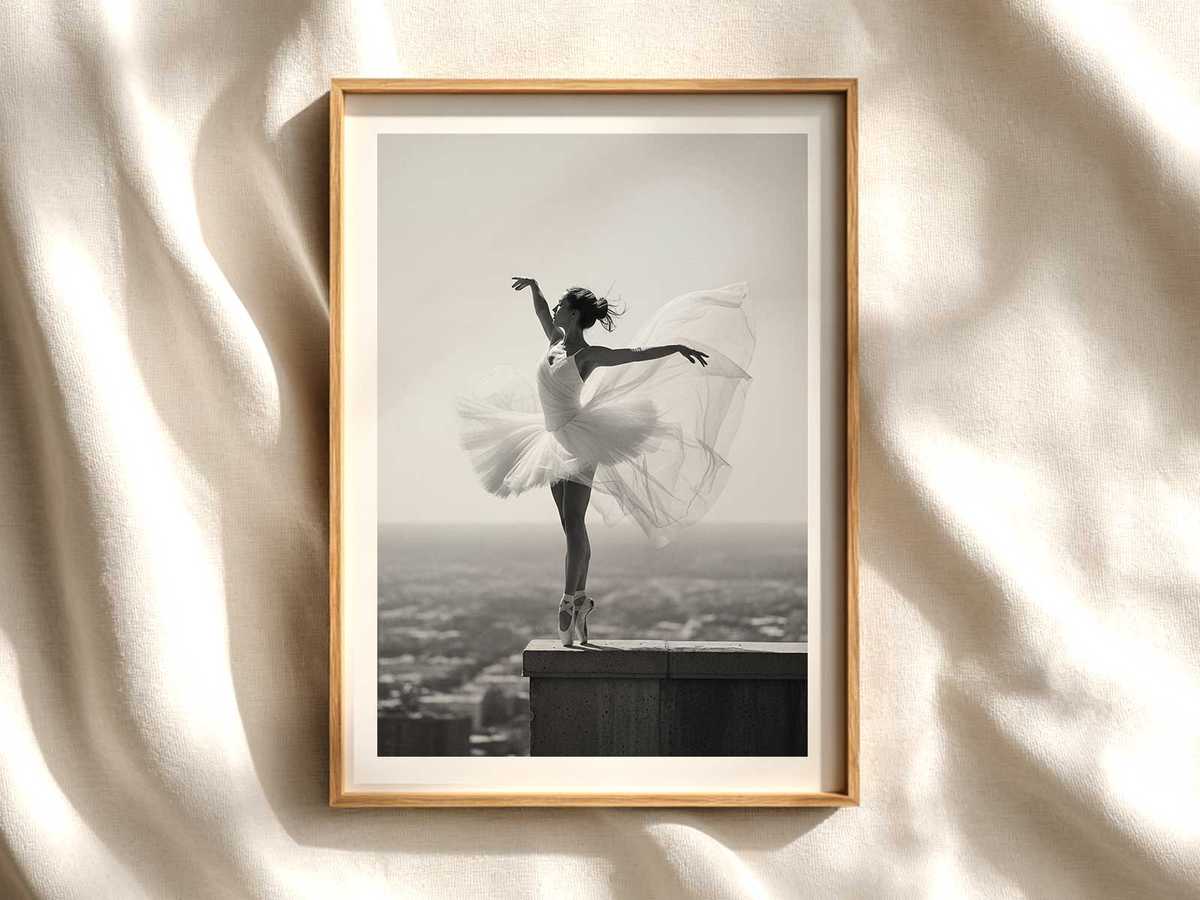
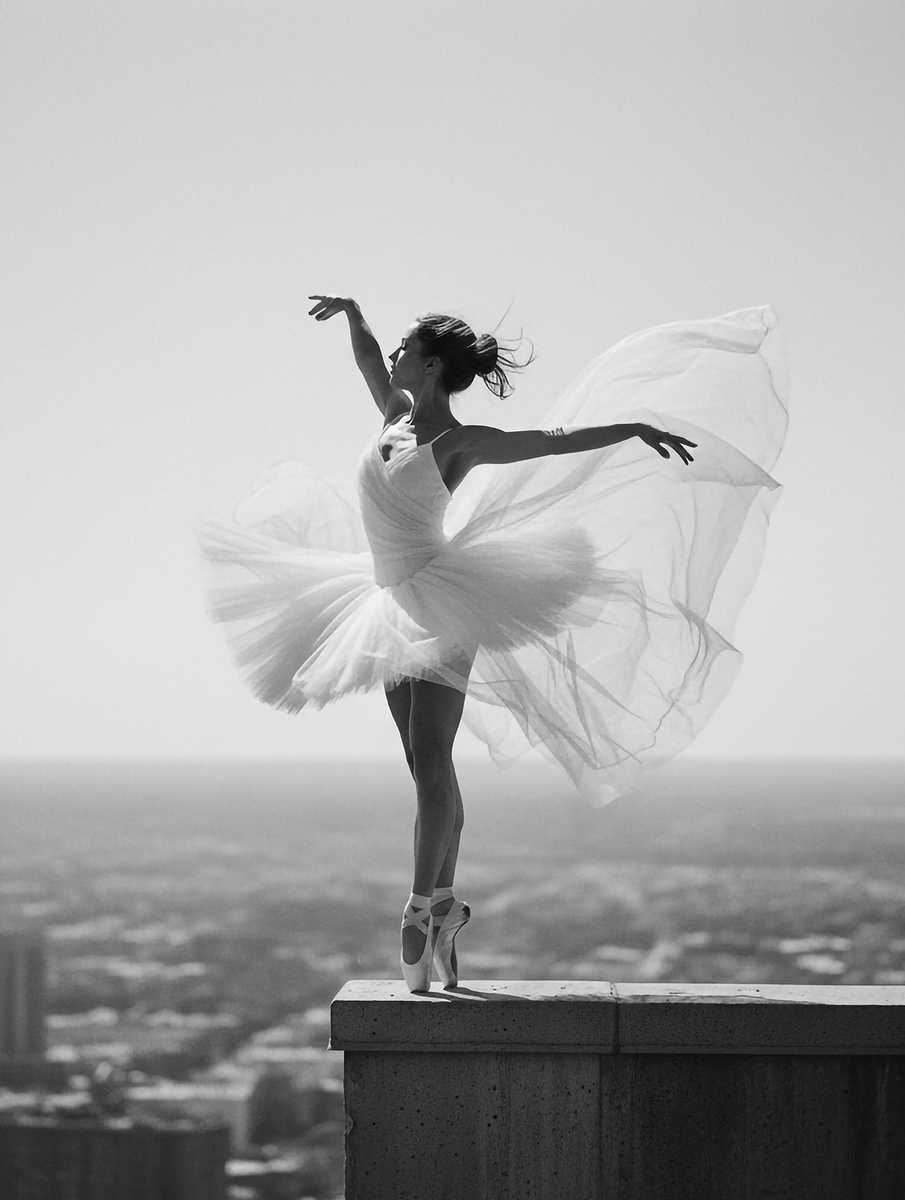
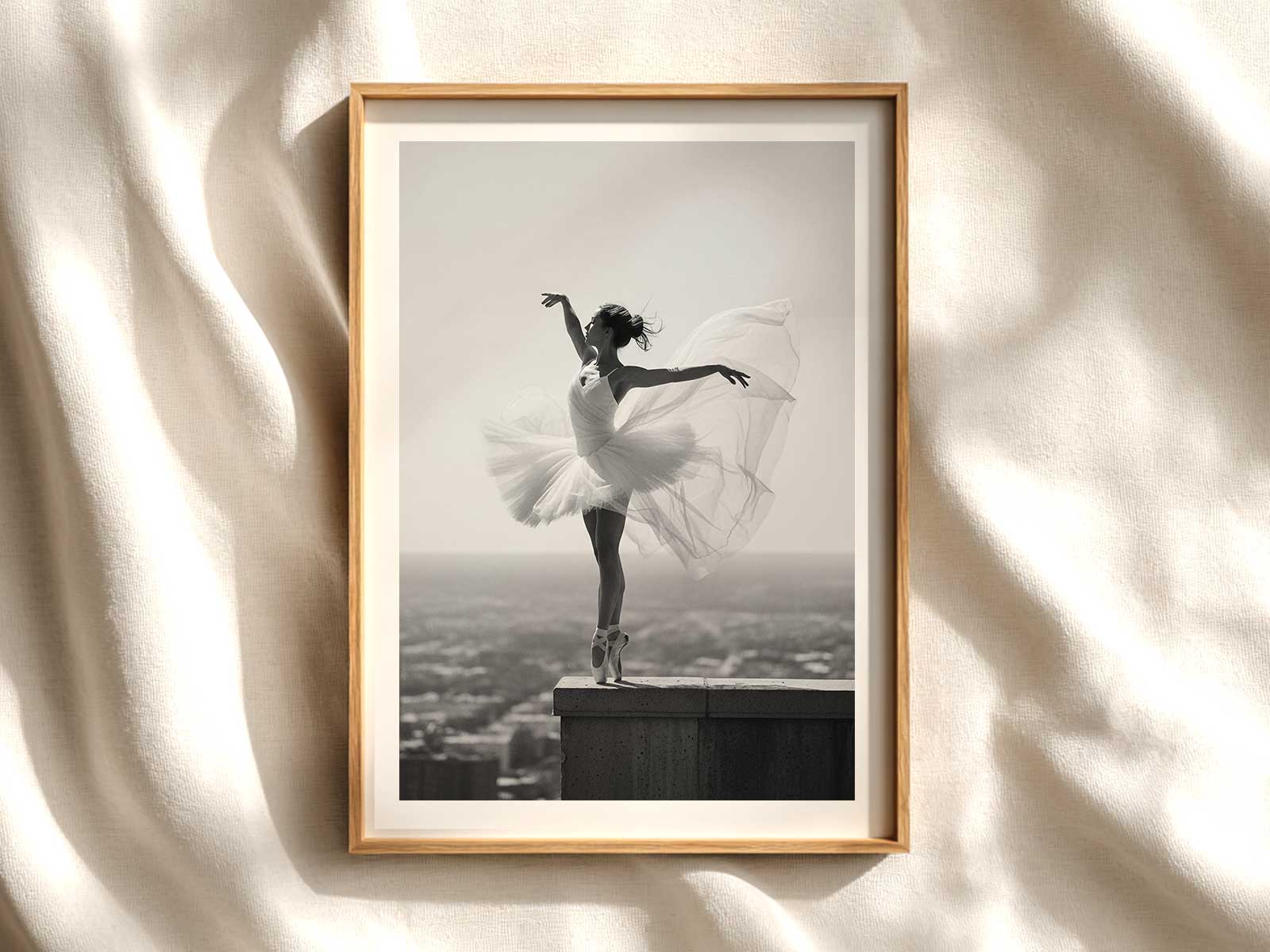
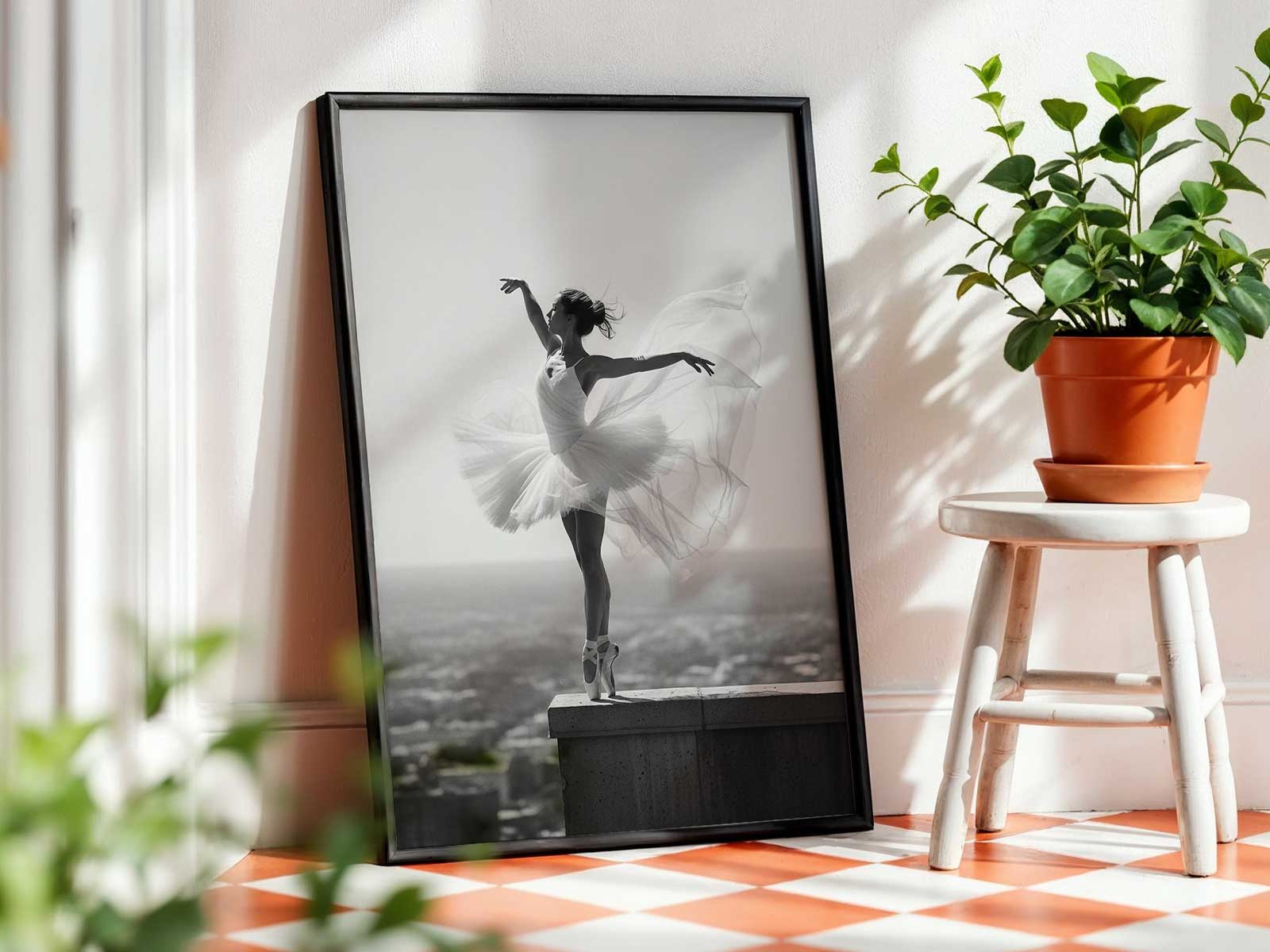
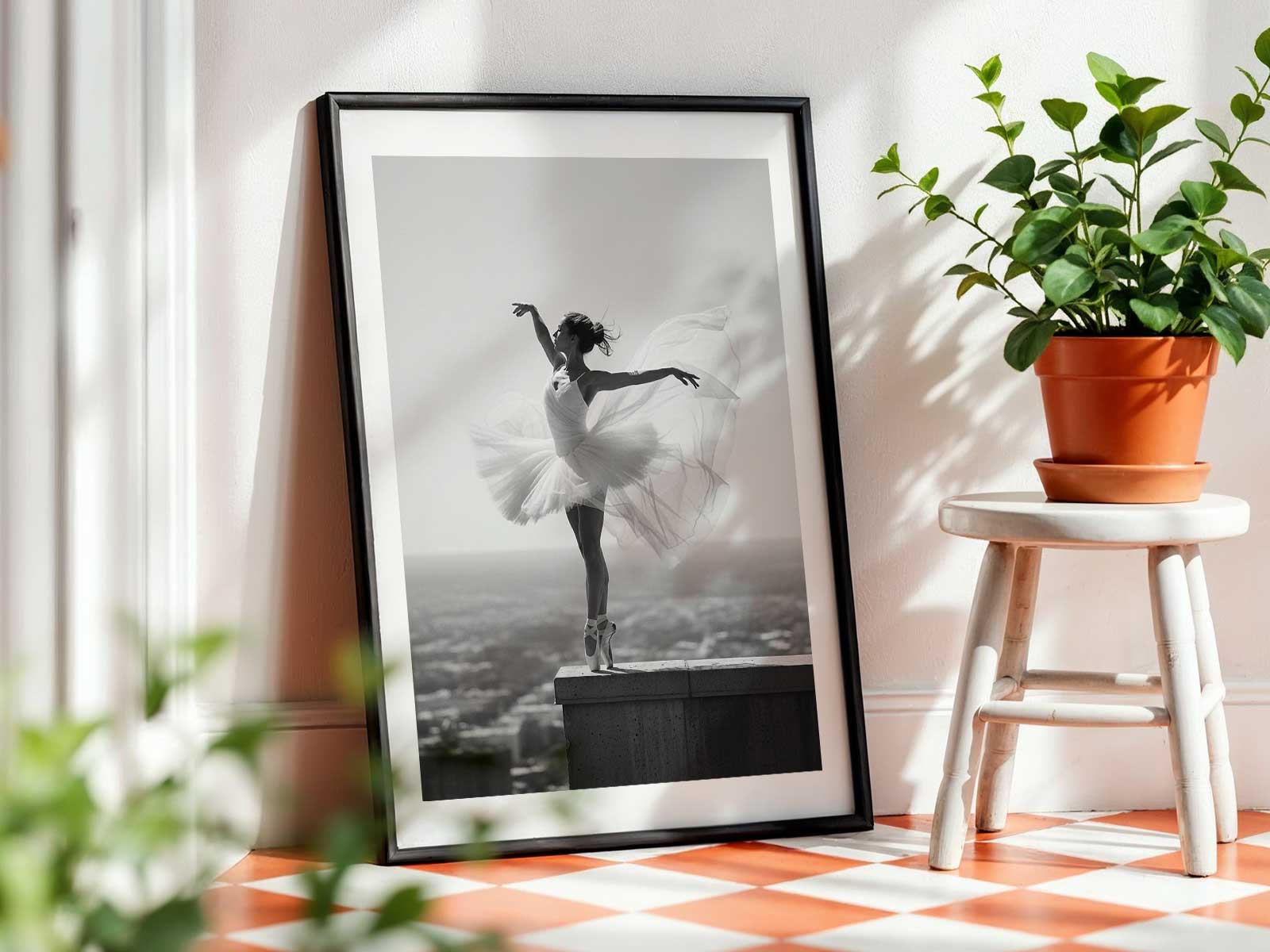
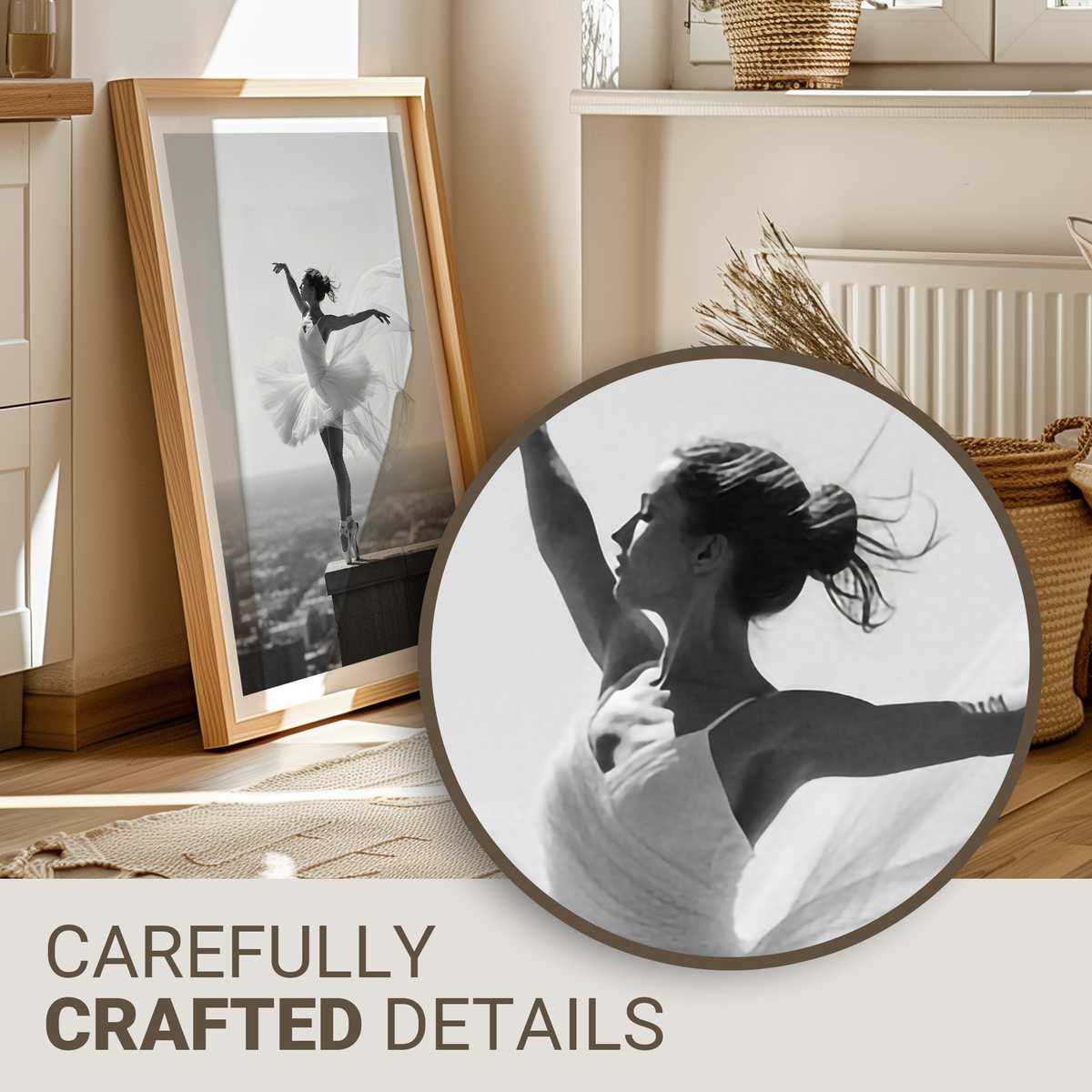
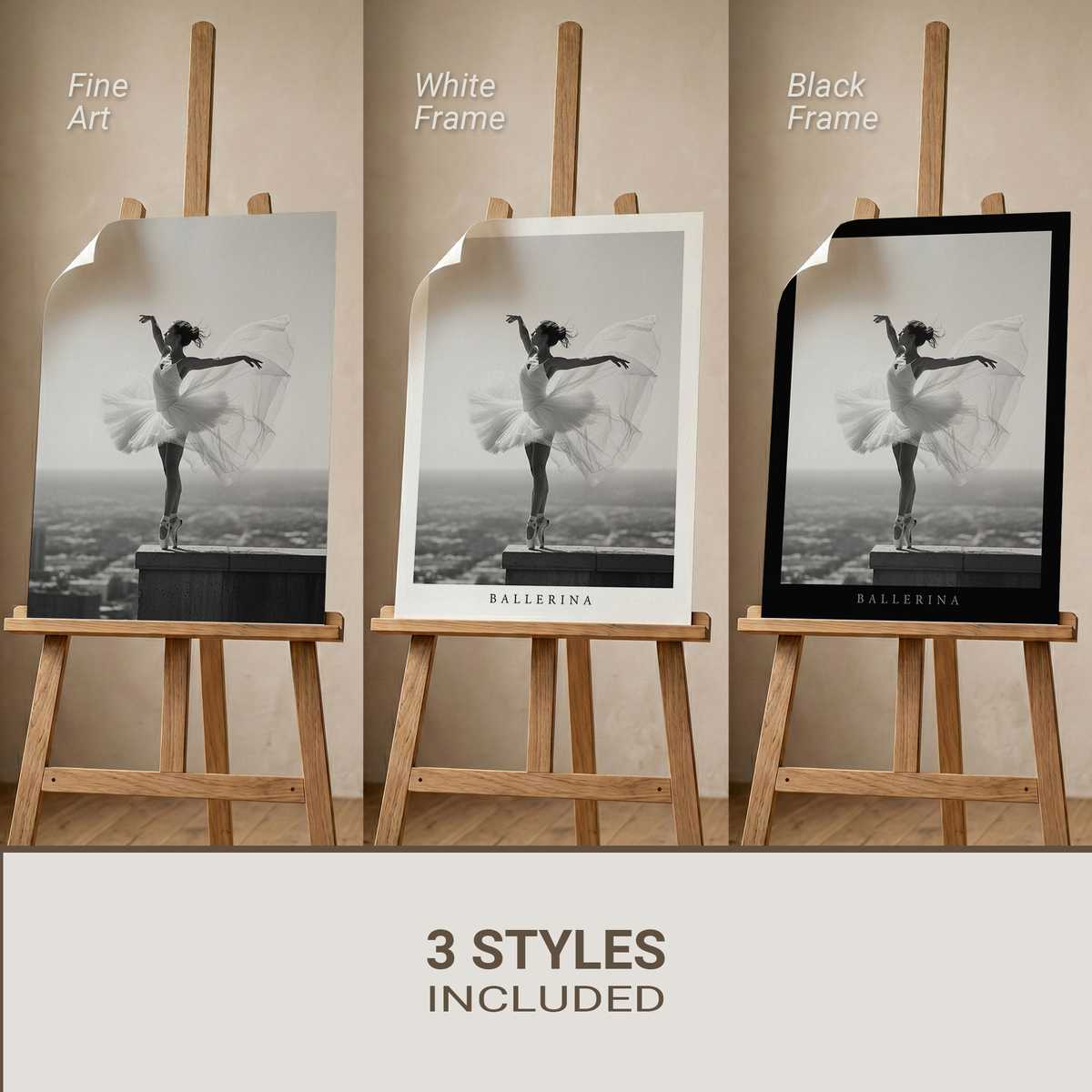
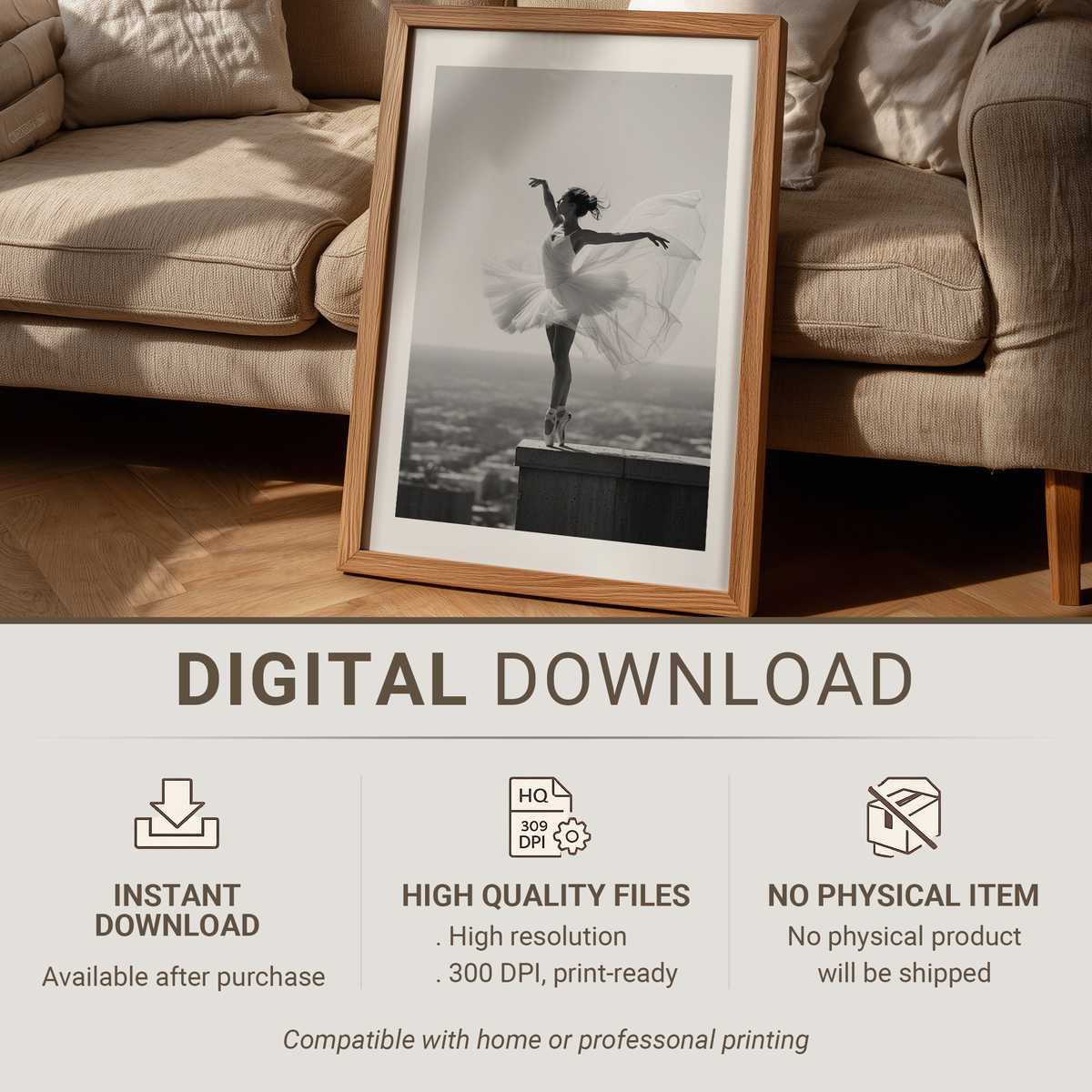
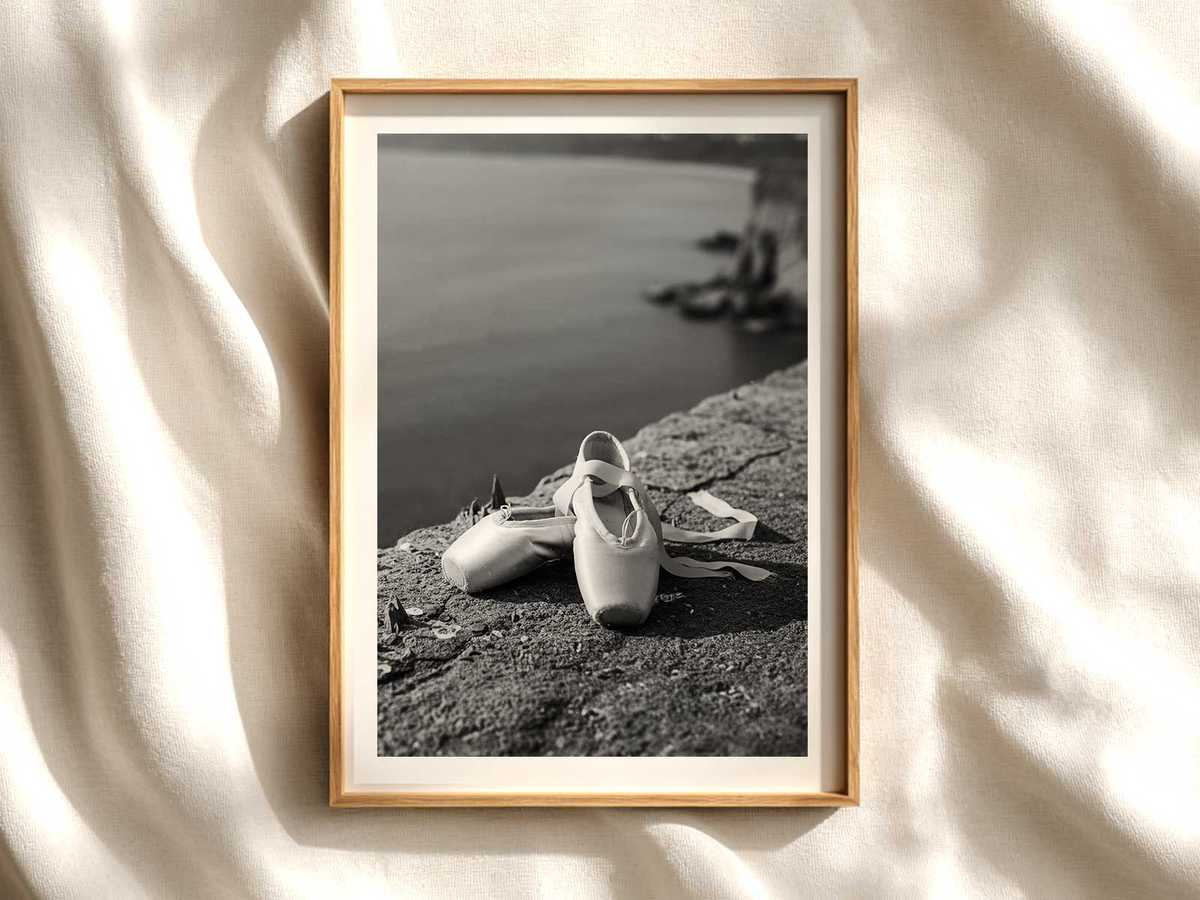
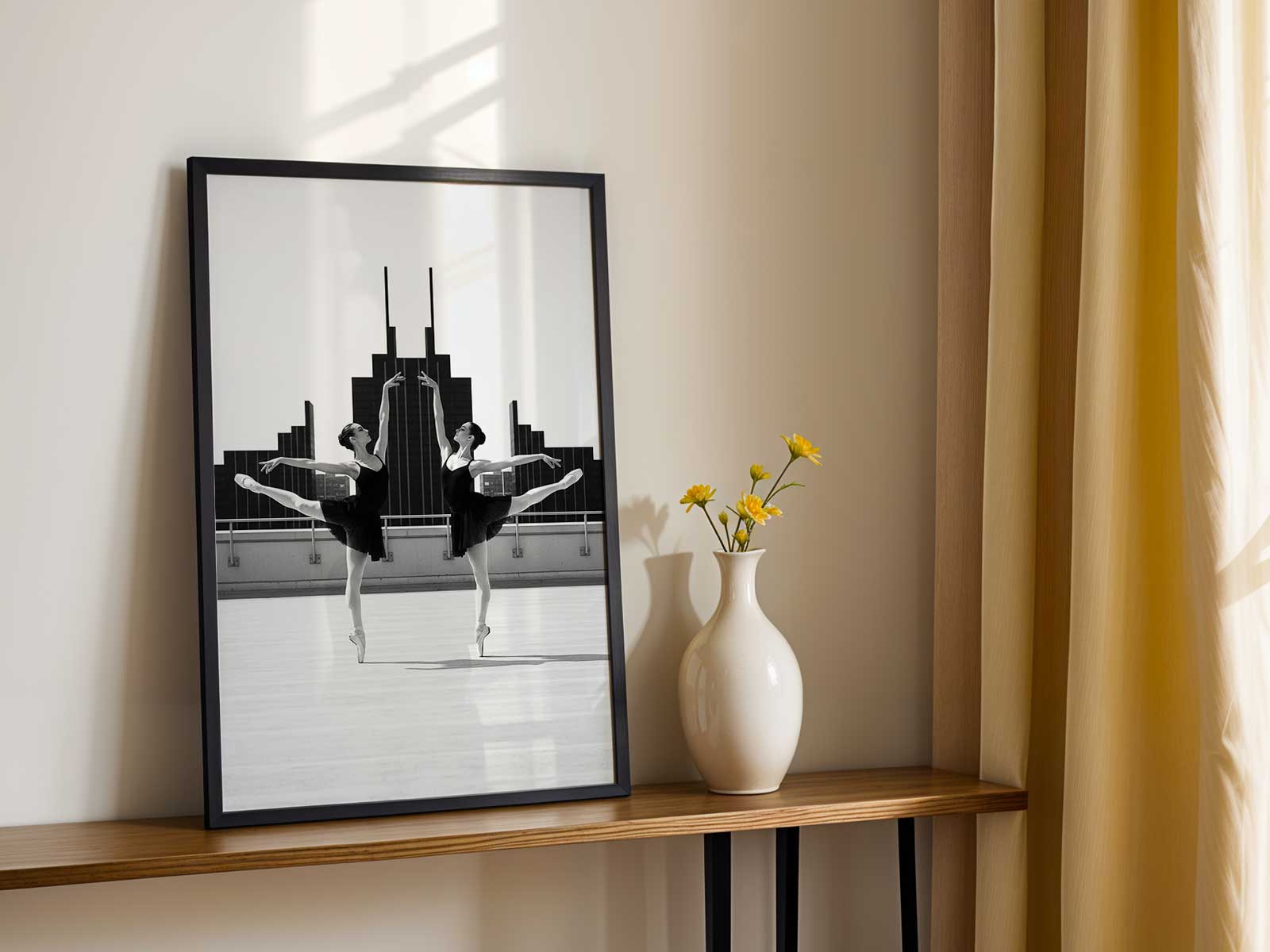
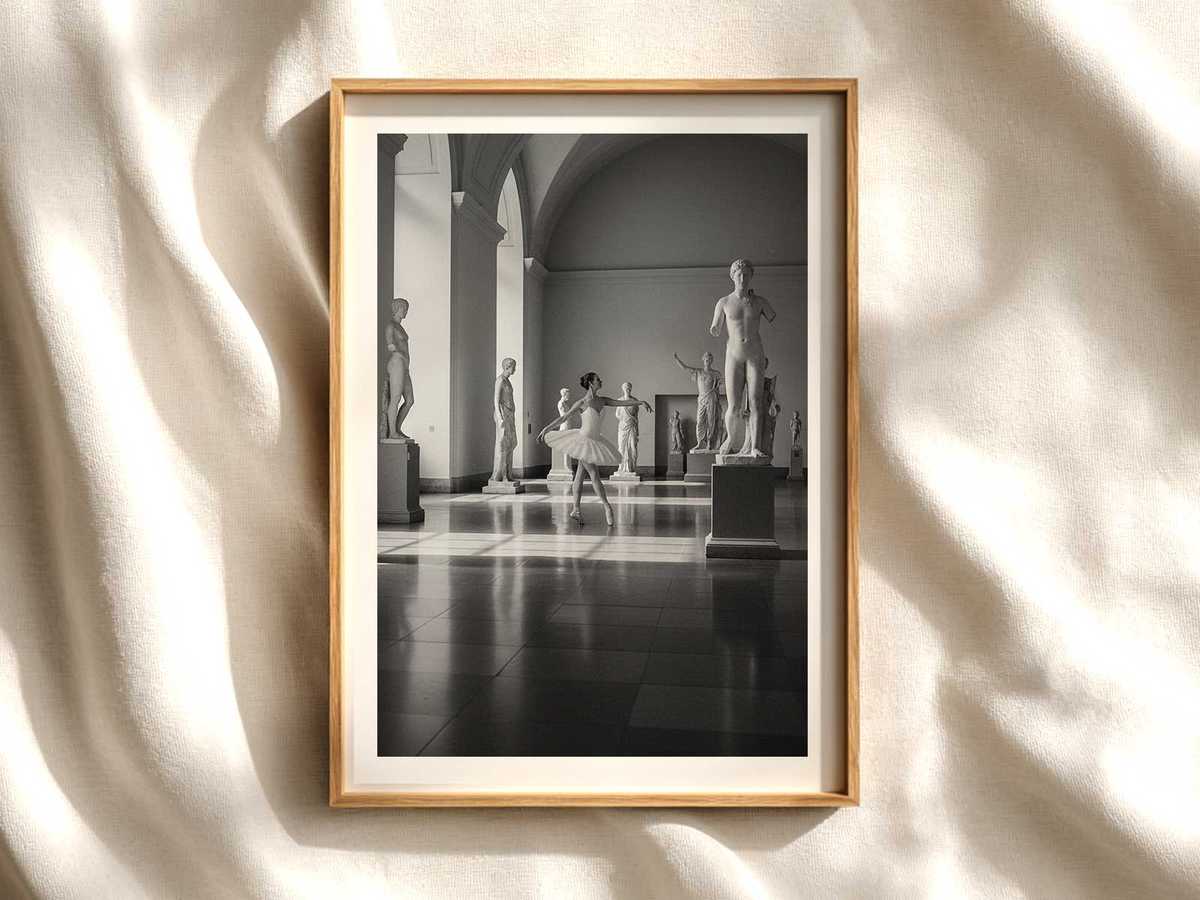
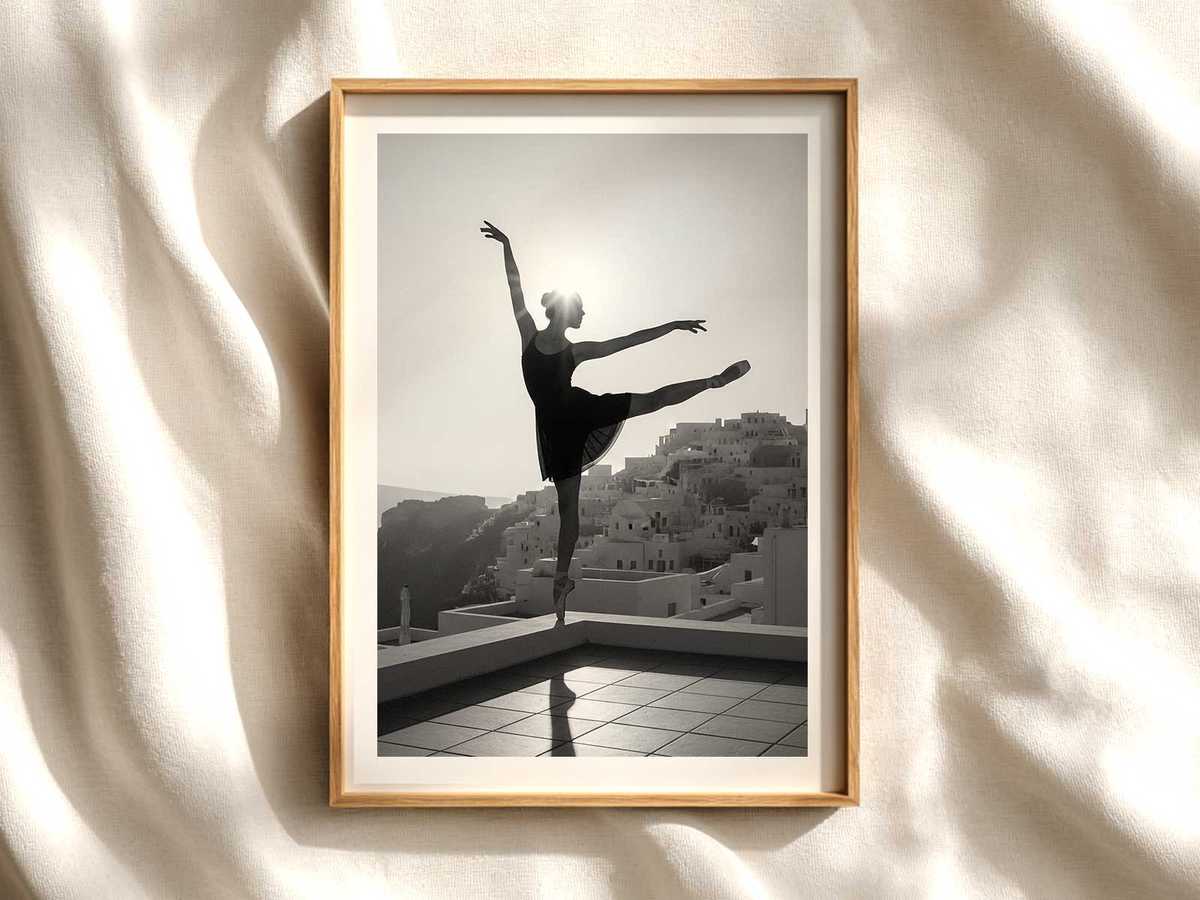
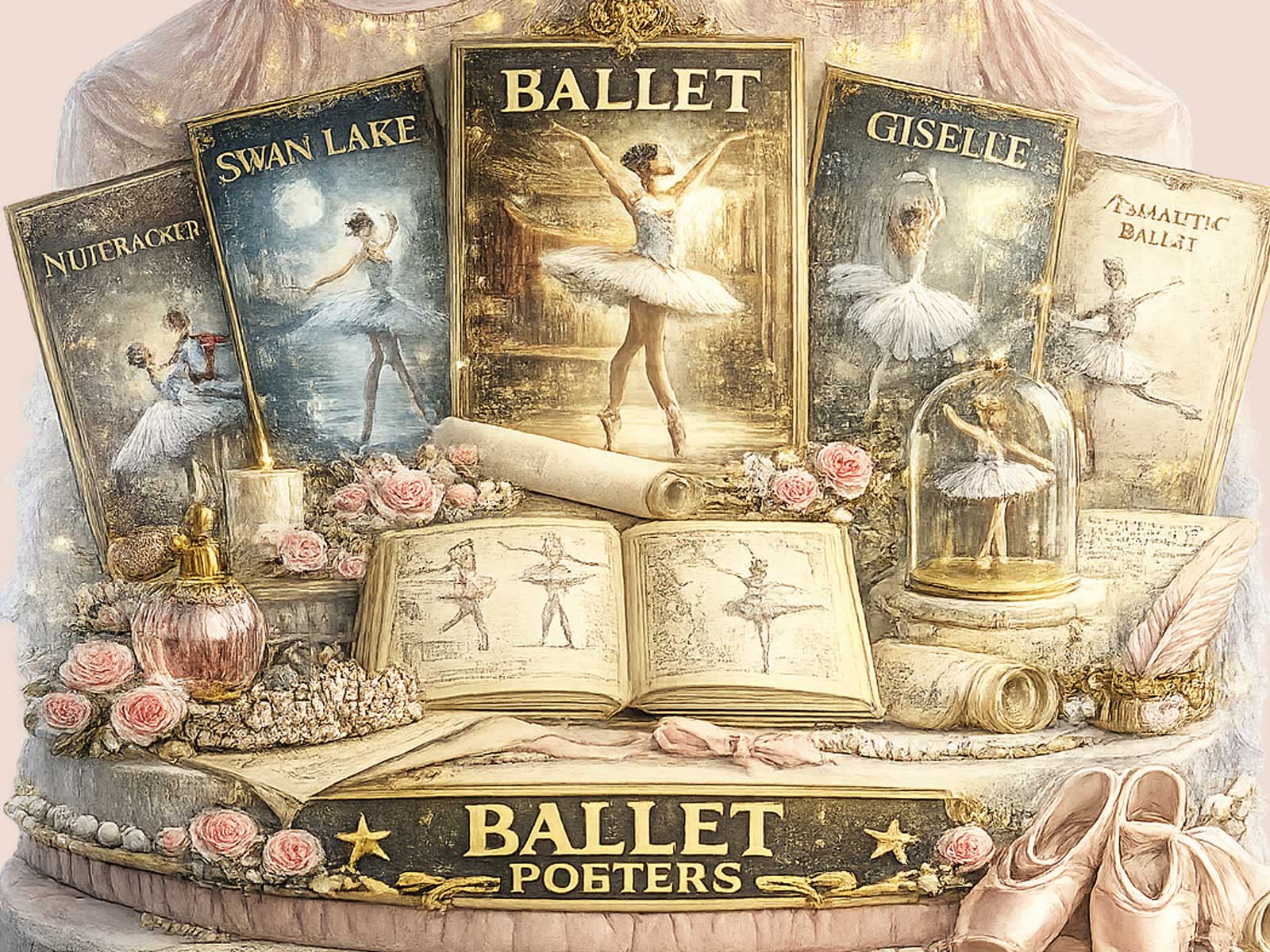
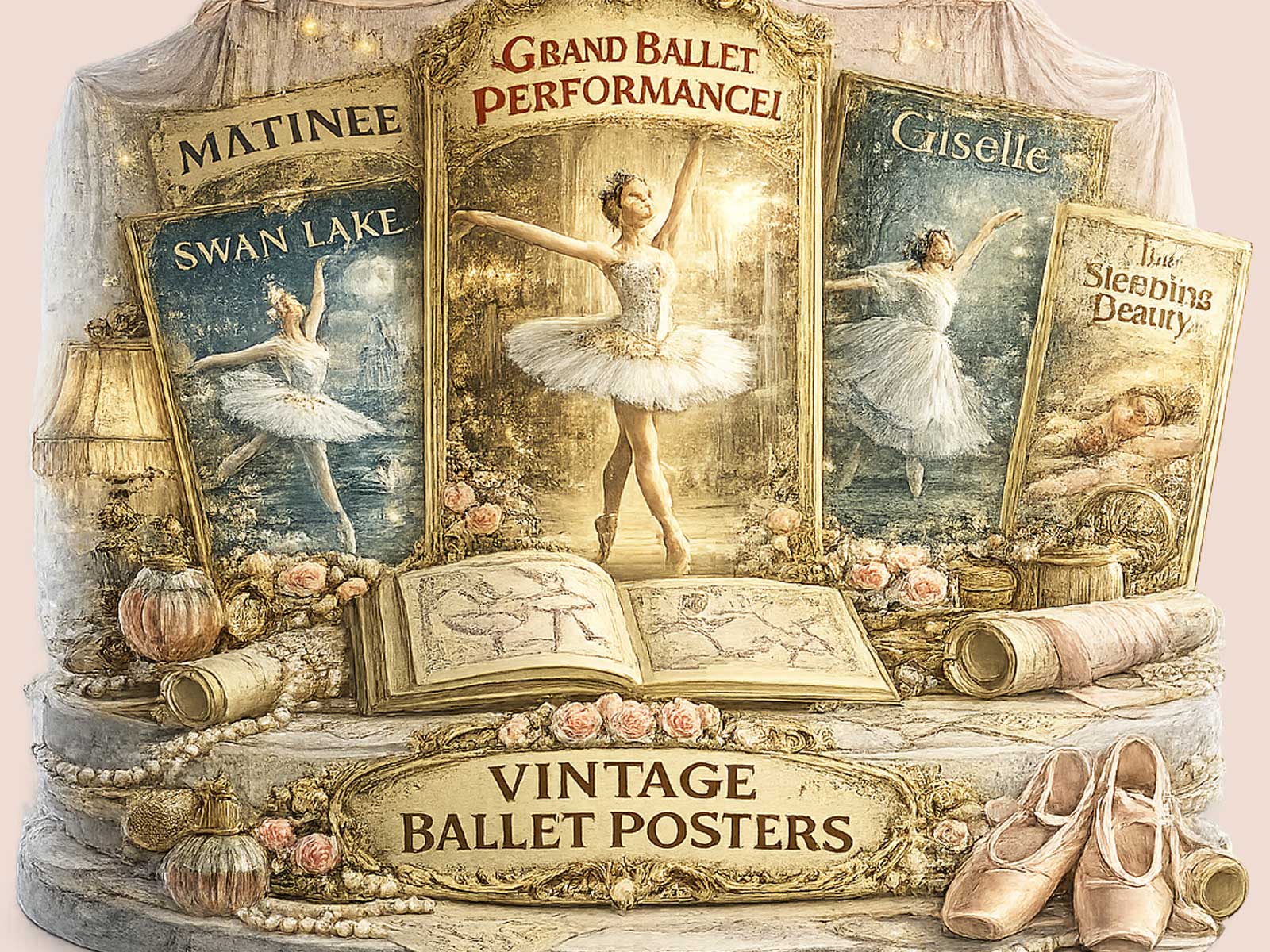
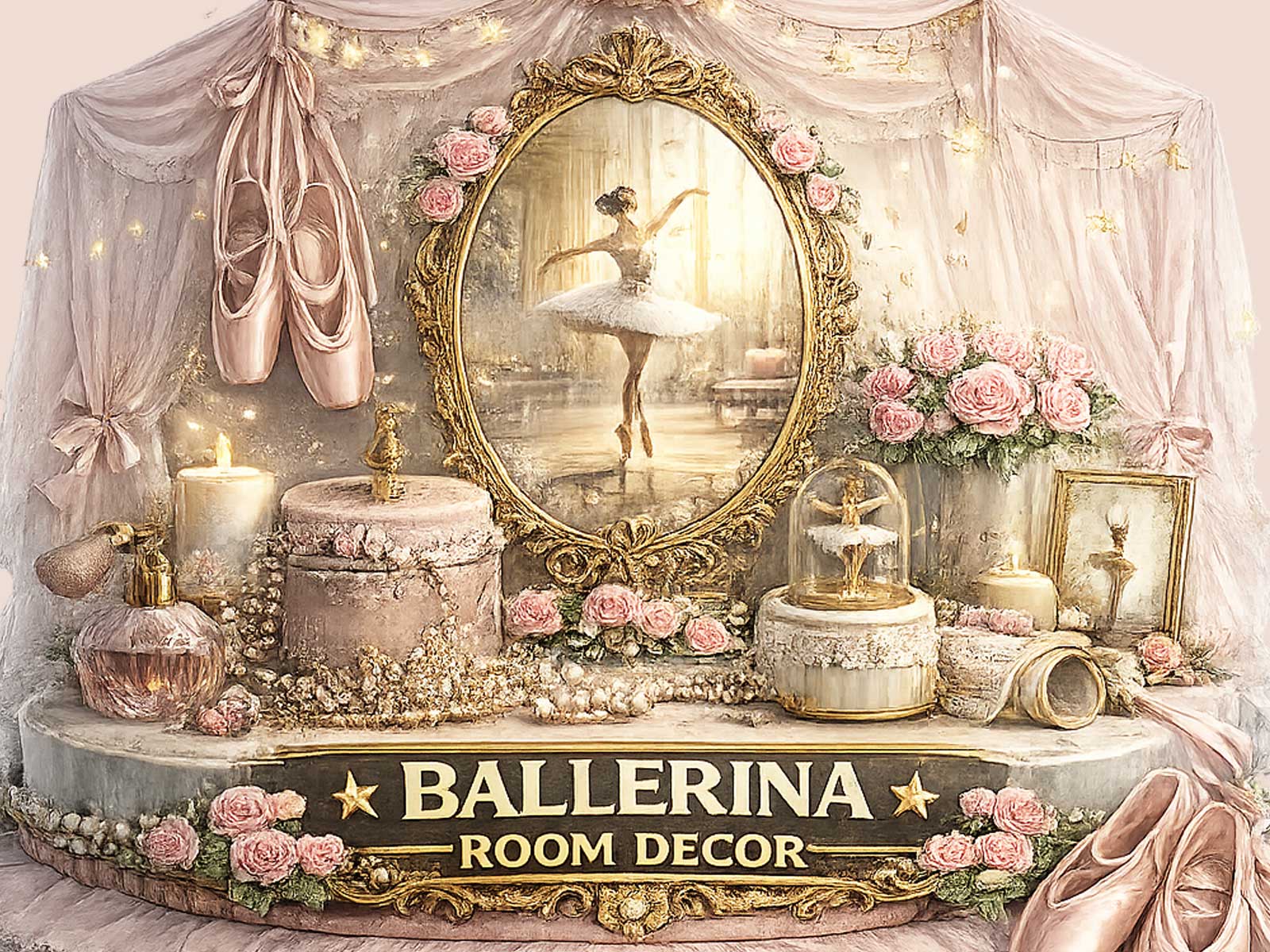
The image arrests you before breath catches: a dancer caught mid-suspension, limbs poised between intention and arrival, the body's line cutting air like a drawn breath held. This is aesthetic ballet at its purest—not merely a pretty pose but a concentrated instant where light, silhouette and the sensation of withheld motion converge to create a visual charge.
Why that single suspended instant commands the eye
When a photograph isolates suspension, it does more than freeze movement; it curates focus. The pause reveals structure: the tautness of a tendon, the soft fall of a costume, the way light frames muscle and bone. Our eyes accept the stillness as a scene of tension—every element pointing toward what will happen next. That implied forwardness is what makes the image survive beyond its moment. It invites the viewer into the narrative without words.
Timing matters. The perfect frame captures the equilibrium between motion and restraint, so the poster retains a sense of urgency even as it hangs motionless on the wall. This is why a suspended leap or held arabesque reads as an idea as much as a pose: it compresses duration into a single, resonant emblem.
[IMAGE_INSERT_ARTICLE_01]
A held moment acts like a room of its own. Light delineates planes; the silhouette creates a private architecture. In that small architecture, emotion is concentrated: hope, defiance, longing or serene control. The viewer projects, making the image porous to memory and mood. A poster built around such a moment can change a space by introducing contained drama—an interior scene open to the world outside the frame.
Because the image suggests movement beyond itself, it resists the flatness of decorative art. It asks for attention without demanding explanation, and it rewards repeated looking. Over time the suspended pose accrues associations: the first time you saw it, who you were thinking of, the light in the room where it hangs. This personal layering is why moment-driven ballet imagery becomes a lasting visual companion.
Why this poster works in your home
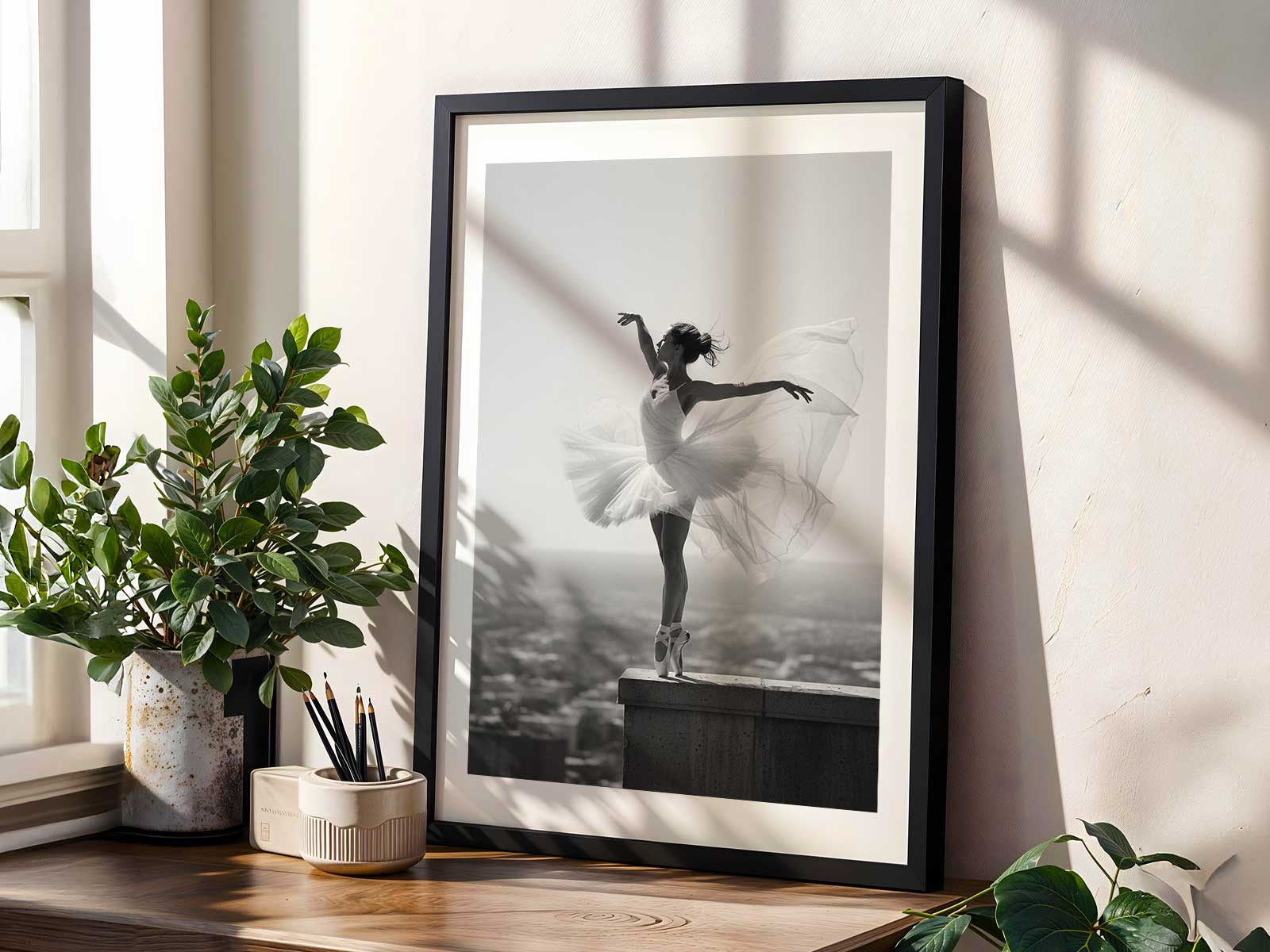
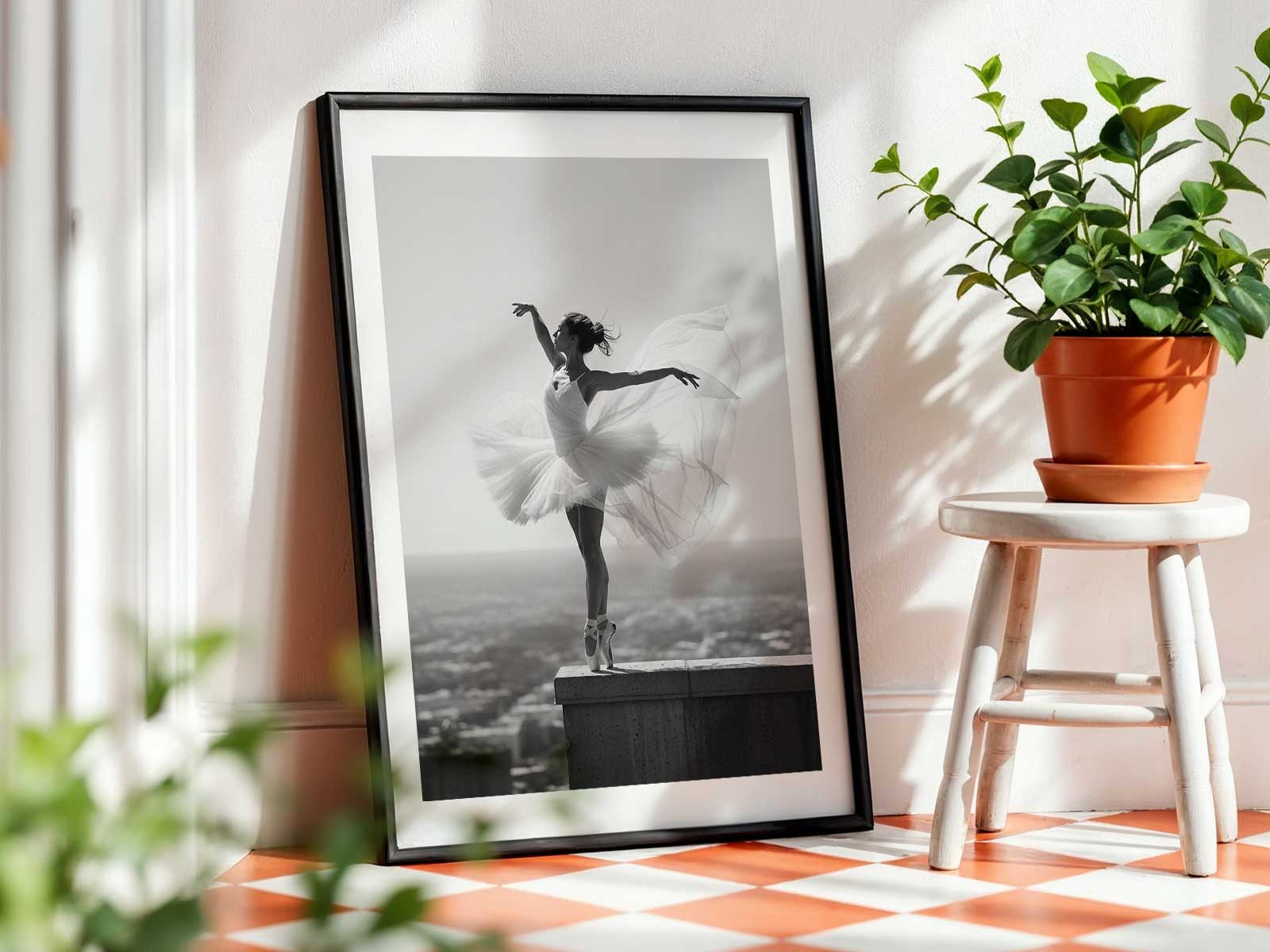
On a living room wall, a kitchen, or a bedside nook, a poster of suspended ballet shifts atmosphere. It introduces kinetic calm: the look of movement preserved as a deliberate quiet. The piece pairs easily with minimal décor when it serves as a focal point, and it softens busier interiors by offering a single, arresting line to rest the eye on. Its tonal clarity—contrast between silhouette and light—translates well to print, ensuring the emotional charge survives the transition from stage to wall.
Ultimately, an aesthetic ballet poster built around a suspended instant is persuasive because it contains a story in a single frame. It keeps the original performance’s intensity alive, inviting that same pulse into everyday rooms and routines. Hanging such an image is not just about decoration; it is about keeping a fragment of flight within reach.