American Ballet Theatre: Repertoire Breadth and a Distinctive American Stage…
American Ballet Theatre (ABT) is widely recognized for a striking institutional ambition: to hold the international classical canon and contemporary American choreographic voices in a single repertory. That dual pledge—preserving masterworks while commissioning and presenting new work—shapes an identity that pairs classical virtuosity with an openness to star guests and an American stage presence.
Understanding ABT means looking at how repertoire choices, guest artists, and a declared mission combine to form a company that reads both like a guardian of tradition and a laboratory for living choreographers.
Repertoire focus
Stage identity
Dance heritage
Visual culture
Quick answer
ABT’s identity rests on a deliberate balance: full-length classical masterworks alongside commissions and works by contemporary American choreographers, intensified by a tradition of featuring internationally renowned guest stars.
What this article explains
How ABT’s founding mission established its repertory logic.
How classical virtuosity and American choreographic voices coexist on its stages.
Why guest stars and congressional recognition contribute to its cultural weight.
First reading of the company
When the name American Ballet Theatre appears in program notes or on a poster, it evokes a company that both reveres the past and commissions the present. Founded as Ballet Theatre at the turn of the 1940s, the company set out to assemble the ‘‘best ballets of the past’’ alongside new work by living choreographers. That origin story still frames public expectations: ABT is read as a repertory house with a broad, deliberate scope.
Style, school, and artistic temperament
ABT’s style is not reducible to a single school. Its temperament emerges from the tension between classical technique required for full-length works and the distinct demands of twentieth- and twenty‑first‑century American choreography. The company’s programming habitually asks dancers to switch registers—from the formal clarity of Sleeping Beauty or Swan Lake to the vernacular-inflected and stylistically diverse works of American choreographers—making versatility a defining professional trait.
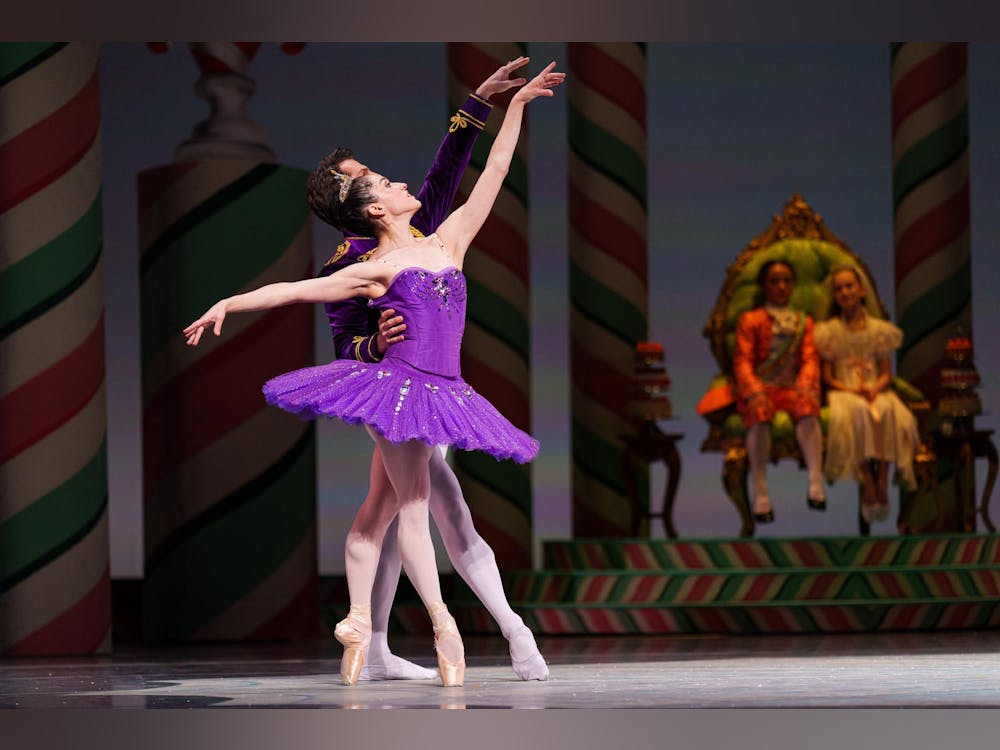
The repertory profile documented by ABT and historical records spans canonical full-length classical ballets and a substantial number of twentieth- and twenty‑first‑century commissions. This mix creates a stage image that privileges classical virtuosity while also affirming contemporary American voices. Audiences associate the company with both evening-length story ballets and the forward-looking work of living choreographers, a combination that broadens the company’s visual and dramatic palette.
Star Guests and Pas de Deux
Dancers, directors, and guest artists
A prominent strand of ABT’s public profile has been its long history of working with internationally renowned guest artists. Across decades, the company has featured celebrated partners and principals from around the world, a practice that amplifies its reputation for star-powered performances and contributes to a cosmopolitan stage identity.
History and cultural position
From its founding mission in 1939/1940 to the present, ABT has been explicit about preserving the international classical tradition while commissioning new works by living choreographers. That institutional mission is recognized in cultural terms: in 2006, by act of the United States Congress, ABT was formally acknowledged as "America’s National Ballet Company." This combination of archival responsibility and contemporary commissioning maps the company’s cultural position as both custodian and incubator.
Why the company feels distinct
ABT’s distinctiveness stems from its deliberate breadth. Not every company carries equal weight in both the classical canon and the contemporary American repertory. ABT’s commitment to presenting masterworks alongside commissions by leading American choreographers means its dancers, designers, and audiences live comfortably between the classical and the modern, between inherited spectacle and commissioned invention. The presence of guest stars further intensifies that dual identity: the company can showcase technical fireworks while also spotlighting choreographic novelty.
Decorative and visual appeal
As a visual subject, ABT offers rich material. Poster art, photography, and wall prints can draw on full-length narrative ballets’ pageant-like costumes and sets as well as on the more spare or idiosyncratic imagery of contemporary pieces. The company’s institutional brand—rooted in both heritage and active commissioning—translates naturally into decorative contexts where the viewer desires both classical elegance and a modern edge.
Closing interpretation
American Ballet Theatre occupies a specific place in the ballet imagination because it chose breadth as strategy. Its founding mission to combine the best of the past with new work by living choreographers created a repertory logic that foregrounds versatility: dancers trained for classical virtuosity who can also interpret distinctly American choreographic voices. Congressional recognition as "America’s National Ballet Company" formalizes part of that public role, but the company’s lasting identity comes from the ongoing, performative act of balancing preservation, star collaborations, and contemporary creation.
Author: Alex R.
Share this page
Further reading
Continue exploring this topic
Discover related articles selected automatically from the same site.