Giselle: Creation, Transmission, and the Lineage That Keeps a Romantic…
Giselle emerged in 1841 as one of the defining ballets of the Romantic era: a two-act fusion of music, narrative, and stagecraft whose Act II ‘‘white act’’ codified a new theatrical language of ghosts, fragile heroines, and redeeming compassion. First seen at the Paris Opéra’s Salle Le Peletier on 28 June 1841, the ballet has survived not as a museum piece but as a living repertory work continually transmitted, revised, and reinterpreted.
Quick answer
Giselle was created (1841) by a Parisian team—choreography credited to Jean Coralli and Jules Perrot, scenario by Théophile Gautier and Jules-Henri Vernoy de Saint-Georges, music by Adolphe Adam—and was reshaped by Marius Petipa’s late-19th-century Russian revivals that inform most versions danced today.
How the ballet began
Giselle premiered on 28 June 1841 at the Paris Opéra’s Salle Le Peletier. Its creation came from a collaboration that mixed literary Romanticism and practical theatrical craft: the scenario was written by Théophile Gautier together with Jules-Henri Vernoy de Saint-Georges, while the score was composed by Adolphe Adam. The choreography credit is shared between Jean Coralli and Jules Perrot. Carlotta Grisi created the title role; Lucien Petipa danced Albrecht and Adèle Dumilâtre performed Myrtha in that first performance. From its opening, Giselle presented a tightly structured two-act drama — earthy village life followed by a spectral ‘‘white act’’ — that epitomized Romantic ballet themes of fragility, death, and supernatural mercy.
The artists behind the ballet
Giselle’s authorship is notable for its collaborative complexity. Adolphe Adam’s score gives the drama a tonal and rhythmic framework that dancers and choreographers could shape. Jean Coralli and Jules Perrot receive choreography credit for the original production; their combined hand produced the gestures, group patterns, and dramatic pacing that allowed a singer-dancer like Carlotta Grisi to create a fully expressive lead. Théophile Gautier’s involvement on the scenario side ensured the work’s literary and atmospheric coherence, anchoring the ballet in Romantic narrative concerns.
The score and its dramatic power
Adolphe Adam’s music underpins both dramatic contrast and choreographic invention: the first act’s folk-inflected rhythms support village dances and dramatic revelation, while the second act’s more ethereal writing supports the supernatural Wilis and the ballet’s white aesthetic. Since 1841, orchestral performance practice for Giselle has been an important part of its transmission; companies rely on the score’s structural cues for tempo, phrasing, and dramatic transitions that shape how the choreography reads on stage.
What the ballet tells and how
At its center is a narrative of innocence betrayed and a redemptive, supernatural forgiveness. The two-act architecture—an earthy, social first act and a nocturnal, supernatural second act—creates a dramatic reversal: the world of everyday human passions gives way to an otherworld where the Wilis, restless spirits of betrayed brides, enact a spectral justice that is ultimately tempered by compassion. This structure is why the Act II ‘‘white act’’ became emblematic of Romantic ballet and why the work’s emotional impact depends so much on pacing, atmosphere, and the principal dancer’s ability to combine technical poise with expressive fragility.
Costumes, stage imagery, and visual memory
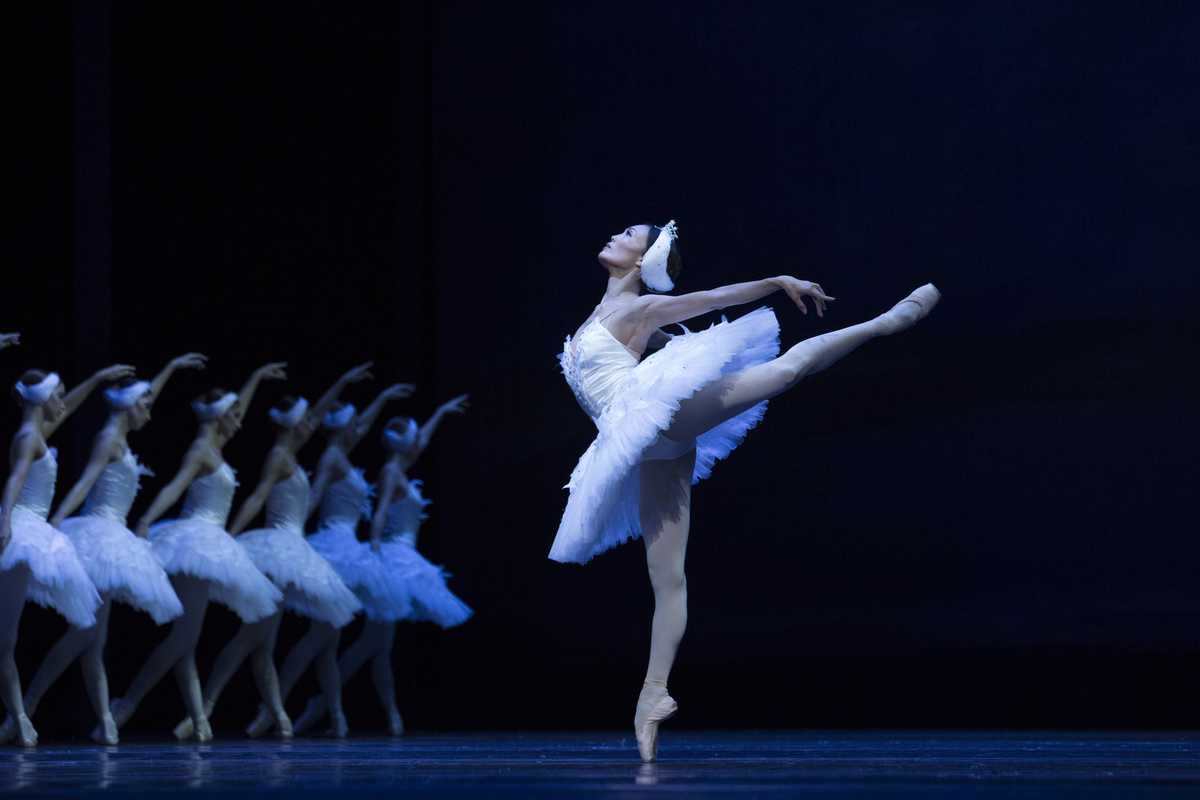
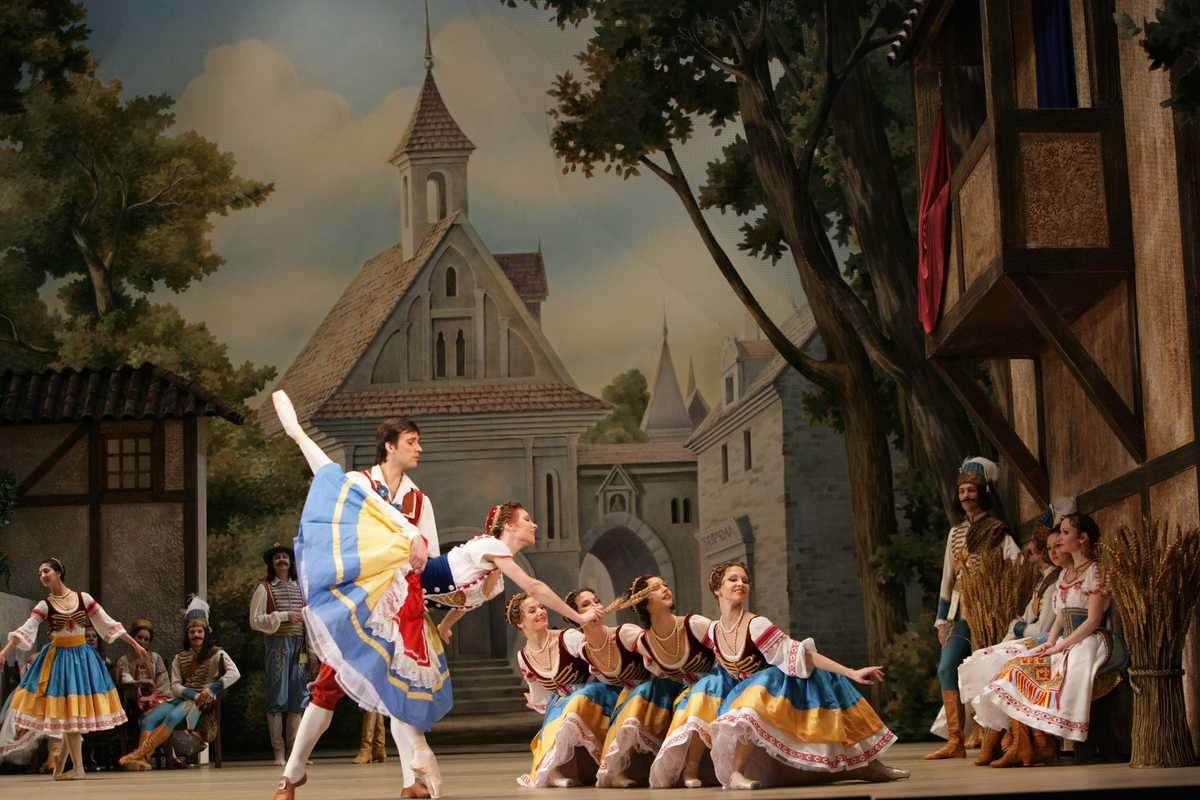
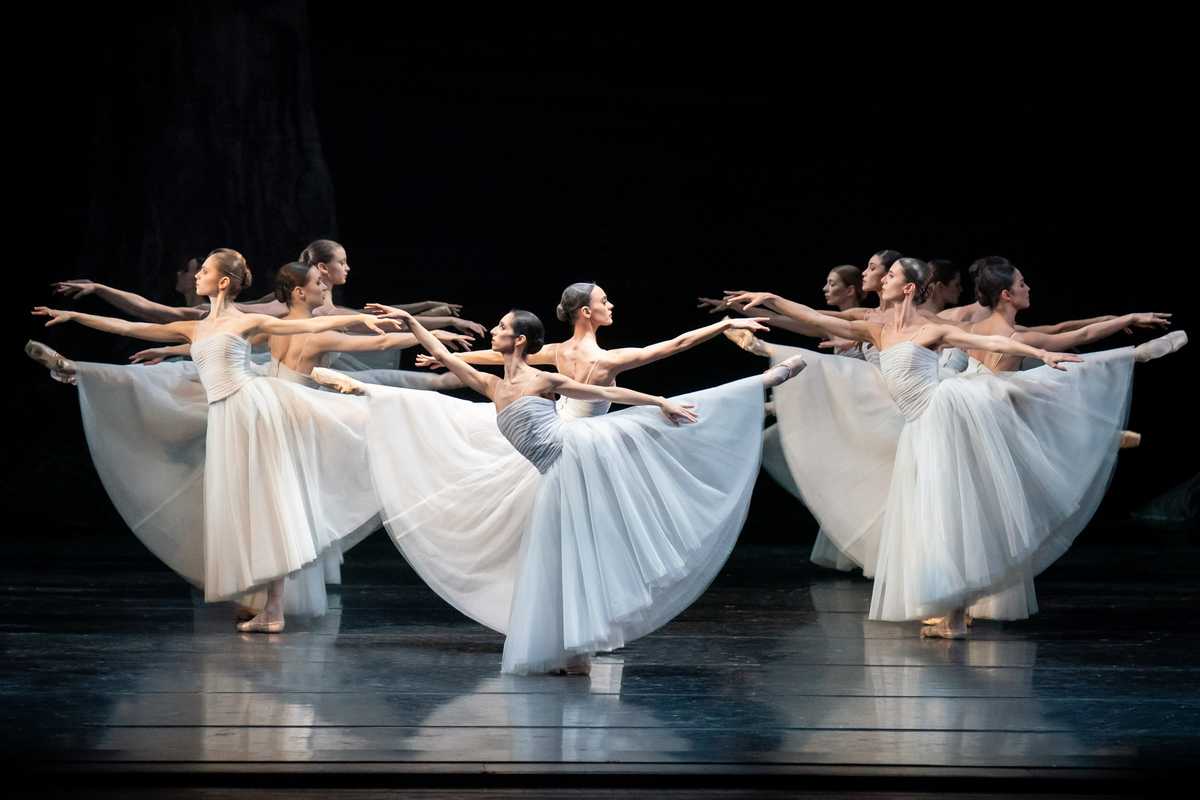
The ‘‘white act’’ visual iconography—misty lighting, pale tutus, and corps de ballet in spectral unison—emerged from early productions and proved central to the ballet’s identity. From the Paris premiere the contrast between the rustic costumes of Act I and the white, diaphanous stage world of Act II created a visual shorthand for the Romantic division between life and death, reality and the supernatural. Stagecraft choices across productions have preserved this binary, even as choreography and choreographic detail have changed in the transmission from Paris to St. Petersburg and then to international repertories.
The dancers who shaped its legacy
Carlotta Grisi’s creation of Giselle established the role’s dramatic and technical parameters in 1841. Over the decades that followed, a continuous lineage of prominent interpreters and company traditions redefined how Giselle is danced while keeping the core dramatic and musical structure intact. This unbroken chain of interpreters—from 19th-century stars through 20th-century figures and beyond—has been crucial to transmitting the work’s expressive subtleties and country-specific stylistic inflections.
How the ballet evolved over time
The single most consequential thread in Giselle’s later history is the Russian revival tradition led by Marius Petipa. Petipa staged important revivals in 1884 and made further revisions in 1887 and 1899; these reworkings introduced or formalized additional dances, inserted variations, and adjusted ensemble writing. The Petipa reworkings—transmitted through Imperial Russian companies and later through Soviet-era pedagogy—have heavily influenced most modern productions. As a result, much of what audiences recognize as canonical Giselle today reflects both the original Parisian creation and the nineteenth-century Russian refinements that entered the repertory.
Timeline
- 28 June 1841 — Premiere at Paris Opéra, Salle Le Peletier.
- Late 19th century — Marius Petipa stages major revivals (1884; further revisions 1887, 1899) in Russia.
- 20th century onward — Continuous interpreter lineage preserves and reshapes performance practice.
Archival sources, reconstruction, and questions of authenticity
Scholars and companies have used archival materials—revival manuscripts, rehearsal notes, and comparative sources—to inform productions that aim for historical fidelity or to recover older choreographic details. While a single authoritative, verbatim notation of the original 1841 choreography does not survive as a complete manuscript online, documented revival manuscripts and Russian rehearsal adaptations provide tangible documentary foundations. These sources permit reconstructions and informed stagings without collapsing the work into a single, fixed ‘‘authentic’’ version.
Why Giselle still matters
Giselle endures because it is both specific and adaptable: the work’s musical architecture, two-act dramatic design, and core emotional stakes give it a fixed identity, while its choreography has proved resilient to revision and cultural translation. The Parisian origins and the later Russian reworkings together created a repertory organism that companies and interpreters can renew. That dual inheritance—original Romantic invention and productive nineteenth-century reinvention—explains how Giselle remains central to repertory companies and why each new performance can feel like both an homage and a living, interpretive event.
Closing: the living tradition of Giselle
Giselle’s survival is not an accident of taste but the outcome of continuous transmission: a creation rooted in the Paris Opéra of 1841, shaped by the choreography of Coralli and Perrot and the music of Adolphe Adam, and reimagined in the late nineteenth century by Marius Petipa in Russia. The ballet’s essence—a fragile heroine, a haunting second act, and a music-theatre bond—remains intact because generations of dancers, choreographers, conductors, and archivists have treated it as a work to be lived in, not a relic to be locked away. That ongoing conversation between origin and reinvention is what keeps Giselle both historically legible and theatrically alive.
Author: Eric M.