Le Corsaire: The Ballet of Adventure, Patchwork Scores and Gala Showpieces
Le Corsaire is a study in survival by reinvention. First staged at the Théâtre Impérial de l'Opéra on 23 January 1856, the work began as a mid‑century Parisian adventure-ballet and, through repeated reworkings in Russia, became a repertory chimera whose best-known moments now circulate as gala showpieces.
Quick answer
Created in Paris in 1856 with choreography by Joseph Mazilier and a score principally attributed to Adolphe Adam, Le Corsaire was transformed in the Imperial Russian theatres—most notably via Marius Petipa—into a work whose music and choreography became a pastiche. Today full-length stagings are uncommon; extracts like the pas de deux and grand pas live on in galas.
What this article explains
- How Le Corsaire began in Paris (1856) and the principal creators involved.
- Why Russian revivals under Marius Petipa changed the ballet's shape and score.
- How the patchwork score and fragmented choreographic history produced a repertory of gala highlights.
How the ballet began
Le Corsaire premiered at the Théâtre Impérial de l'Opéra (Paris Opera) on 23 January 1856. The original production credited Joseph Mazilier with choreography and attributed the principal musical authorship to Adolphe Adam. The scenario, prepared for the Paris stage, drew loosely on Lord Byron's poem The Corsair and a libretto by Jules‑Henri Vernoy de Saint‑Georges. Historically, the 1856 premiere marks the work's entry into the mid‑19th century Romantic ballet repertory.
The artists behind the ballet
Joseph Mazilier, a prolific French choreographer of the era, mounted the first choreography for Paris in 1856. Adolphe Adam provided the music often cited as the principal score; sources note that Le Corsaire was Adam's last ballet, as he died in 1856. Jules‑Henri Vernoy de Saint‑Georges supplied the libretto that adapted Byron's narrative impulse for a spectacle of seaside adventure and exotic staging.
How Russian reworkings reshaped the work
After its Paris premiere, Le Corsaire entered the Russian repertory and underwent substantial reworking. Marius Petipa is the central figure linked to those revisions, with documented revivals and revisions occurring from the late 1860s through later decades in the Imperial theatres. The Russian productions did not simply restage Mazilier's choreography; they inserted new dances and reshaped the ballet's dramatic and choreographic architecture to suit Imperial tastes and star dancers of the time.
The score and its fragmented life
The score used in later productions became a pastiche. Russian stagings incorporated additional music and interpolations by several composers—sources identify contributors such as Cesare Pugni, Léo Delibes and Riccardo Drigo among others—so that what companies perform today is often Adam's music alongside later additions. This accumulation of interpolations is one reason no single authoritative, original 1856 score dominates modern productions.
The ballet's dramatic core and stage identity
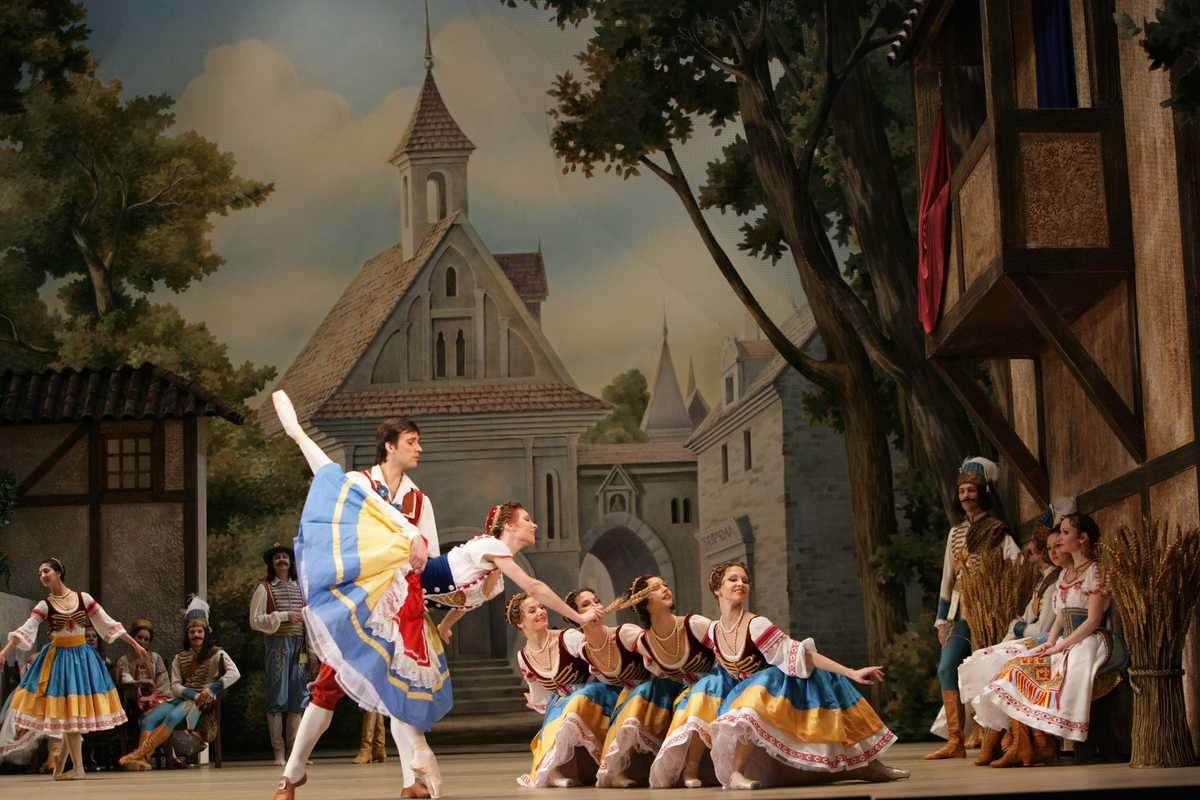
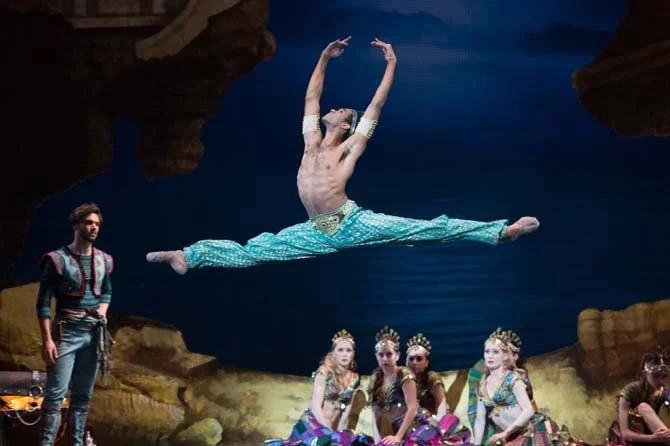
Le Corsaire's scenario—rooted in Romantic adventure—offers a framework for sea‑bound romance, abduction, and shipboard spectacle. The libretto's Byronesque source furnished episodic scenes that proved adaptable to the divertissements and virtuoso numbers demanded by 19th‑century theatres. That episodic character made the work particularly amenable to cutting, rearrangement and the insertion of new dances.
The dancers and performances that shaped its reputation
Because Le Corsaire survived largely through repeated revivals, its reputation became tied to the performance moments companies and stars chose to preserve. Over time, individual virtuoso passages—especially grand pas and pas de deux—became signature showpieces. Ballet companies and study guides identify those excerpts as the most frequently performed elements, sustaining the work's visibility in concert programming and gala events.
Companies, revivals and the modern repertory
Major company materials and Petipa scholarship document a pattern: the ballet was reshaped in Russia during the Imperial era, and those versions formed the basis for many 20th‑ and 21st‑century stagings. Full‑length productions are relatively rare; more often companies present extracts drawn from the complex editorial tradition. Study guides from contemporary companies note this history and explain how modern productions navigate competing versions of score and choreography.
Timeline of key stages
Timeline
- 23 January 1856 — World premiere at Théâtre Impérial de l'Opéra (Paris); Mazilier choreographer, music principally by Adolphe Adam.
- Late 1860s–1880s — Substantial reworkings in Russia, notably under Marius Petipa, with added music and choreographic revisions.
- Modern era — The score and choreography exist as a patchwork; highlights frequently performed as gala repertoire.
Why Le Corsaire endures
Le Corsaire endures because its structure invites reinvention. The combination of an adventurous scenario, a robust collection of virtuosic dances and a malleable score allowed successive generations to remake the ballet to suit changing tastes. Rather than a single canonical text, Le Corsaire survives as a repertoire of fragments and moments—sometimes criticized for being patchy, but also celebrated for supplying some of ballet's most thrilling technic and spectacle to audiences worldwide.
What keeps this ballet alive
Le Corsaire matters as an example of how 19th‑century spectacle adapts to institutional and artistic change. Its history—from the 1856 Paris premiere to Petipa's Russian reworkings and the modern pastiche score—shows a living repertory piece sustained by adaptation. In performance today, the ballet's life is dual: rare attempts at full‑length reconstruction sit alongside the steady circulation of extracts that continue to test and display virtuosity on the contemporary stage.
Author: Cynthia D.