Cendrillon: Tracing Cinderella Through Prokofiev, Ashton and Nureyev
Cendrillon—better known in English as Cinderella—is one of those stories that choreographers and composers have returned to again and again because it combines a simple narrative with rich possibilities for dance, spectacle and character. From Charles Perrault's 1697 tale to the 20th century’s fullest realizations, Cendrillon has served as a laboratory in which music, movement and stagecraft test the concerns of each era.
Quick answer
Cendrillon’s modern balletic life centers on Sergei Prokofiev’s full-length score (1940–44) and three major choreographic treatments: the Bolshoi premiere staged by Rostislav Zakharov in 1945, Frederick Ashton’s celebrated 1948 Royal Opera House production, and Rudolf Nureyev’s distinct 1986 staging for the Paris Opera Ballet.
How the ballet began
The narrative roots of Cendrillon lie in Charles Perrault’s 1697 publication of "Cendrillon," which crystallized the familiar elements — the fairy godmother, the glass slipper, the ball — that later stage and ballet versions often adopt. That literary template provided a clear dramatic spine for choreographers and composers who wished to shape a multi-act theatrical work.
The composer and the first stagings
Sergei Prokofiev composed his Cinderella (Op. 87) between 1940 and 1944, producing one of the 20th century’s most idiomatic full-length ballet scores. Prokofiev’s music found an immediate home on the Soviet stage: the score received its premiere at the Bolshoi Theatre in Moscow on 21 November 1945. The original staging of that premiere was by choreographer Rostislav Zakharov.
Choreographic authorship and early interpreters
The 1945 Bolshoi premiere established a working relationship between Prokofiev’s music and Zakharov’s choreographic language. That production helped embed the score in repertory and left room for other choreographers to approach the same music from different theatrical and stylistic standpoints. Over the next decades, the marriage of Prokofiev’s score and alternate choreographies became the principle through which Cendrillon evolved.
Ashton’s 1948 Cendrillon: a Western landmark
Sir Frederick Ashton created a celebrated full-length production of Prokofiev’s Cinderella for Sadler’s Wells and the Royal Ballet. Ashton’s premiere production opened on 23 December 1948 at the Royal Opera House, Covent Garden. By translating Prokofiev’s Russian score into the idiom of postwar British ballet, Ashton established a Western repertory model that emphasized lyrical partnering, pure classical line and a dramaturgy suited to the Covent Garden stage.
What this article explains
- Why Perrault’s 1697 tale supplies the narrative framework for ballet versions.
- How Prokofiev’s 1940–44 score became the dominant musical basis for full-length ballets called Cinderella.
- What Zakharov, Ashton and Nureyev each contributed to the ballet’s identity.
Nureyev’s 1986 staging and later reinterpretations
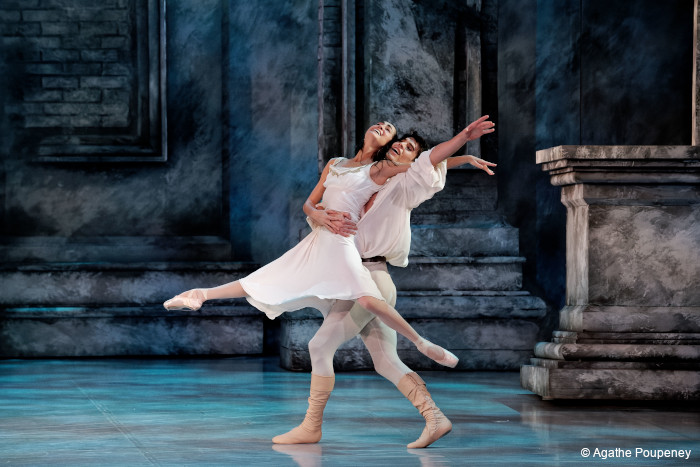
Rudolf Nureyev created a distinct production of Cendrillon using Prokofiev’s score for the Paris Opera Ballet in 1986. Nureyev’s version is recognized as an important late-20th-century reading that demonstrates how a single score can support notably different theatrical visions. His staging reinforced the practice—now central to the ballet’s modern life—of reimagining Prokofiev’s music to reflect specific aesthetic and cultural priorities of each choreographer and company.
Music, orchestras and the score’s role
Prokofiev’s Cinderella score, composed during 1940–44, is the cornerstone of most full-length 20th-century ballet versions. Because that music became the most widely used musical basis for full productions, it allowed choreographers as stylistically distant as Zakharov, Ashton and Nureyev to set different narratives and stage textures while preserving a shared sonic identity. The score’s melodic clarity and dramatic punctuation make it adaptable: it supports lyric pas de deux, comic ensemble scenes and pointed character dances in equal measure.
Performance legacy: dancers, companies and traditions
The Bolshoi’s 1945 premiere anchored Cendrillon in Soviet repertory, while Ashton's 1948 production placed the work firmly in Western repertory through the Royal Ballet. Nureyev’s 1986 staging further cemented the ballet’s presence at the Paris Opera. These three points of codification—Moscow, London and Paris—illustrate how different national companies adopted Prokofiev’s score and made it their own, creating distinct performance traditions tied to local schools of technique and stagecraft.
Why Cendrillon still matters
Cendrillon is valuable not because it is a single immutable text but because it is a test-case for how music and choreography interact across time. Perrault provided the story; Prokofiev supplied a richly expressive musical world; and choreographers from Zakharov to Ashton to Nureyev demonstrated that the same score can accommodate divergent theatrical logics. The ballet’s living quality—its ability to be reshaped without losing its core narrative—explains why companies continue to revive and reexamine it.
Author: Alex R.