Tracing le lac des cygnes: how Swan Lake became a canon through Petipa, Ivanov…
le lac des cygnes began as a precarious experiment: Tchaikovsky’s first full-length ballet score was composed for the Moscow Imperial Theatres but met an uncertain reception at its 1877 premiere. The work that audiences around the world now recognize as Swan Lake did not arrive intact at birth. Its canonical identity was forged in later revivals, editorial interventions and the repertory practices of the imperial theatres.
Quick answer
Composed by Pyotr Ilyich Tchaikovsky in 1875–76 for the Moscow Imperial Theatres, Swan Lake premiered in 1877 under Julius Reisinger and found its lasting form in the 1895 Mariinsky revival staged by Marius Petipa and Lev Ivanov, with musical edits by Riccardo Drigo and libretto revisions associated with Modest Tchaikovsky.
What this article explains
- How the ballet’s fragile premiere gave way to the 1895 Petipa/Ivanov revival that set today’s standard.
- Which artistic and editorial interventions shaped the score and staging.
- How imperial theatres and performance tradition turned an uncertain work into a repertory cornerstone.
How the ballet began
Pyotr Ilyich Tchaikovsky composed the score for Swan Lake in 1875–1876 after a commission from the Moscow Imperial Theatres. The ballet was conceived as a full-length theatrical work at a time when Russian institutions were still negotiating how to integrate new musical voices into staged dance. Its first public outing took place at the Bolshoi Theatre in Moscow on 4 March 1877 (Old Style 20 February 1877) with choreography by Julius Reisinger. That premiere was not a triumph: the production suffered from cuts, changes in rehearsal, and alterations that left the score and choreography feeling disjointed to contemporary critics and audiences.
The artists behind the ballet
Tchaikovsky supplied the musical foundation, but the work’s life was instantly collaborative and contested. Julius Reisinger, credited as choreographer for the 1877 premiere, led the original staging that struggled to unify the score and dramatic structure. After the composer's death, later artists and theatre practitioners at the Imperial Mariinsky Theatre rethought the ballet’s dramatic and choreographic architecture, producing the version that would become broadly accepted.
The 1895 revival that shaped the canon
The most decisive turning point came in 1895 at the Imperial Mariinsky Theatre in St. Petersburg. There, a staged revival combined the complementary strengths of two choreographers: Marius Petipa prepared Acts I and III while Lev Ivanov was responsible for Acts II and IV. This division of labor foregrounded Petipa’s formal grand-pas traditions and Ivanov’s lyrical lakeside choreography, giving the ballet a clear structural and expressive balance that earlier stagings lacked.
Musical and textual editorial work accompanied the revival. Riccardo Drigo prepared revisions to Tchaikovsky’s score, and Modest Tchaikovsky—Pyotr’s brother—took part in libretto revisions and in shaping the narrative outcomes. The production premiered on 27 January 1895 (New Style) / 15 January 1895 (Old Style) and provided the blueprint for future companies; most modern choreographic and musical editions trace their lineage to this Mariinsky staging.
The score and its dramatic power
Tchaikovsky’s Swan Lake score was notable at its creation for its symphonic treatment of dance music and its thematic coherence. Although the 1877 production saw numbers cut or replaced and some music altered in rehearsal, the composer’s orchestral language remained the ballet’s lasting strength. Drigo’s later musical revisions after Tchaikovsky’s death influenced how orchestras and conductors present the work, and the 1895 edition effectively became the reference for companies mounting the ballet thereafter.
The visual life and staging traditions
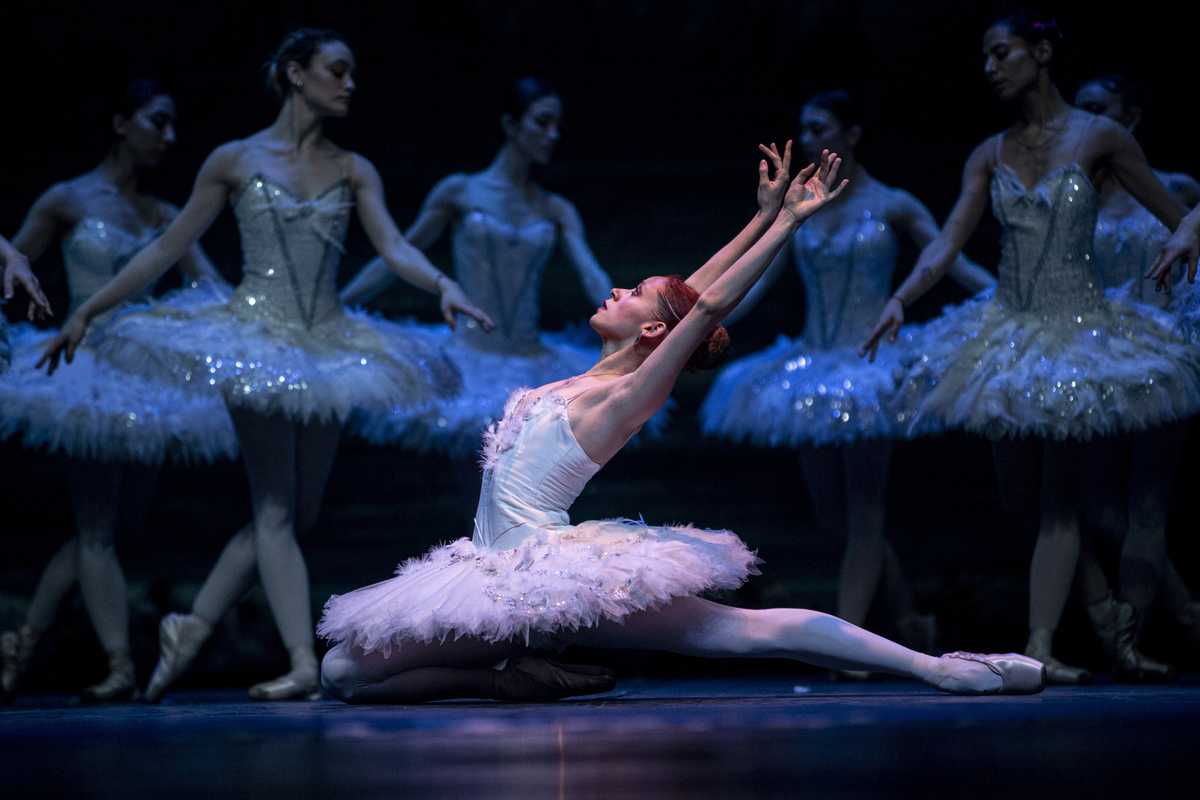
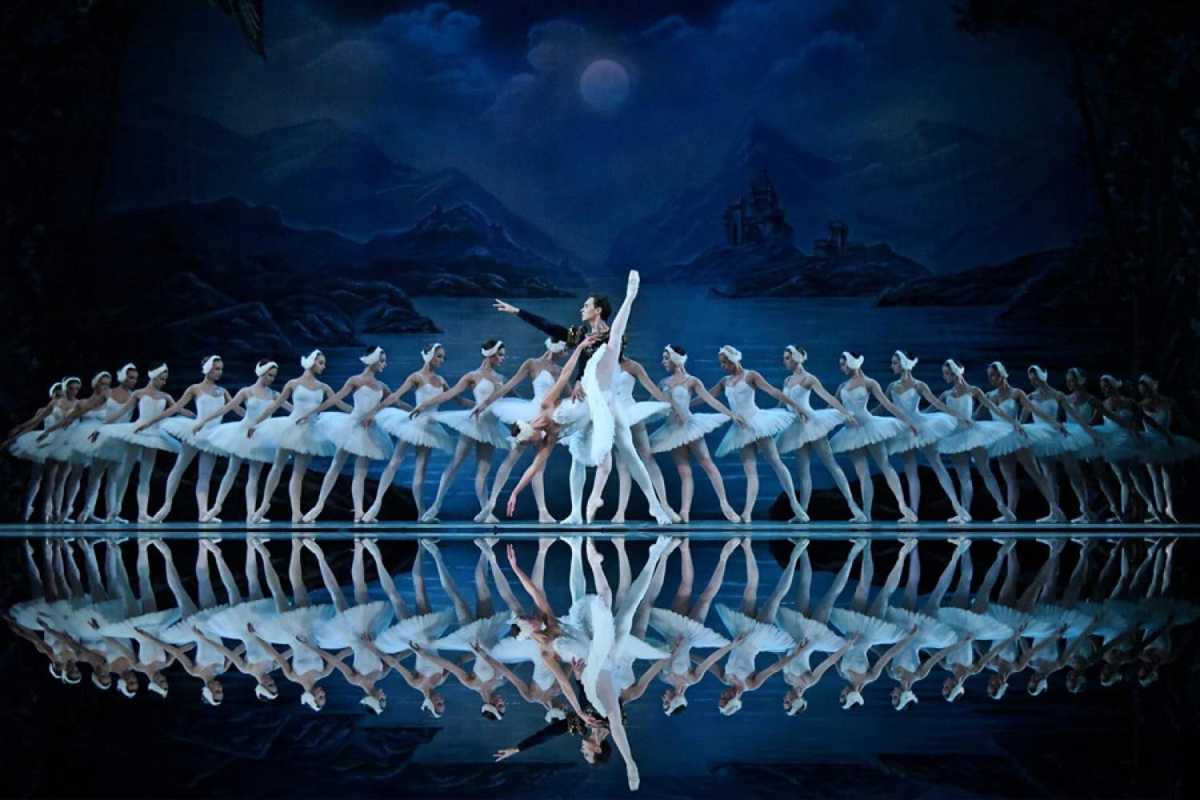
While the verified sources do not preserve complete details of the earliest visual realizations, the Mariinsky revival codified a staging logic: formal court scenes juxtaposed with the more poetic, mist-filled lakeside acts. This dramaturgical contrast—ceremonial interiors versus lyrical exteriors—became central to the ballet’s visual memory and has guided costume, lighting and set choices ever since. The imperial theatres’ resources and taste for grand repertory helped stabilize these visual conventions.
Performance legacy and interpretive landmarks
The 1895 revival also left a record in casting: principal performers in that production, as recorded in historical accounts, included Pierina Legnani in the dual role of Odette/Odile and Pavel Gerdt as Prince Siegfried. Those associations anchored the ballet in a lineage of star interpreters and created performance expectations—technical virtuosity for the dual role and a poise of character for the prince—that companies and dancers would measure themselves against in the decades that followed.
Companies, revivals and the ballet across eras
Following the Mariinsky restoration, subsequent revivals and stagings continued to refine the ballet. Scholarship commonly notes important early reinterpretations—such as Alexander Gorsky’s 1901 revival—that further adapted Petipa and Ivanov’s work for changing audiences and theatre practices. Over time, the Petipa/Ivanov/Drigo configuration became the working text companies relied upon, while directors and choreographers have occasionally reimagined scenes to fit new theatrical approaches.
Why the ballet endured
le lac des cygnes endures because its later, careful reworking reconciled Tchaikovsky’s musical ambition with choreographic and theatrical means capable of sustaining full-length narrative dance. The Mariinsky revival provided structural coherence and editorial fixes that rescued the score from its uneven premiere. Once the imperial theatres established a repeatable model—musical edits, choreographic division of labor, and performance conventions—the ballet entered the repertory as a living text companies could preserve, adapt, and pass on.
Why Swan Lake still matters
Seen as a case study in artistic recovery, le lac des cygnes shows how a work can be reborn through collaboration between choreographers, editors and institutional repertory practice. The 1895 Petipa/Ivanov revival—together with Riccardo Drigo’s musical revisions and Modest Tchaikovsky’s libretto work—turned an insecure premiere into the canonical Swan Lake known today. That history explains both the ballet’s enduring presence in company seasons and the continuing fascination it holds for performers, conductors and audiences who encounter its combination of orchestral richness and choreographic invention.
Author: Cynthia D.