Coppélia decoded: what the comic ballet reveals about the classical repertoire
Coppélia is one of classical ballet’s most telling examples of how narrative, music, character and stage image combine to shape repertory identity. First seen in Paris in May 1870, with music by Léo Delibes and choreography by Arthur Saint‑Léon, the ballet’s comic mechanism — a jealous heroine, a lifelike doll and a scheming toymaker — keeps returning in company repertories and in visual memory.
Quick answer
Coppélia matters because its comic plot, Delibes’s danceable score and the central role of Swanilda together crystallize a specific kind of classical stage identity: narrative economy, character-driven pantomime and memorable visual set pieces that companies can rework across generations.
What this article explains
- How the core plot and impersonation device shape dramatic and visual priorities.
- What Delibes’s score contributes to style and danceable color.
- Why Swanilda and the doll function as central visual and theatrical hooks.
THE SHORT EXPLANATION
At its heart Coppélia is a comic ballet about a case of mistaken attraction: Franz is fascinated by a doll named Coppélia, created by the toymaker Dr. Coppélius. Swanilda, jealous and resourceful, discovers the truth and impersonates the doll to expose the deception and reclaim Franz. That swap — human mimicking object — is the work’s central dramatic device and the source of much of its stage comedy.
WHAT MAKES IT VISUALLY DISTINCT
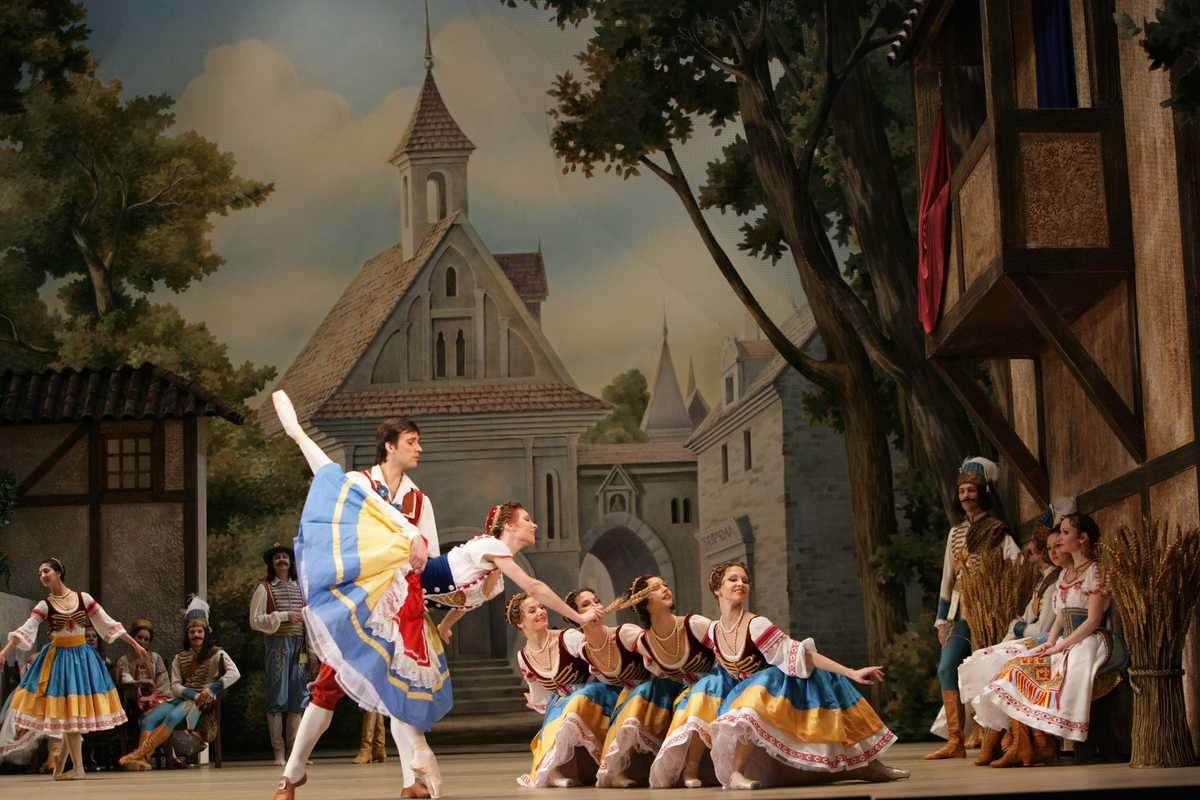
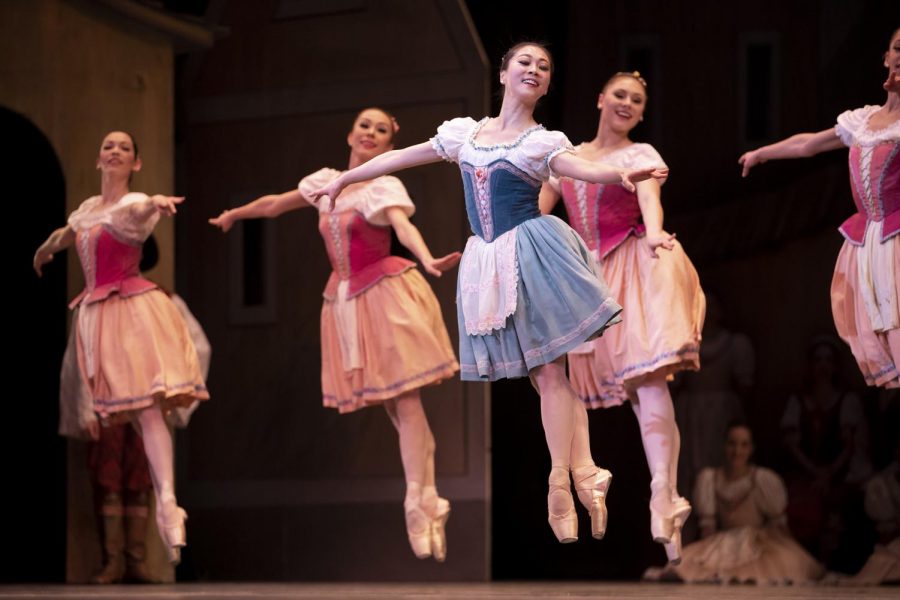
The ballet’s visual code plays on contrasts: the everyday village setting versus the uncanny precision of the mechanical doll; comic pantomime against classical technique; and sequences of national or character dances that punctuate the action. These contrasts create vivid tableaux that linger in memory: a spirited village ensemble, Swanilda’s deliberate doll-like freezes, and the figure of Dr. Coppélius as the eccentric inventor.
TECHNIQUE, FORM, OR STRUCTURE
Formally, Coppélia relies on clear storytelling through pantomime and divertissements. The choreography supports the plot through gesture and mimicry rather than extended psychological development: Swanilda’s impersonation requires precise timing and comic acting as much as clean technique. Delibes’s score furnishes danceable forms — mazurkas, czardas and a mechanical waltz — that give choreographers rhythmic and character contours to shape solos and ensemble numbers.
WHY IT MATTERS IN BALLET CULTURE
Coppélia occupies a transitional place in ballet history. Premiered after the Romantic era, it is treated as a comic, increasingly classical repertory piece. Its mixture of light narrative, national dances and theatrical invention made it well suited to revision and restaging; notable later stagings, including revisions in Russia and 20th‑century reworkings, have helped it endure in company repertoires worldwide. The ballet thus stands as an example of how choreography and score can be adapted while preserving a strong visual and dramatic identity.
COMMON MISREADINGS OR CONFUSIONS
One common simplification is to reduce Coppélia to a mere children’s spectacle or a novelty about a doll. In reality the work stages a comic investigation into human/object boundaries and uses Delibes’s varied score and character dancing to sustain both theatricality and technical display. Another frequent misunderstanding is to overlook how much the impersonation relies on pantomime and staging rather than only on classical bravura.
WHY THE AESTHETIC ENDURES
Delibes’s melodic charm and the inclusion of recognizable dance types give Coppélia a musical and choreographic clarity that translates easily across eras. The doll motif — a visual shorthand for the uncanny — combined with village color and comic timing, produces images that companies can reinterpret without losing the ballet’s identity. That adaptability secures Coppélia’s place as a repertory staple.
DECORATIVE TRANSLATION
As a source for posters and wall art, Coppélia offers precise visual cues: silhouette-driven poses (Swanilda versus Coppélia), the contrast of domestic interiors with mechanical detail, and palette choices suggested by village costumes and stage sets. These elements translate well to graphic treatments that favor clear shapes, playful vintage inflections and a gentle uncanny undertone — a balance between charm and a mechanized motif well suited to decorative prints.
CLOSING INTERPRETATION
Coppélia reveals how classical ballet can combine narrative economy, musical color and choreographic invention to make a work both stageable and memorable. Its core device — a human impersonating an object — keeps the action lively while giving dancers opportunities for comic acting and technical display. Woven into repertory histories through revisions and restagings, Coppélia remains a useful lens for understanding how story, score and image create enduring repertory identity.
Author: Eric M.