Swan Lake: Reading the White, the Black and the Art of Metamorphosis
Swan Lake remains one of classical ballet’s most eloquent studies in narrative, spectacle and visual code. Composed by Pyotr Ilyich Tchaikovsky in 1875–1876 and first performed in 1877, the work only entered the standard repertory after the 1895 Mariinsky revival prepared by Marius Petipa and Lev Ivanov with revisions by Riccardo Drigo. That later edition—preserving a four-act shape, the famous white-act ensemble scenes and the double role of Odette/Odile—gave the ballet a formal and visual identity that dancers and designers still reference today.
Quick answer
Swan Lake’s meaning is shaped by its four-act classical structure, the doubled heroine (Odette/Odile), the sorcerer figure, and a stark white/black visual language whose motif of metamorphosis anchors the drama.
What this article explains
- How the ballet’s form and key characters create narrative clarity.
- Why the white/black costume code functions as visual shorthand.
- How metamorphosis and ensemble writing define stage identity and legacy.
THE SHORT EXPLANATION
At its core Swan Lake is a classical ballet that tells a fairy-tale-like story through music, choreography and stage imagery. The basic dramatic ingredients are the double role of Odette/Odile (white and black swan), Prince Siegfried and the sorcerer Von Rothbart. The plot revolves around enchanted swan-women, deception (the use of a double) and metamorphosis—the literal transformation that drives the dramatic stakes.
WHAT MAKES IT VISUALLY DISTINCT
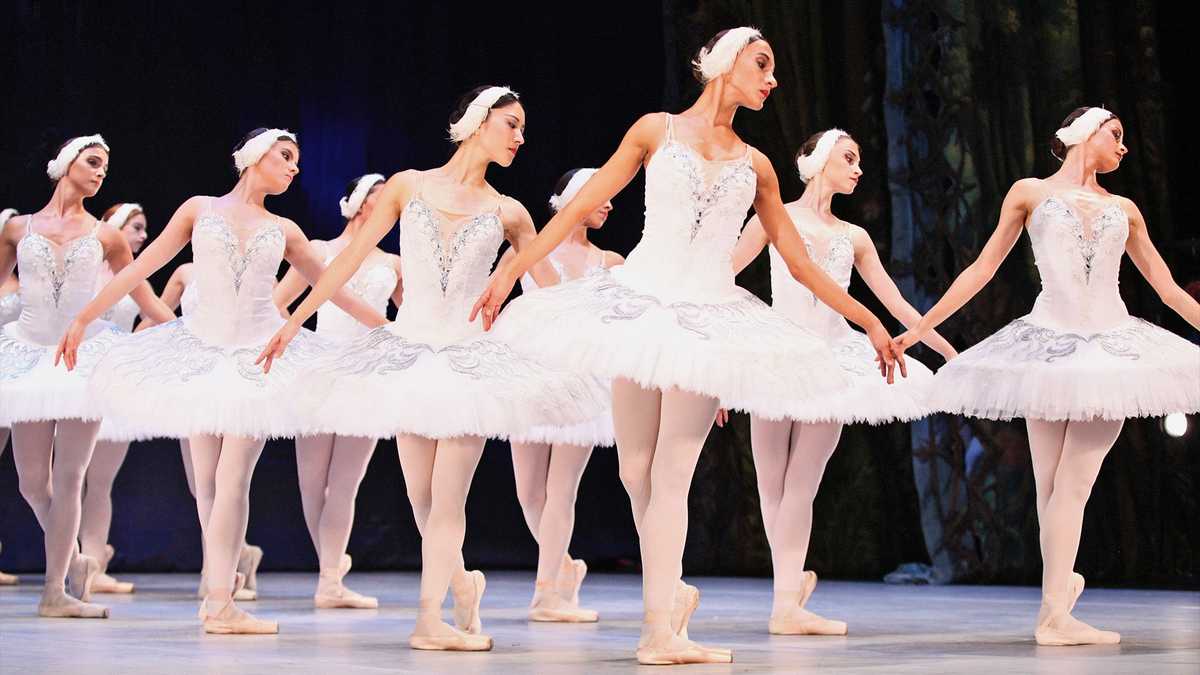
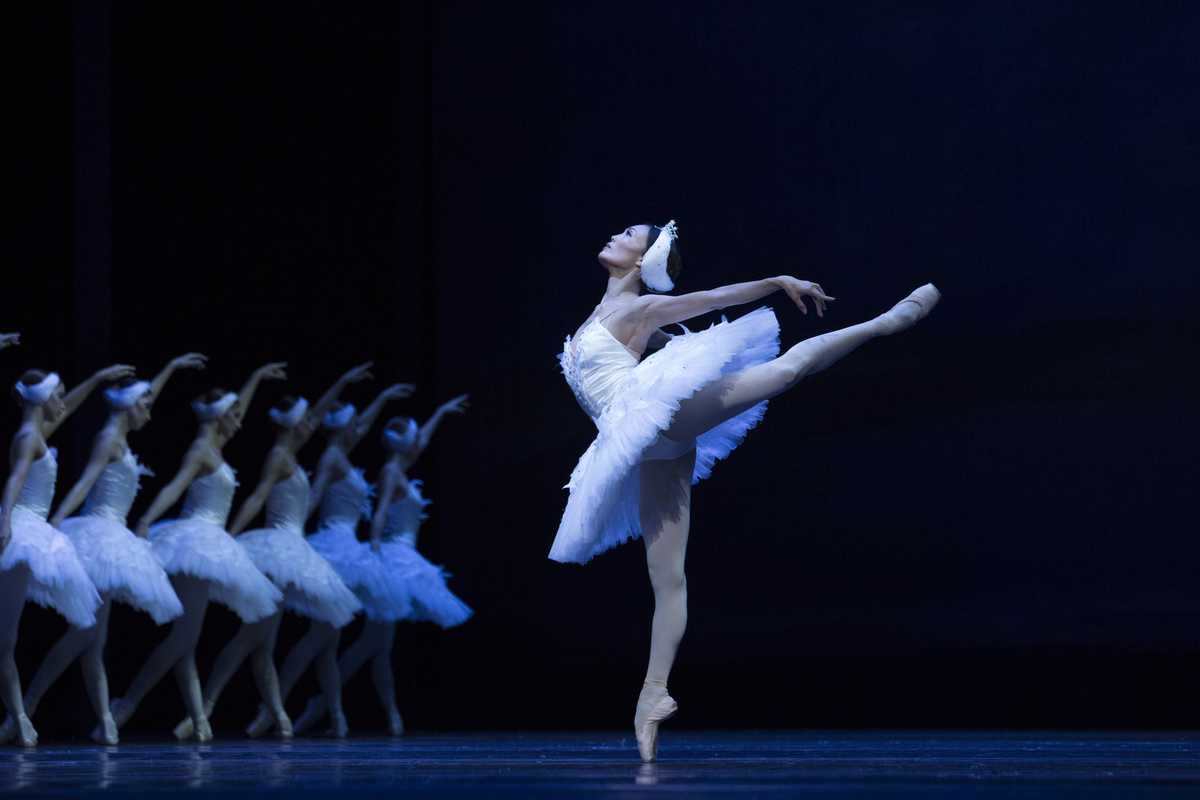
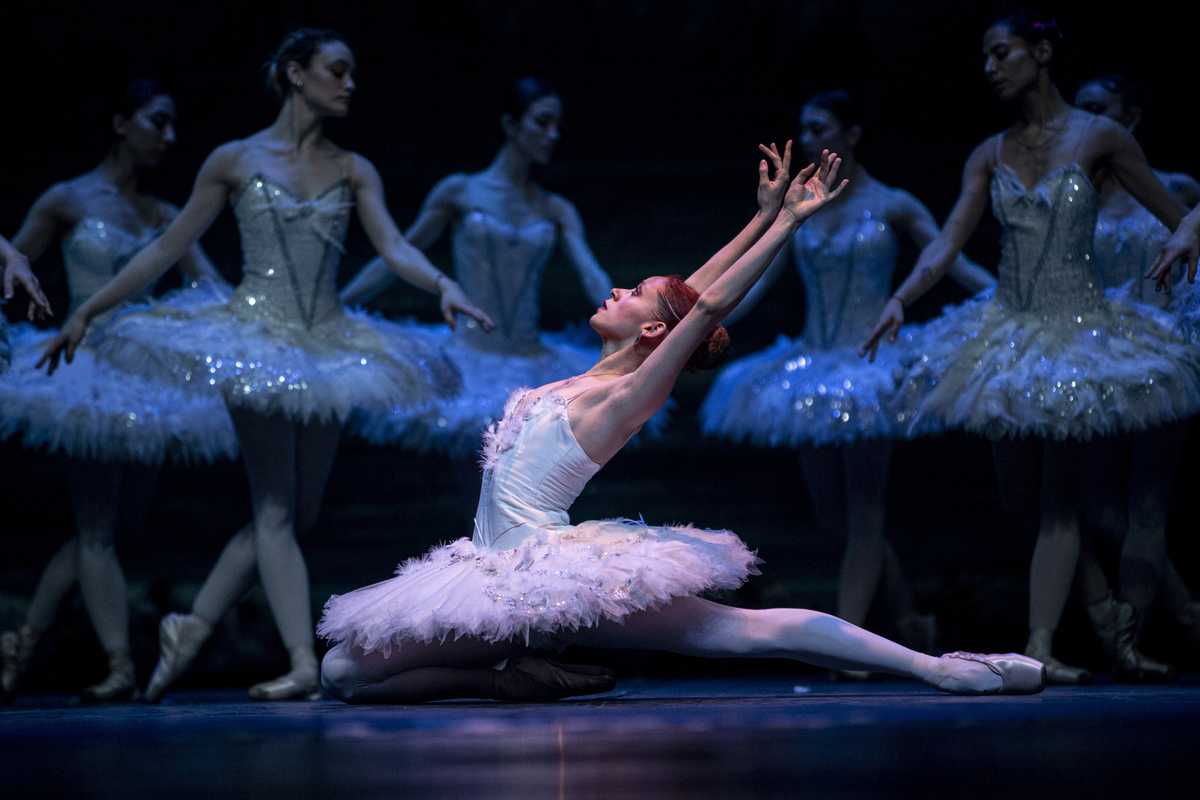
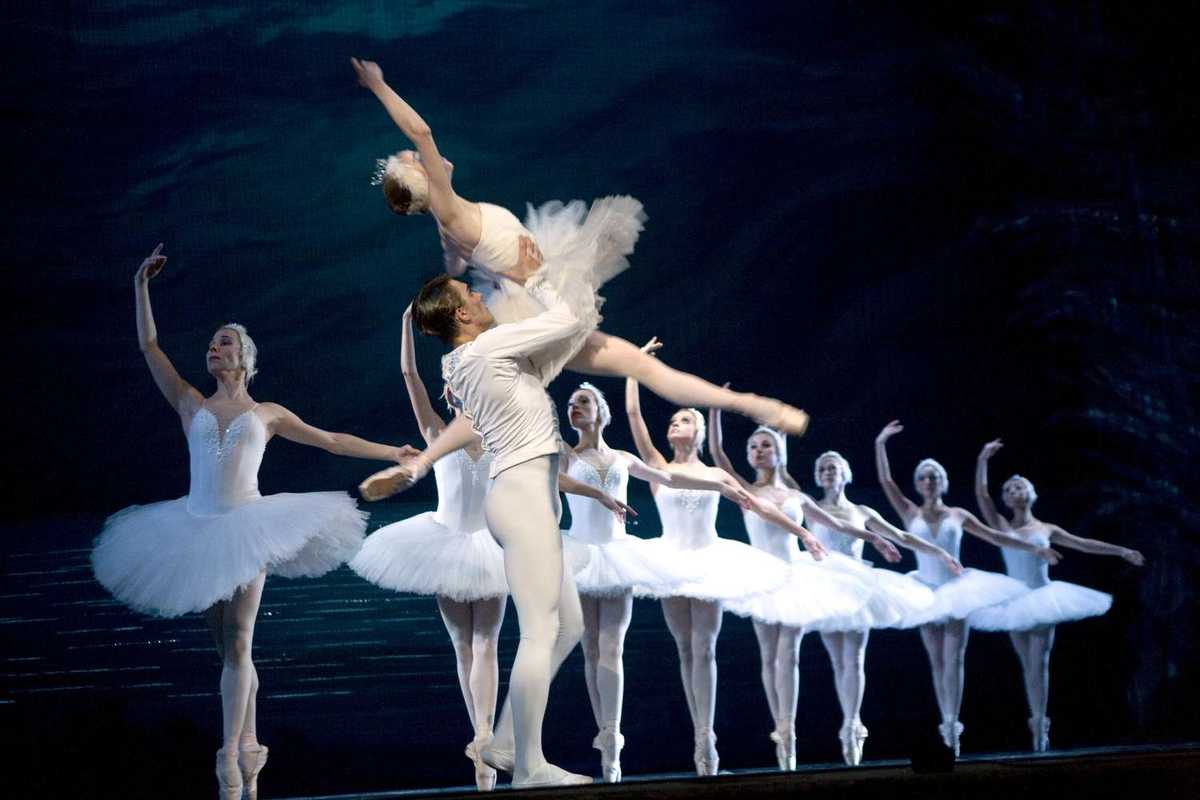
A defining visual logic in Swan Lake is the contrast between white and black as costume and lighting cues. The white-act ensemble scenes—the so-called "ballet blanc"—present uniformity and lyricism, an almost sculptural chorus of swans. By contrast, the black-swan figure is staged as a deliberate visual break: dark costume, sharper accents, and a choreography that reads as antagonist or seductress. That interplay creates immediate readability onstage: the audience locates moral and emotional polarity through color and group composition.
TECHNIQUE, FORM, OR STRUCTURE
Swan Lake follows a four-act shape commonly staged as four scenes. This structure accommodates both ensemble spectacles (the white acts) and featured virtuosic moments: the Black Swan pas de deux and the grand pas de deux design familiar from classical ballet—entrée, adagio, variations and coda—are integral to the work’s formal balance. Historically, the 1895 Petipa/Ivanov revival codified how these elements fit together, and later stagings often derive from that edition and its preserved notations.
WHY IT MATTERS IN BALLET CULTURE
Swan Lake’s canonical status rests on both musical ambition and a choreography-production history that shaped classical taste. After a lukewarm reception at the 1877 premiere in Moscow, the ballet’s 1895 revival at the Mariinsky Theatre established the version that would become the reference for the 20th century. The combination of a clear narrative device (the double), large-scale ensemble writing and a formal grand pas de deux made Swan Lake a model for classical repertory and for how ballet can marry narrative and spectacle.
COMMON MISREADINGS OR CONFUSIONS
Audiences sometimes reduce Swan Lake to a simple dichotomy—good white swan versus evil black swan—but the dramatic economy is more nuanced. The double role functions theatrically: one character represents innocence and victimhood, the other deception and temptation. The sorcerer figure and the motif of transformation complicate moral readings; staging choices and choreographic detail across productions also affect how clearly those lines read.
WHY THE AESTHETIC ENDURES
The visual economy of Swan Lake—minimal palettes, ensemble symmetry and a powerful motif of metamorphosis—translates easily across eras and media. The stark white of the ballet blanc and the decisive black of Odile create images that remain memorable and adaptable. The 1895 revival’s notational legacy ensured that those images became widely reproducible, allowing designers, choreographers and filmmakers to reinterpret the code without erasing its recognizability.
DECORATIVE TRANSLATION
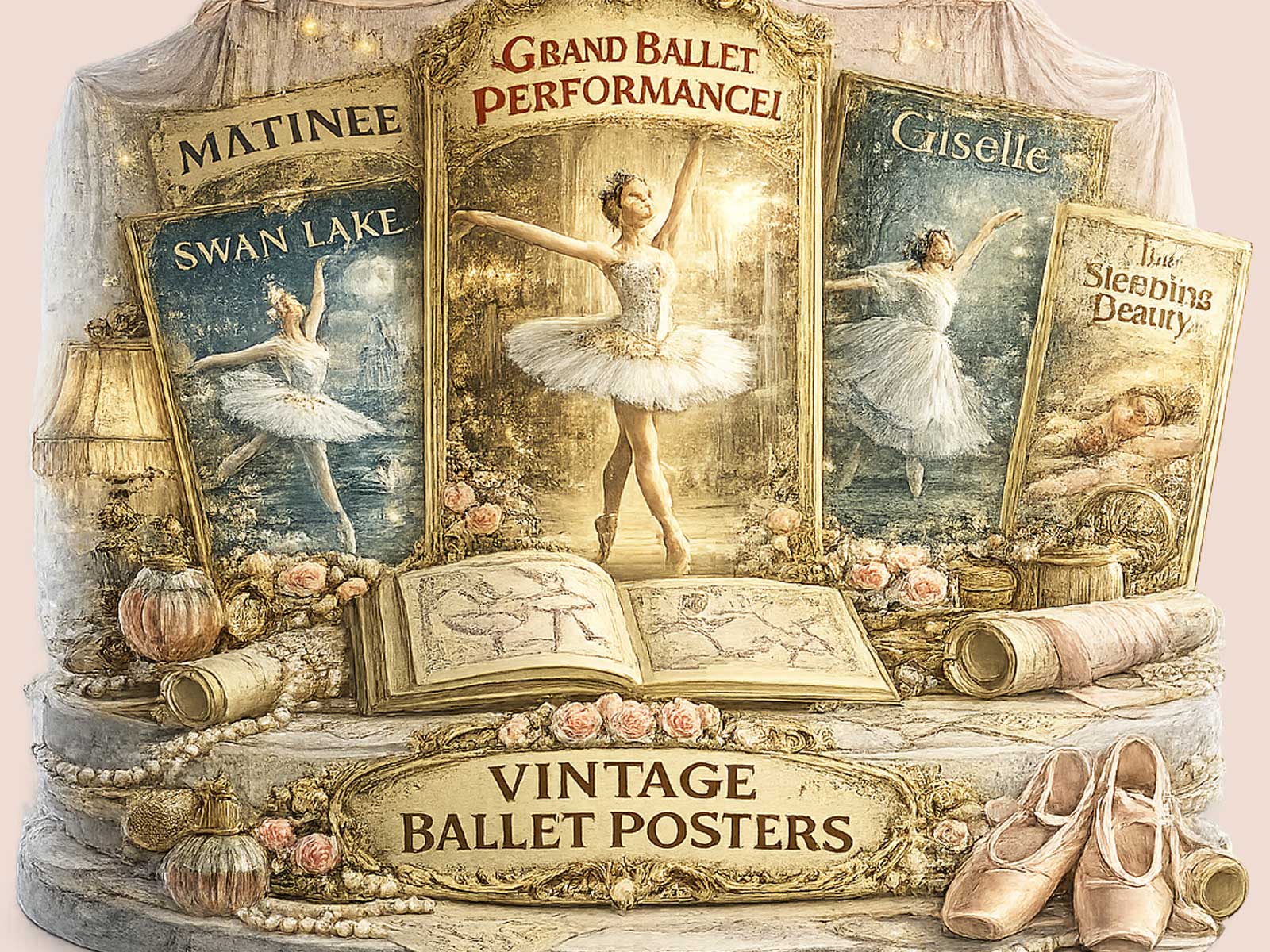
Swan Lake’s imagery lends itself naturally to decorative work. Poster art, prints and interior accents often borrow the ballet’s restrained palette and silhouette-driven forms—groups of white figures against deep stage space, a single dark figure framed in profile, or motifs suggesting wings and transformation. These distilled elements capture the ballet’s atmosphere without requiring narrative detail, making them useful for wall art and visual merchandising rooted in classical taste.
CLOSING INTERPRETATION
Reading Swan Lake through its structure and visual language clarifies why it remains a cornerstone of classical ballet. The four-act architecture, the double role of Odette/Odile, the presence of Von Rothbart and the decisive white/black motif create a compact system in which story, form and image reinforce one another. That system—preserved and popularized by the 1895 Petipa/Ivanov edition and subsequent stagings—continues to shape how classical ballet communicates emotion, identity and spectacle onstage and in visual culture offstage.
Author: Cynthia D.