NYC Ballet’s Nutcracker: The Stories and Stage Traditions That Made It an…
George Balanchine’s The Nutcracker for New York City Ballet is more than a seasonal program piece: its production choices, use of children, and commercial durability reshaped how Americans experience ballet at Christmastime. The company’s 1954 full-length premiere and subsequent stagings created production traditions—an on-stage growing Christmas tree, the prominence of School of American Ballet students, and the renaming of Clara to “Marie” in NYCB materials—that quickly entered cultural memory and helped secure NYCB’s place in the city’s institutional life.
In short
Balanchine’s 1954 full-length staging at City Center remade The Nutcracker into a New York holiday ritual, establishing visual and casting conventions—large-scale family spectacle, a growing tree, and many child performers—that influenced American ballet for decades.
What this article uncovers
- How Balanchine’s production choices created a distinct American Nutcracker template.
- Which production elements made the NYCB staging visually memorable and institutionally important.
- The ways licensing, film, and archives extended NYCB’s Nutcracker beyond the theater.
How Balanchine’s Nutcracker entered ballet memory
When George Balanchine staged his full-length The Nutcracker for New York City Ballet, with the premiere on February 2, 1954 at City Center, he did more than restage a familiar score. The production became a cultural vector: critics and later commentators credit Balanchine’s version with turning The Nutcracker into an American holiday institution. That movement from European seasonal curiosity to ubiquitous American ritual is central to why NYCB’s Nutcracker is remembered not just as a work in the repertoire but as a driver of ballet’s commercial permanence in the United States.
Production signatures that became iconic
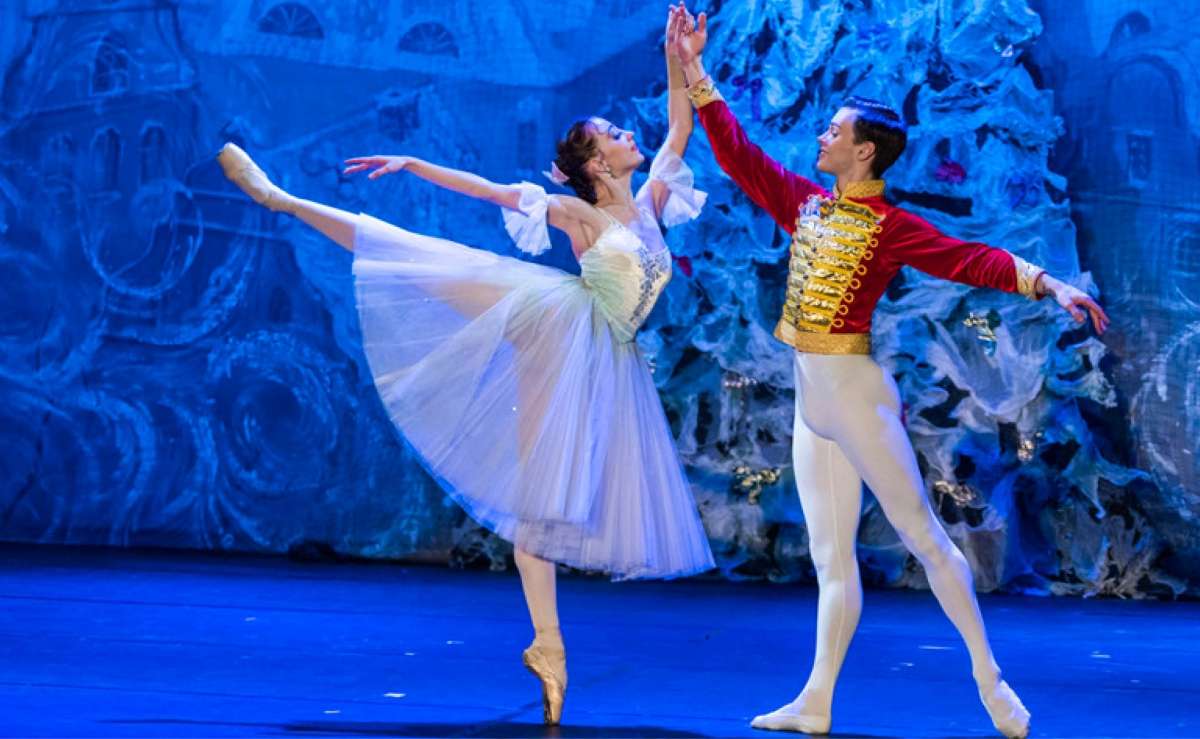
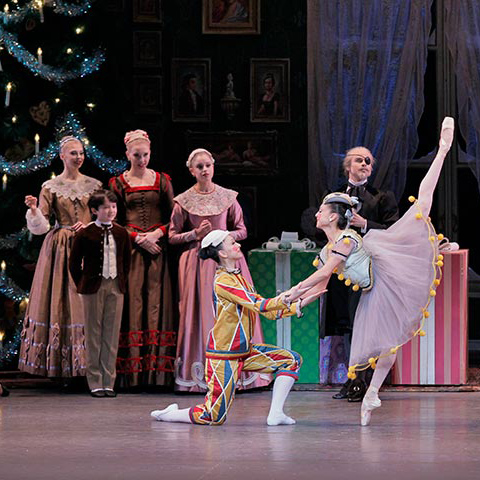
Balanchine introduced staging choices that audiences came to associate specifically with the NYCB Nutcracker. Chief among them is the very large on-stage Christmas tree that visibly "grows" during the performance—a mechanical and visual flourish that clarified for mid-century audiences the transition from domestic parlor to enchanted realm. Alongside the tree, Balanchine’s concept emphasized spectacle on a family scale: lavish divertissements, broad ensemble passages, and choreography suited to a company with both seasoned principals and many younger dancers.
Why children matter in NYCB’s Nutcracker
One of Balanchine’s decisive gestures was the heavy involvement of children in the production. Many roles in NYCB’s staging are traditionally filled by pupils from the School of American Ballet, creating a transmission line between the school and the company and giving the ballet a communal, civic feeling each season. That reliance on youthful performers helped make the production a civic rite: families see relatives and neighborhood children on stage, and the company strengthens ties to its training institution every year.
How film, licensing, and archives extended the reach
NYCB’s Nutcracker did not remain confined to the theater. A 1993 filmed version of Balanchine’s staging was released, featuring the New York City Ballet and serving both as a document of the choreography and a way for broader audiences to encounter this particular production. Beyond film, the staging’s importance is preserved in institutional archives: organizations such as the George Balanchine Foundation and the New York Public Library’s Jerome Robbins Dance Division hold production materials, photographs, and models that trace the 1954 premiere and subsequent seasons. Those holdings have allowed scholars and curators to show how the NYCB Nutcracker developed into a clearly recognizable production type.
Limited licensing, widespread influence
Balanchine’s staging has not been an open-source model. Only a limited number of U.S. companies have been licensed to perform the exact Balanchine production, and a select group of companies have staged his version under license. Yet the NYCB model—especially the use of children, the spectacle of the growing tree, and the balance of company dancers with student casts—shaped how many American companies approached The Nutcracker, even when they developed distinct stagings of their own. In that sense, NYCB’s production exerted influence both directly, through licensed stagings, and indirectly, as a template emulated in spirit across the country.
How the Nutcracker helped stabilize NYCB
Major cultural histories and media coverage have argued that Balanchine’s Nutcracker did more than popularize a seasonal ballet: it helped secure the commercial permanence of New York City Ballet itself. By creating a production that reliably drew audiences each holiday season, Balanchine gave NYCB a recurring financial and cultural anchor. Over decades, the annual Nutcracker run has been described as a foundational element in the company’s ability to program more experimental or less commercially certain works at other times of year.
Names, roles, and small but telling shifts
Another detail that entered NYCB’s internal identity was the renaming of the heroine: in company materials the girl is often called "Marie" rather than Clara, a choice that signals how production teams can reshape familiar narratives to suit institutional tastes. Similarly, Balanchine’s occasional personal presence in performances and archival references to his hands-on approach are part of the production’s recorded history, feeding the idea that this Nutcracker is as much a company creation as it is an adaptation of Tchaikovsky’s score and the older story tradition.
Why audiences keep returning
The continued attraction of NYCB’s Nutcracker rests on a blend of spectacle, ritual, and continuity. The visual hallmarks—the tree, the child ensembles, the company’s refined ensemble work—deliver a familiar story each year while allowing successive generations of dancers and spectators to participate in a rite of passage. Film versions and archival exhibitions help keep the staging visible beyond the seasonal run, reinforcing its status as a touchstone of American ballet practice.
Closing interpretation
Balanchine’s 1954 Nutcracker did more than stage music and story: it created a durable American theatrical culture around a European ballet. Through distinctive production choices, strong ties to a training school, selective licensing, and archival attention, NYCB’s Nutcracker became both a family spectacle and an institutional anchor. The ballet’s reputation today—the ritualized performances at Lincoln Center, the occasional filmed document, and the presence of its materials in major archives—shows how a single staging can change not only what audiences expect of a work, but how an entire company survives and is remembered.
Author: Alex R.