How La Belle au bois dormant Declares Courtly Splendour Through Costume
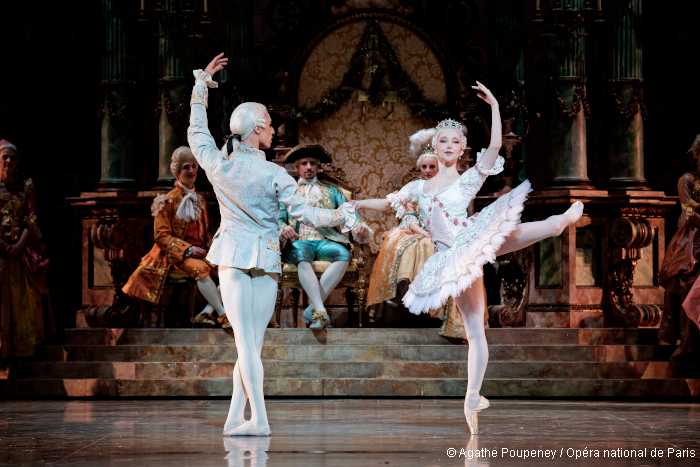
La Belle au bois dormant (The Sleeping Beauty) is often read first as a visual proclamation: a staged world of court ritual where costume names rank, ceremony and classical line. The ballet’s design history ties its imagery to the pageantry of royal courts, and its costumes — from richly worked textiles to crowns and the disciplined tutu silhouette — make a theatrical claim about social order and aesthetic hierarchy.
Quick answer
Sleeping Beauty’s visual identity deliberately evokes the Louis XIV court model. Costuming — brocaded surfaces, ceremonial headwear, court palettes and sharply cut classical silhouettes — frames the ballet as an ordered, dynastic spectacle.
What this article explains
- How the ballet’s original mise-en-scène was conceived as courtlike.
- Which costume elements signal hierarchy and ceremony on stage.
- Why these visual choices persist in museum collections and later revivals.
THE FIRST VISUAL WORLD OF THE BALLET
From its inception the work presents a visual world that privileges ceremony. Ivan Vsevolozhsky — the director of the Imperial Theatres who shaped the 1890 production’s mise-en-scène — explicitly proposed staging the ballet "in the style of Louis XIV." That curatorial choice situates the production within the iconography of absolutist pageantry: stately processions, hierarchical grouping and an emphasis on decorum over individual psychology. Before a step is analysed, the audience reads rank and ritual from the costumes on stage.
COSTUME SILHOUETTES AND CHARACTER LANGUAGE
The Sleeping Beauty tradition uses costume to map social order. The classical ballerina silhouette — structured bodice combined with a clear, staged tutu — functions as a visual shorthand for aristocratic refinement and disciplined technique. Headpieces such as crowns and tiaras operate as immediate markers of status and ceremony. As scholars describe the work, Petipa’s codified classicism treats costume as a system: garments delineate role, station and the ceremonial choreography of court life.
COLOUR, TEXTURE, AND ATMOSPHERE
Designs associated with Sleeping Beauty favour the vivid, emblematic palette of courtly spectacle and richly worked fabrics that read as luxurious at a distance. Museum holdings and exhibition records (including V&A and the Museum at FIT) document costumes and sketches from later productions that show brocaded patterns, ornamental surfaces and a court-based colour logic. These materials create an atmosphere of sumptuous ritual: fabric texture and colour are not merely decorative but integral to the work’s ceremonial tone.
COSTUME AND MOVEMENT TOGETHER
Costume in this ballet is designed to clarify rather than obscure classical line. The combination of fitted bodices and defined tutus sharpens the dancer’s silhouette, reinforcing Petipa’s visual grammar of order and proportion. Brocades and ornamentation add surface richness while the cut of the garment maintains the purity of classical posture and geometry; the visual weight of ornament is balanced by the clarity of silhouette so that movement reads as formalized ritual.
DIFFERENT PRODUCTIONS, DIFFERENT VISUAL READINGS
Over the twentieth century designers working within or after Diaghilev’s circle and in major companies have reinterpreted these court motifs without abandoning their communicative force. Léon Bakst (Diaghilev), Oliver Messel and later designers appear in scholarship and museum collections as figures who translated imperial court imagery into stage costume: brocade-like fabrics, crowns, and clarified tutus recur. While each production adapts texture, scale and colour to a contemporary eye, the essential vocabulary — court colours, ornament, and formal silhouette — keeps the work legible as an aristocratic spectacle.
ICONIC IMAGES, SCENES, AND MEMORY
Some visual moments from Sleeping Beauty outlast narrative specifics because they crystallize this costume vocabulary: processional tableaux, coronation-like groupings, and the poised, sculptural lines of the principal figures. Museum collections preserve designs and objects from notable revivals, which helps explain why certain images become durable in the public imagination. When Aurora’s costume or a court scene is reproduced in exhibitions or posters, the brocaded surfaces, crowns and court colours carry instant recognition.
DECORATIVE AND CULTURAL AFTERLIFE
The ballet’s courtly visual world translates especially well into decorative formats. Brocaded motifs and clear classical silhouettes read strongly at scale and lend themselves to poster art and interior prints: each element — pattern, crown, palette, silhouette — functions as a focused design motif that can stand apart from plot. Museum displays of Sleeping Beauty costumes and design sketches underline this afterlife by showing how stage garments inform fashion, exhibition narratives and decorative reproductions.
CLOSING INTERPRETATION
Reading La Belle au bois dormant through its costume vocabulary reveals a deliberate strategy: costume is a mechanism of order. Vsevolozhsky’s Louis XIV reference and Petipa’s classical codification make the ballet’s costumes agents of hierarchy and ceremony. Rich textiles, headpieces and a disciplined silhouette do more than embellish; they constitute a visual argument that the stage is a court — an ordered aesthetic space where classical line and ornamental splendour declare dynastic ritual.
Further note: Museum collections and programme histories document many of these costume traditions in later revivals and exhibitions.
Author: Alex R.